Territorial Disputes and Conflict Management: The art of avoiding war
Book information
Description
This book examines the problems of boundary demarcation and its impact on territorial disputes, and offers techniques to manage and resolve the resulting conflicts. Historically, most civil conflicts and internal wars have been directly related to boundary or territorial disputes. Cross-border discord directly affects the sustenance and welfare of local populations, often resulting in disease, impoverishment, and environmental damage as well as creating refugees. Although the impact of territorial disputes is great, they can often be settled through bilateral, and sometimes multilateral, agreements or international arbitration. This book sets out to probe into the problems of existing techniques on boundary demarcation and to test their possible impacts on boundary and territorial disputes. Various factors and their influences on cross-border tensions are tested, either qualitatively or quantitatively. After close examination of dozens of the most significant cases, the book presents various alternative solutions to the achievement of cross-border cooperation in disputed territories. An ‘art of avoiding war’ is included within the book, comprising six key schemes and five negotiating techniques. The comparative advantages, costs and benefits of each of these is analyzed and evaluated. This book will help guide practitioners in territorial disputes and will be of interest to students of conflict management, international security, peace and conflict studies, political violence and IR in general. Front Cover Territorial Disputes and Conflict Management Copyright Page Contents List of figures List of tables List of cases Acknowledgments Notes on the text Abbreviations Introduction 1. Boundary, territory and war 1.1 Good boundary, bad boundary 1.2 Fuzzy boundaries and uncertain territories 1.3 Bad news, good news Appendix I 2. Territorial disputes 2.1 Resource scarcity 2.2 Locational feature 2.3 Domestic politics 2.4 Geopolitical competition 2.5 Cultural difference 2.6 Summary Appendix II 3. Options for territorial dispute settlement 3.1 Fair division scheme 3.2 Joint management scheme 3.3 International peace park 3.4 Neutral zone 3.5 Buffer zone 3.7 Summary 3.6 Demilitarized zone Appendix III 4. Engaging in settlement negotiations 4.1 Round table talk 4.2 Third-party mediation 4.3 International arbitration 4.4 Litigation at international court 4.5 Shelving disputes strategy 4.6 Summary Appendix IV 5. The art of avoiding war 5.1 The evil of war 5.2 Avoiding war 5.3 Toward a war-free world Appendix V Epilogue Notes Bibliography Index
Similar books

Cross-Cultural Economic Management
2009 · PDF

Territorial Disputes and Conflict Management: The Art of Avoiding War
2011 · EPUB

CHINA ETHNIC STATISTICAL YEARBOOK 2020.
2020 · PDF

Human-Earth System Dynamics
2019 · PDF
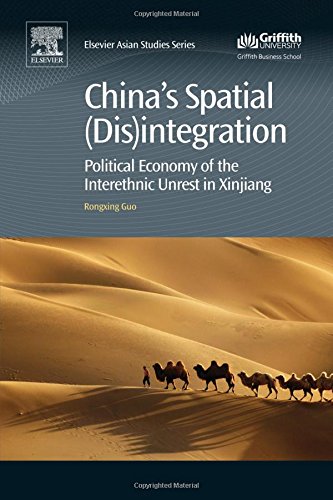
China’s Spatial (Dis)integration: Political Economy of the Interethnic Unrest in Xinjiang
2015 · PDF

Multiregional Economic Development in China
2015 · PDF

Cross-Border Management: Theory, Method and Application
2015 · PDF

Multicultural China: A Statistical Yearbook (2014)
2015 · PDF