The Bronx
Book information
Description
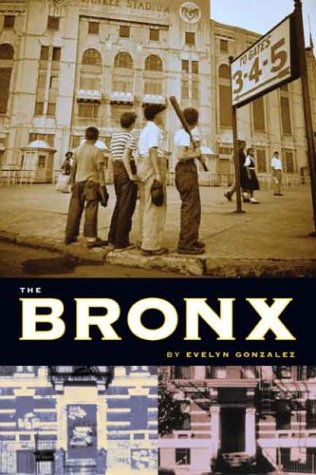
The Bronx is a fascinating history of a singular borough, mapping its evolution from a loose cluster of commuter villages to a densely populated home for New York's African American and Hispanic populations. In recounting the varied and extreme transformations this community has undergone, Evelyn Gonzalez argues that racial discrimination, rampant crime, postwar liberalism, and big government were not the only reasons for the urban crisis that assailed the Bronx during the late 1960s. Rather, a combination of population shifts, public housing initiatives, economic recession, and urban overdevelopment caused its decline. Yet she also proves that ongoing urbanization and neighborhood fluctuations are the very factors that have allowed the Bronx to undergo one of the most successful and inspiring community revivals in American history. The process of building and rebuilding carries on, and the revitalization of neighborhoods and a resurgence of economic growth continue to offer hope for the future. Home to the New York Yankees, the Bronx Zoo, and the Grand Concourse, the Bronx was at one time a haven for upwardly mobile second-generation immigrants eager to leave the crowded tenements of Manhattan in pursuit of the American dream. Once hailed as a "wonder borough" of beautiful homes, parks, and universities, the Bronx became—during the 1960s and 1970s—a national symbol of urban deterioration. Thriving neighborhoods that had long been home to generations of families dissolved under waves of arson, crime, and housing abandonment, turning blocks of apartment buildings into gutted, graffiti-covered shells and empty, trash-filled lots. In this revealing history of the Bronx, Evelyn Gonzalez describes how the once-infamous New York City borough underwent one of the most successful and inspiring community revivals in American history. From its earliest beginnings as a loose cluster of commuter villages to its current status as a densely populated home for New York's growing and increasingly more diverse African American and Hispanic populations, this book shows how the Bronx interacted with and was affected by the rest of New York City as it grew from a small colony on the tip of Manhattan into a sprawling metropolis. This is the story of the clattering of elevated subways and the cacophony of crowded neighborhoods, the heady optimism of industrial progress and the despair of economic recession, and the vibrancy of ethnic cultures and the resilience of local grassroots coalitions crucial to the borough's rejuvenation. In recounting the varied and extreme transformations this remarkable community has undergone, Evelyn Gonzalez argues that it was not racial discrimination, rampant crime, postwar liberalism, or big government that was to blame for the urban crisis that assailed the Bronx during the late 1960s. Rather, the decline was inextricably connected to the same kinds of social initiatives, economic transactions, political decisions, and simple human choices that had once been central to the development and vitality of the borough. Although the history of the Bronx is unquestionably a success story, crime, poverty, and substandard housing still afflict the community today. Yet the process of building and rebuilding carries on, and the revitalization of neighborhoods and a resurgence of economic growth continue to offer hope for the future.
Similar books
The Bronx (Columbia History of Urban Life)
2004 · PDF

MySQL® Notes for Professionals book
2018 · PDF

MrExcel 2022: Boosting Excel
2022 · PDF

MrExcel 2022: Boosting Excel
2022 · PDF

Session C11: Ancient Cultural Landscapes in South Europe – their Ecological Setting and Evolution, Session C22: Gardeners from South America, Session S04: Agro-Pastoralism and Early Metallurgy Sessions, Session WS29: The Idea of Enclosure in Recent Iberian Prehistory, Session C88: Rhytmes et causalites des dynamiques de l'anthropisation en Europe entre 6500 ET 500 BC: Hypotheses socio-culturelles et/ou climatiques: Proceedings of the XV UISPP World Congress (Lisbon 4-9 September 2006) / Actes du XV Congrès Mondial (Lisbonne 4-9 Septembre 2006) Vol.36
2010 · PDF

THE BRITISH ARMY IN INDIA: ITS PRESERVATION BY AN APPROPRIATE CLOTHING, HOUSING, LOCATING, RECREATIVE EMPLOYMENT, AND HOPEFUL ENCOURAGEMENT OF THE TROOPS. with AN APPENDIX ON INDIA : THE CLIMATE OP ITS HILLS ; THE DEVELOPMENT OF ITS RESODRCBS, INDUSTRY, AND ARTS ; THE ADMINISTRATION OF JUSTICE ; THE BLACK ACT ; THE PROGRESS OF CHRISTIANITY ; THE TRAFFIC IN OPIUM ; THE VALUE OF INDIA ; PERMANENT CAUSES OF DISAFFECTION, AND OF THE RECENT REBELLION ; THE TRADITIONARY POLICY; MISGOVERNMENT BY NATIVE RULERS ; ANNEXATIONS OF THEIR TERRITORY, ETC.
1858 · PDF

Idries Shah 27 Books Collection : A Perfumed Scorpion, A Veiled Gazelle, Caravan of Dreams, Darkest England, Destination Mecca, Evenings with Idries Shah, Knowing How to Know, Learning How to Learn, Letters and Lectures of Idries Shah, Neglected aspects of Sufi study, Observations, Oriental Magic, Reflections, Seeker after Truth, Special Illumination, Special Problems in the study of Sufi ideas, Sufi thought and action, Tales of the Dervishes, The Dermis Probe, The Elephant in the Dark, The Englishman Handbook, Idries Shah Antology, The Magic Monastery, The natives are restless, wisdom of the Idiots PDF.
2022 · PDF

The travels of Capts. Lewis and Clarke from St. Louis, by way of the Missouri and Columbia rivers, to the Pacific ocean; performed in the years 1804, 1805 & 1806, by order of the government of the United States. Containing delineations of the manners, customs, religion, &c. of the Indians, comp. from various authentic sources, and original documents, and a summary of the Statistical view of the Indian nations, from the official communication of Meriwether Lewis. Illustrated with a map of the country, inhabited by the western tribes of Indians
1809 · PDF