Bauman and contemporary sociology: A critical analysis
Book information
Description
This is the first single-authored critical engagement with the major works of Zygmunt Bauman. Where previous books on Bauman have been exegetical, here an unwavering light is shone on key themes in the sociologist’s work, exposing serious weaknesses in Bauman’s interpretations of the Holocaust, Western modernity, consumerism, globalisation and the nature of sociology. The book shows how Eurocentrism, the neglect of issues of gender and a lack of awareness of the racism faced by Europe’s non-white ethnic minorities seriously limit Bauman’s analyses of Western societies. At the same time, it points to Bauman’s repeated insistence on the need for sociologists to take a moral stance in favour of the world’s poor and downtrodden as being his most valuable legacy. The book will be of great interest to sociologists. Its readability will be valued by undergraduates and postgraduates and it will attract a readership well beyond the discipline. Cover Bauman and contemporary sociology Contents Acknowledgements Introduction Part I: The dark side of modernity Bauman on the Enlightenment and modernity The Holocaust’s modernity The ambivalences of modernity: a preliminary interrogation of Bauman’s Eurocentric, white, male gaze Part II: Living with postmodernity Modernism and postmodernism Legislators and Interpreters: extending the critique of Bauman’s first exposition of postmodernity and postmodernism Sociology and postmodernity Aspects of Bauman’s sociology of postmodernity: a critical commentary Postmodern ethics: Bauman’s Levinasian turn Part III: Floating, slipping, sliding, drowning, boiling and freezing: the perils of liquid life Why did Bauman become a postmodernist? The whys and wherefores of the demise of postmodernism ‘Liquid’ modernity vs ‘reflexive’ modernity: Bauman’s problem of agency, again ‘Metaphoricity’ in Bauman’s sociology On the ‘liquid’ metaphor: what is this liquid in ‘liquid modernity’? ‘Solid’ modernity ‘Liquid’ writing and liquid modernity: some ethical considerations Liquid modernity: the bare essentials Aspects of liquid modernity: critical reflections Conclusion: a sociologist of hope or a prophet of gloom? References Index
Similar books
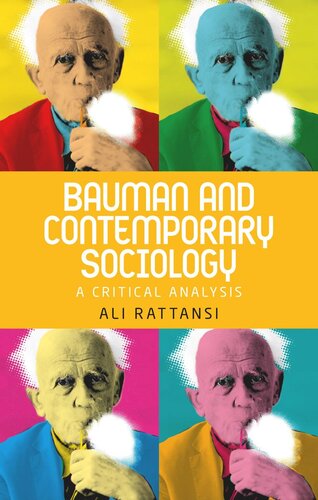
Bauman and contemporary sociology: A critical analysis
2017 · PDF

Racism: A Very Short Introduction

Multiculturalism : a Very Short Introduction
2011 · EPUB

Racism: A Very Short Introduction
2007 · EPUB

Racism: A Very Short Introduction
2007 · PDF

Racism: A Very Short Introduction (Very Short Introductions)
2007 · PDF

Racism: A Very Short Introduction (Very Short Introductions)
2007 · PDF

Racism: A Very Short Introduction (Very Short Introductions)
2007 · PDF