The Philosophical Legacy of Jorge J. E. Gracia
Book information
Description
Fleeing Cuba in 1961, Jorge J. E. Gracia arrived in the USA at the age of nineteen without family and unable to speak English. Ten years later he was assistant professor of philosophy at the State University of New York at Buffalo. Over the next 50 years Gracia published dozens of books and hundreds of articles, making major contributions to numerous areas of philosophy: Latin American philosophy, race and ethnicity, Medieval philosophy, philosophical historiography, metaphysics and ontology, and theory of interpretation. This book is a critical response to Gracia’s work and a tribute to his legacy. It includes a comprehensive bibliography of Gracia’s philosophical works. Cover Half Title Title Page Copyright Page Contents Introduction Historical Medieval/Scholastic Philosophy Hispanic/Latino/Latin American Philosophy Systematic Metaphysics/Ontology Philosophical Historiography Philosophy of Language/Hermeneutics Ethnicity/Race/Nationality Issues, and Hispanic/Latino Issues Conclusion I: Latino/Latin American Philosophy Chapter 1: Gracia’s Role in Shaping the Field of Latin American Philosophy Meta-Philosophy and Diversity Proving the Existence of Latin American Philosophy Concluding Remarks Chapter 2: Gracia’s Contributions to LatinaXo Philosophy and His Engagement with Philosophy of Liberation1 Gracia’s Engagement with The Critical View of Philosophy of Liberation Conclusion Chapter 3: An Account of Philosophical Vocation in Chile1 Introduction The Sources Philosophical Beginnings The Link between Biography and Philosophical Works Philosophy and Specialization An Account of Philosophical Vocation Conclusion Appendix: Brief Biographies II: Medieval Philosophy Chapter 4: The Method of Philosophy: Gracia’s Gift of Suárez Introduction Suárez Gracia Qualifications Conclusion Chapter 5: The Ontological Status of Suárez’s Objective Concepts Introduction Formal and Objective Concepts Objective Concepts and Beings of Reason The Ontological Status of Suárez’s Objective Concepts Conclusion Chapter 6: A Gracian Categorial Analysis of Boethius’s On Division Chapter 7: Tachau on Scotus’ Theory of Cognition: How to Expand Gracia’s Program on the History of the Problem of Individuation Setting up the Problem Tachau’s Interpretation of Scotus’ Theory of Cognition Tachau/Spruit Controversy on Intelligible Species in Bacon Toward Understanding Scotus against the Baconian Background: Summing Up Concluding Remarks: How to Expand Gracia Program in the History of Individuation III: Metaphysics and Ontology Chapter 8: Gracia, Individuation, and Thomistic Metaphysics Introduction The Problem of Universals Individuality and the Principle of Individuation Gracia’s Solution to the Problems of Individuality and Identity in Thomistic Metaphysics Gracia’s Contribution to Thomistic Metaphysics Conclusion Chapter 9: Individuals and Communities Scheler on Sorting Communities Aristotelian Soundings Aristotelian Inspired Criticisms of Scheler Conclusion Chapter 10: The Ontological Statuses of Features Introduction Three Questions: Intension, Extension, and Ontological Status Intension and Extension of the Features of Substances The Ontological Status of the Features of Substances Essential and Accidental Features Concluding Remarks Chapter 11: Categories and Development in Metaphysics: From Ontology to Objective Logic Introduction 1. Categorial Conceptions of Metaphysics: Gracia, Collingwood, Mure and a Synthesis 2. Origins of Metaphysics and the Developmental Paradigm: Heraclitus 3. Ontology as a Special Science and its Collapse. 4. From Ontology to Objective Logic Closing Remarks Acknowledgments and Dedication Chapter 12: Omnis categoria pulchra est: A Neutralist Conception of Beauty Introduction Gracia on Categories, Aesthetic Objects, and Interpretation Transcendental Beauty Supertranscendental Beauty Reply to Objections and the Place of Beautiful Categories in Excellent Metaphysics IV: Interpretation Chapter 13: From a Distance: Gracia on the Nature and Interpretation of Revelation Introduction Gracia on Divine Revelation Gracia’s Theory of the Interpretation of Texts The Central Argument of HGM Theology and the Hermeneutic Circle Difficulties with Gracia’s Theory of Revelation Religious Experience and Revelation Conclusion Chapter 14: Taking Pierre Menard Seriously: Gracia’s Gift of Borges Introducing Pierre Menard In Praise of Copying Texts and Works What If Reading Is Writing? Chapter 15: The Relevance of Gracia’s Genetic Common-Bundle View of Race for Contemporary Medical Research and Practice Introduction Gracia’s Genetic Common-Bundle View of Race How Is Race Being Used in Contemporary Medical Research and Practice? The Relevance of Gracia’s Genetic Common-Bundle View of Race Chapter 16: Jorge J. E. Gracia as Aristotelian-Thomistic Organizational Psychologist and Cultural Humanist Introduction Why Chicago? Why Toronto after Chicago? Why Gracia Did Not Call Himself a Thomist, and Why, in a Way, Like Adler, He Was Right and Wrong To Do So Notes Introduction Chapter 1 Chapter 2 Chapter 3 Chapter 4 Chapter 5 Chapter 6 Chapter 7 Chapter 8 Chapter 9 Chapter 10 Chapter 11 Chapter 12 Chapter 13 Chapter 14 Chapter 15 Chapter 16 The Gracia Bibliography Contents 1. Introduction 2. Books Authored 3. Books Edited 4. Journal Articles and Book Chapters 5. Special Journal Issues Edited 6. Publications on Gracia Index
Similar books

The Chronicles of Narnia and Philosophy: The Lion, the Witch, and the Worldview (Popular Culture and Philosophy)
2005 · PDF

The Chronicles of Narnia and Philosophy: The Lion, the Witch, and the Worldview (Popular Culture and Philosophy)
2005 · EPUB

True Blood and Philosophy: We Wanna Think Bad Things with You
2010 · PDF

The Hobbit and Philosophy: For When You've Lost Your Dwarves, Your Wizard, and Your Way
2012 · PDF

The Hobbit and Philosophy: For When You've Lost Your Dwarves, Your Wizard, and Your Way
2012 · EPUB
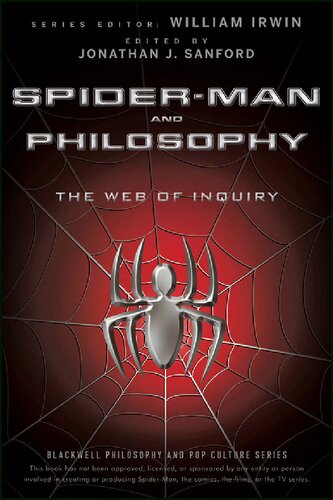
Spider-Man and Philosophy: The Web of Inquiry
2012 · PDF

Spider-Man and Philosophy: The Web of Inquiry
2012 · EPUB

30 Rock and Philosophy: We Want to Go to There
2010 · PDF