Chiricahua Apache Enduring Power: Naiche's Puberty Ceremony Paintings (Contemporary American Indians)
Book information
Description
A gripping story of the cultural resilience of the descendants of Geronimo and Cochise. This book reveals the conflicting meanings of power held by the federal government and the Chiricahua Apaches throughout their history of interaction. When Geronimo and Naiche, son of Cochise, surrendered in 1886, their wartime exploits came to an end, but their real battle for survival was only beginning. Throughout their captivity in Florida, Alabama, and Oklahoma, Naiche kept alive Chiricahua spiritual power by embodying it in his beautiful hide paintings of the Girl’s Puberty Ceremony—a ritual at the very heart of tribal cultural life and spiritual strength. This narrative is a tribute to the Chiricahua people, who survive today, despite military efforts to annihilate them, government efforts to subjugate them, and social efforts to destroy their language and culture. Although federal policy makers brought to bear all the power at their command, they failed to eradicate Chiricahua spirit and identity nor to convince them that their lower status was just part of the natural social order. Naiche, along with many other Chiricahuas, believed in another kind of power. Although not known to have Power of his own in the Apache sense, Naiche’s paintings show that he believed in a vital source of spiritual strength. In a very real sense, his paintings were visual prayers for the continuation of the Chiricahua people. Accessible to individuals for many purposes, Power helped the Chiricahuas survive throughout their history. In this book, Griffin-Pierce explores Naiche’s artwork through the lens of current anthropological theory on power, hegemony, resistance, and subordination. As she retraces the Chiricahua odyssey during 27 years of incarceration and exile by visiting their internment sites, she reveals how the Power was with them throughout their dark period. As it was when the Chiricahua warriors and their families struggled to stay alive, Power remains the centering focus for contemporary Chiricahua Apaches. Although never allowed to return to their beloved homeland, not only are the Chiricahua Apaches surviving today, they are keeping their traditions alive and their culture strong and vital.
Similar books

The Columbia Guide to American Indians of the Southwest
2010 · PDF

The Columbia Guide to American Indians of the Southwest
2010 · PDF
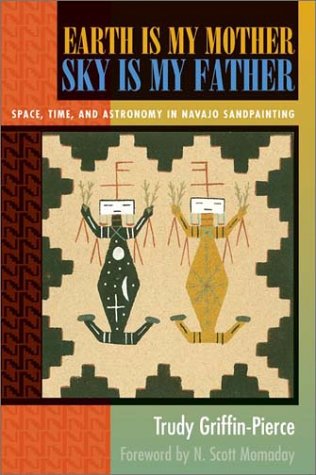
Earth Is My Mother, Sky Is My Father: Space, Time, and Astronomy in Navajo Sandpainting
1995 · PDF
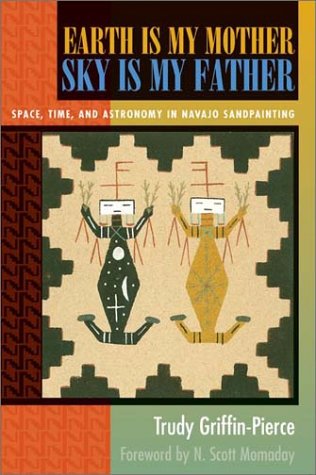
Earth Is My Mother, Sky Is My Father: Space, Time, and Astronomy in Navajo Sandpainting
1995 · CHM

MySQL® Notes for Professionals book
2018 · PDF

MrExcel 2022: Boosting Excel
2022 · PDF

MrExcel 2022: Boosting Excel
2022 · PDF

Session C11: Ancient Cultural Landscapes in South Europe – their Ecological Setting and Evolution, Session C22: Gardeners from South America, Session S04: Agro-Pastoralism and Early Metallurgy Sessions, Session WS29: The Idea of Enclosure in Recent Iberian Prehistory, Session C88: Rhytmes et causalites des dynamiques de l'anthropisation en Europe entre 6500 ET 500 BC: Hypotheses socio-culturelles et/ou climatiques: Proceedings of the XV UISPP World Congress (Lisbon 4-9 September 2006) / Actes du XV Congrès Mondial (Lisbonne 4-9 Septembre 2006) Vol.36
2010 · PDF