The Marlborough Mound: Prehistoric Mound, Medieval Castle, Georgian Garden
Book information
Description
Marlborough Mound, standing among the buildings of Marlborough College, has attracted little attention until recently. Records showed it to be the motte of a Norman castle, of which there were no visible remains. The local historians and archaeologists who had investigated it had found very little in the way of archaeological evidence beyond a few prehistoric antler picks, the odd Roman coin, and a scatter of medieval pottery. It was to be archaeology which provided the most dramatic discovery after the Mound Trust began to restore the mound in 2003. English Heritage were investigating Silbury Hill, and arranged to take cores from the Mound for dating purposes. The results were remarkable, as they showed that the Mound was almost a twin of Silbury Hill and therefore belonged to the extraordinary assembly of prehistoric monuments centred on Stonehenge. For the medieval period, this book brings together for the first time all that we know about the castle from the royal records and from chronicles. These show that it was for a time one of the major royal castles in the land. Most of the English kings from William I to Edward III spent time here. For Henry III and his queen Eleanor of Provence, it was their favourite castle after Windsor. It marks the end of the first stage of the work of the Mound Trust, which, following the restoration, turns to its second objective of promoting public knowledge of the Mound based on scholarly research. As to its final form as a garden mound next to the house of the dukes of Somerset, in the eighteenth century, this emerges from letters and even poems, and from the recent restoration. Much of this has been slow and painstaking work, however, involving the removal of the trees which endangered the structure of the Mound, the recutting of the spiral path and the careful replanting of the whole area with suitable vegetation. By doing this, the shape of the Mound as a garden feature has re-emerged, and can now be seen clearly. This book marks the end of the first stage of the work of the Mound Trust, which, following the restoration, turns to its second objective of promoting public knowledge of the Mound based on scholarly research. Front Cover Contents List of Figures Acknowledgements Preface 1 ‘One remarkable earthen-work’: The Neolithic Origins of the Marlborough Mound Afterword: The Round Mounds Project 2 Castles and the Landscape of Norman Wessex, c. 1066-1154 3 Marlborough Castle in the Middle Ages 4 The Mound as a Garden Feature 5 Epilogue: The Marlborough Mound Trust Appendix A Inquisition into the State of Marlborough Castle, 11 September 1327 Appendix B Castellum Merlebergensis By H. C. Brentnall, F.S.A. Appendix C Constables of Marlborough Castle Appendix D Marlborough Castle: Archaeological Findings for the Medieval Period Excavations of the bailey wall Bibliography Notes Contributors Index
Similar books

Henry II (Penguin Monarchs)
2015 · EPUB

King Arthur in legend and history
1973 · PDF

The Holy Grail: The History of a Legend
2005 · EPUB

King Arthur: Hero and Legend
1986 · PDF
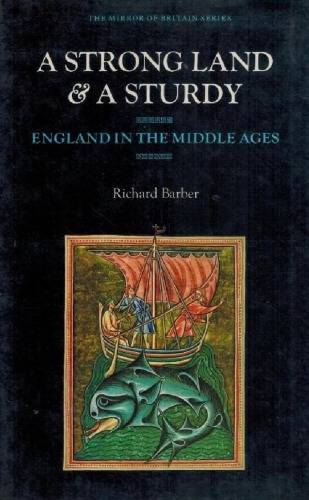
A Strong Land & a Sturdy: England in the Middle Ages
1976 · PDF

Tournaments: Jousts, Chivalry, and Pageants in the Middle Ages
1989 · PDF

The Holy Grail: Imagination and Belief
2004 · PDF

The Reign of Chivalry
1980 · PDF