Anoxia: Evidence for Eukaryote Survival and Paleontological Strategies
Book information
Description
ANOXIA defines the lack of free molecular oxygen in an environment. In the presence of organic matter, anaerobic prokaryotes produce compounds such as free radicals, hydrogen sulfide, or methane that are typically toxic to aerobes. The concomitance of suppressed respiration and presence of toxic substances suggests these habitats are inhospitable to Eukaryota. Ecologists sometimes term such environments 'Death Zones'. This book presents, however, a collection of remarkable adaptations to anoxia, observed in Eukaryotes such as protists, animals, plants and fungi. Case studies provide evidence for controlled beneficial use of anoxia by, for example, modification of free radicals, use of alternative electron donors for anaerobic metabolic pathways, and employment of anaerobic symbionts. The complex, interwoven existence of oxic and anoxic conditions in space and time is also highlighted as is the idea that eukaryotic inhabitation of anoxic habitats was established early in Earth history.
Similar books
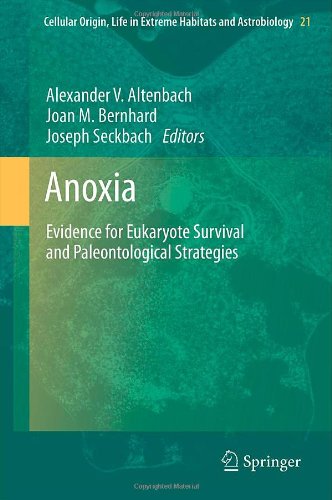
Anoxia: Evidence for Eukaryote Survival and Paleontological Strategies
2012 · PDF

The Algae World
2015 · PDF

Enigmatic Microorganisms and Life in Extreme Environments
1999 · PDF

Life on Earth and other Planetary Bodies
2012 · PDF

Habitability of Other Planets and Satellites
2013 · PDF
Genesis - In The Beginning: Precursors of Life, Chemical Models and Early Biological Evolution
2012 · PDF

All Flesh Is Grass: Plant-Animal Interrelationships
2011 · PDF

Life as We Know It
2006 · PDF