Working with Rock Art: Recording, Presenting and Understanding Rock Art Using Indigenous Knowledge
Book information
Description
This volume contains contributions that consider new approaches to three areas: the documentation of rock art; its interpretation using indigenous knowledge; and the presentation of rock art. 'Working with Rock Art' is the first edited volume to consider each of these areas in a theoretical rather than a technical fashion, and it therefore makes a significant contribution to the discipline. The volume aims to promote the sharing of new experiences between leading researchers in the field. While the geographic focus is truly global, there is a dominant north-south axis with strong representation from researchers in southern Africa and northern Europe, two leading centres for new approaches in rock art research. Working with Rock Art opens up a long overdue dialogue about shared experiences between these two centres, and a number of the chapters are the first published results of new collaborative research. Since this volume covers the recording, interpretation and presentation of rock art, it will attract a wide audience of researchers, heritage managers and students, as well as anyone interested in the field of rock art studies. ON DOCUMENTING ROCK ART Rock art management: juggling with paradoxes and compromises, and how to live with them / Anne-Sophie Hygen Expressing intangibles: A recording experience with /Xam Rock Engravings / Janette Deacon Aspects of documentation for conservation purposes exemplified by rock art / Terje Norsted The spatial context of rock art sites: what might GIS have to offer in the absence of a temporal resolution of rock paintings? / Thembi Russell Rock art in context – theoretical aspects of pragmatic data collections / Tilman Lenssen-Erz Representing southern African San rock art: a move towards digitisation / D. Winnie Mokokwe The routine of documentation / Knut Helskog Prehistoric explorations in rock – investigations beneath and beyond carved surfaces / Trond Lødøen ON UNDERSTANDING ROCK ART USING INDIGENOUS KNOWLEDGE Politics, ethnography and prehistory: in search of an 'informed' approach to Finnish and Karelian rock art / Antti Lahelma Ethnography, history, rock art: the significance of social change in interpreting rock art / David Pearce Symbols on stone – in the footsteps of the bear in Finnish antiquity / Juha Pentikäinen Animals and humans: metaphors of representation in south-central African rock art / Leslie Zubieta Ways of knowing and ways of seeing: spiritual agents and the origins of Native American rock art / David Whitley Shamanism, rock art and history: implications from a Central Asian case study / Andrzej Rozwadowski ON PRESENTING ROCK ART Presenting rock art through digital film / Paul Taçon Rock art at present in the past / Lindsay Weiss The importance of Wildebeest Kuil: 'a hill with a future, a hill with a past' / David Morris Theoretical approaches and practical training for rock art tourist guiding and management / Janette Deacon and Neville Agnew Two related rock art conservation/education projects in Lesotho / Pieter Jolly Scandinavian rock art in the past – the present – and the future / Gitte Kjeldsen The presentation of rock art in South Africa: what are the new challenges? / Ndukuyakhe Ndlovu Yellowstone, Kruger, Kakadu: nature, culture and rock-art in three celebrated national parks / Catherine Namono and Christopher Chippindale
Similar books
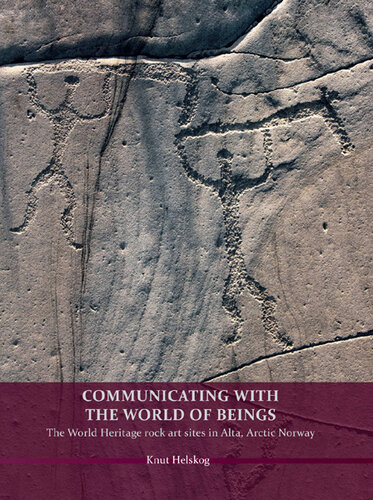
Communicating With the World of Beings: The World Heritage Rock Art Sites in Alta, Arctic Norway
2014 · EPUB

Merleau-Ponty’s Developmental Ontology
2018 · PDF

Passionate marriage: love, sex, and intimacy in emotionally committed relationships
EPUB

DURATION THRESHOLDS IN THE PERCEPTION OF UNPLEASANT WORDS
Student Voice and Teacher Professional Development: Knowledge Exchange and Transformational Learning
2019 · PDF

Neighborhood Power - The New Localism

Time, Memory, Institution: Merleau-Ponty’s New Ontology of Self
2015 · PDF

Intimacy & desire : awaken the passion in your relationship
2009 · MOBI