Romantic Empiricism: Nature, Art, and Ecology from Herder to Humboldt
Book information
Description
In Romantic Empiricism, Dalia Nassar distinguishes and explores an understudied philosophical tradition that emerged in Germany in the late eighteenth and early nineteenth centuries, traces its development, and argues for its continued significance. Moving from the late Kant's notion of reflecting judgment, to Herder's articulation of the idea of "animal worlds," Goethe's explication of the obligations of the scientist, and Alexander von Humboldt's aesthetic science, Nassar demonstrates how these thinkers developed a sophisticated empirical approach to the natural world, which focuses on the phenomenon while also recognizing the creative role of the knowing subject and the cognitive value of art and aesthetic experience. She explores how these four thinkers worked together-sometimes as rivals, but more often than not as teachers and collaborators-and illustrates how their search for a new methodology culminated in a new, ecological understanding of the world and the human place within it. Revisiting their thought, especially their distinctive approach to the study of nature, Nassar demonstrates, has the potential to redirect contemporary environmental debates and respond to urgent ecological questions in new and productive ways. Dedication Epigraph Contents Acknowledgments Abbreviations Note on Referencing Introduction: Finding Romantic Empiricism 1. Setting the Stage: Kant and the Critique of the Power of Judgment 2. The Hermeneutics of Nature: Herder on Animal and Human Worlds 3. The Science of Describing: Herder, Goethe, and the Hauptform 4. Aesthetic Education and the Transformation of the Scientist 5. Intuitive Judgment and Goethe’s Ethics of Knowledge 6. Organism and Environment: The Aesthetic Foundations of Humboldt’s Ecological Insight 7. Embodied Cognition: Humboldt and the Art of Science Conclusion: The Relevance of Romantic Empiricism Notes Works Cited Index
Similar books

The Romantic Absolute: Being and Knowing in Early German Romantic Philosophy, 1795-1804
2013 · PDF
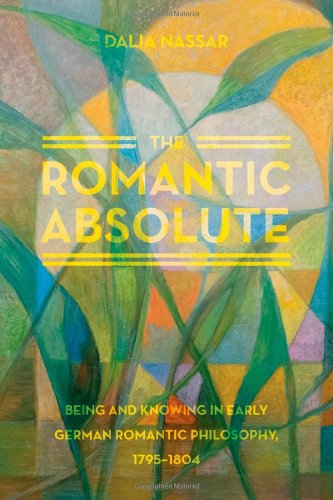
The Romantic Absolute: Being and Knowing in Early German Romantic Philosophy, 1795–1804
2013 · PDF

The Relevance of Romanticism: Essays on German Romantic Philosophy
2014 · PDF

MySQL® Notes for Professionals book
2018 · PDF

MrExcel 2022: Boosting Excel
2022 · PDF

MrExcel 2022: Boosting Excel
2022 · PDF

Session C11: Ancient Cultural Landscapes in South Europe – their Ecological Setting and Evolution, Session C22: Gardeners from South America, Session S04: Agro-Pastoralism and Early Metallurgy Sessions, Session WS29: The Idea of Enclosure in Recent Iberian Prehistory, Session C88: Rhytmes et causalites des dynamiques de l'anthropisation en Europe entre 6500 ET 500 BC: Hypotheses socio-culturelles et/ou climatiques: Proceedings of the XV UISPP World Congress (Lisbon 4-9 September 2006) / Actes du XV Congrès Mondial (Lisbonne 4-9 Septembre 2006) Vol.36
2010 · PDF

THE BRITISH ARMY IN INDIA: ITS PRESERVATION BY AN APPROPRIATE CLOTHING, HOUSING, LOCATING, RECREATIVE EMPLOYMENT, AND HOPEFUL ENCOURAGEMENT OF THE TROOPS. with AN APPENDIX ON INDIA : THE CLIMATE OP ITS HILLS ; THE DEVELOPMENT OF ITS RESODRCBS, INDUSTRY, AND ARTS ; THE ADMINISTRATION OF JUSTICE ; THE BLACK ACT ; THE PROGRESS OF CHRISTIANITY ; THE TRAFFIC IN OPIUM ; THE VALUE OF INDIA ; PERMANENT CAUSES OF DISAFFECTION, AND OF THE RECENT REBELLION ; THE TRADITIONARY POLICY; MISGOVERNMENT BY NATIVE RULERS ; ANNEXATIONS OF THEIR TERRITORY, ETC.
1858 · PDF