Mastering the Niger: James MacQueen's African Geography and the Struggle over Atlantic Slavery
Book information
Description
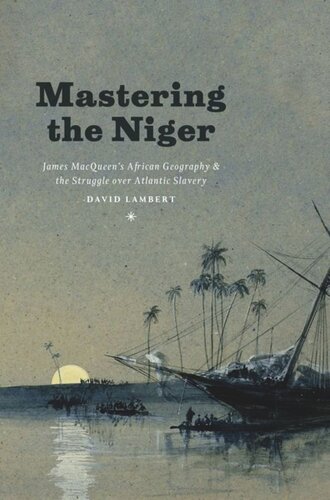
In Mastering the Niger, David Lambert recalls Scotsman James MacQueen (1778–1870) and his publication of A New Map of Africa in 1841 to show that Atlantic slavery—as a practice of subjugation, a source of wealth, and a focus of political struggle—was entangled with the production, circulation, and reception of geographical knowledge. The British empire banned the slave trade in 1807 and abolished slavery itself in 1833, creating a need for a new British imperial economy. Without ever setting foot on the continent, MacQueen took on the task of solving the “Niger problem,” that is, to successfully map the course of the river and its tributaries, and thus breathe life into his scheme for the exploration, colonization, and commercial exploitation of West Africa. Lambert illustrates how MacQueen’s geographical research began, four decades before the publication of the New Map, when he was managing a sugar estate on the West Indian colony of Grenada. There MacQueen encountered slaves with firsthand knowledge of West Africa, whose accounts would form the basis of his geographical claims. Lambert examines the inspirations and foundations for MacQueen’s geographical theory as well as its reception, arguing that Atlantic slavery and ideas for alternatives to it helped produce geographical knowledge, while geographical discourse informed the struggle over slavery. Contents List of Figures 1. Mastering the Niger Part One: Sources 2. “Mr. Park’s Book” and the Niger Problem 3. Keeping Account of Atlantic Commerce 4. Captive Knowledge Part Two: Courses 5. Credibility and Truth Making in the Atlantic World 6. Surveying Sierra Leone 7. Thomas Fowell Buxton and the Niger Expedition Part Three: Termination 8. Beyond the Niger Acknowledgments List of Abbreviations Notes Bibliography Index
Similar books
Mastering the Niger: James MacQueen's African Geography and the Struggle over Atlantic Slavery
2013 · PDF

DK Eyewitness Books: Dinosaur: Enter the Incredible World of the Dinosaurs from How They Lived to their Disappearance from Earth
2014 · PDF

Dinoszauruszok
2014 · PDF

Body Language 101: The Ultimate Guide to Knowing When People Are Lying, How They Are Feeling, What They Are Thinking, and More
2008 · MOBI

Smarter Selling: How to grow sales by building trusted relationships
2011 · PDF

The Ultimate Dinosaur Book
1993 · PDF

Geography in Education: Lost in the Post?
2009 · PDF

Dinosaur
2010 · PDF