Cosmopolitanism in Mexican visual culture
Book information
Description
Since the colonial era, Mexican art has emerged from an ongoing process of negotiation between the local and the global, which frequently involves invention, synthesis, and transformation of diverse discursive and artistic traditions. In this pathfinding book, María Fernández uses the concept of cosmopolitanism to explore this important aspect of Mexican art, in which visual culture and power relations unite the local and the global, the national and the international, the universal and the particular. She argues that in Mexico, as in other colonized regions, colonization constructed power dynamics and forms of violence that persisted in the independent nation-state. Accordingly, Fernández presents not only the visual qualities of objects, but also the discourses, ideas, desires, and practices that are fundamental to the very existence of visual objects. Fernández organizes episodes in the history of Mexican art and architecture, ranging from the seventeenth century to the end of the twentieth century, around the consistent but unacknowledged historical theme of cosmopolitanism, allowing readers to discern relationships among various historical periods and works that are new and yet simultaneously dependent on their predecessors. She uses case studies of art and architecture produced in response to government commissions to demonstrate that established visual forms and meanings in Mexican art reflect and inform desires, expectations, memories, and ways of being in the world—in short, that visual culture and cosmopolitanism are fundamental to processes of subjectification and identity.
Similar books

Українські ікони «Спас у Славі»
2005 · PDF

Writings on Art
2006 · PDF

Uffizi. Art, history, collections
2020 · PDF
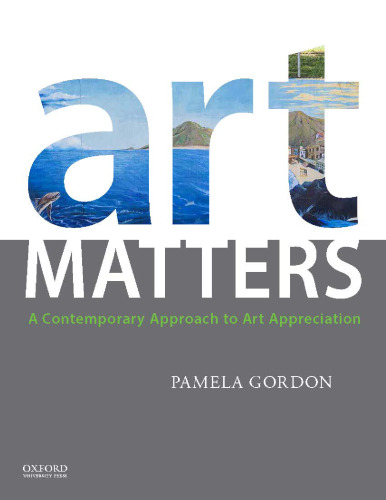
Art Matters : A Contemporary Approach to Art Appreciation
2023 · PDF

Bohnen, Anarchie & Freiheit: Ein künstlerischer Pflanzenversuch
2014 · PDF

Nataraja, the divine dancer
2018 · PDF

Photographs 2011-2016: Collected Photographic Works
2016 · PDF

Pirandello in Context
2024 · PDF