Herding chickens: innovative techniques for project management
Book information
Description
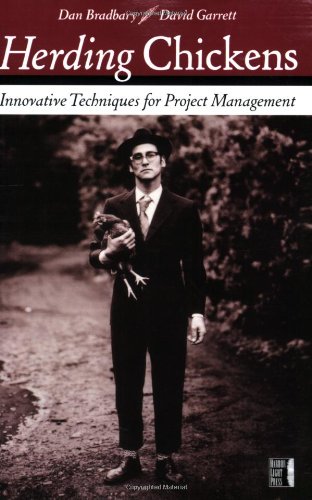
Today's office can seem more like a chicken coop, with everyone running around, squawking, clucking, and kicking up dust and feathers. Well, it's time to take control of the problem!Have you studied traditional project management, only to discover that it falls short? Are you done with silly theories of how things should function, and eager to apply streetwise tactics to real problems like egos, cliques, deadlines and squabbles?Welcome to the fine art of herding chickens-innovative, unique techniques for project management. Here, authors Dan Bradbary and David Garrett reveal novel ways to boost efficiency, eliminate chaos, and ultimately complete your project on time, within budget.In a novel, engaging style, you'll how to herd your project tam (no matter how dysfunctional it is), how to look ahead to keep from falling behind, how to read, deal with, and charm all types of people, how to navigate the corporate jungle with finesse, to control all aspects of a meeting, to use bleeding-edge technology to help your project, and more.
Similar books
Herding Chickens: Innovative Techniques for Project Management
2005 · PDF

Herding Chickens: Innovative Techniques for Project Management
2005 · PDF

The Influence of Mysticism on 20th Century British and American Literature
2014 · PDF

Intranets Unleashed
1996 · ZIP

MySQL® Notes for Professionals book
2018 · PDF

MrExcel 2022: Boosting Excel
2022 · PDF

MrExcel 2022: Boosting Excel
2022 · PDF

Session C11: Ancient Cultural Landscapes in South Europe – their Ecological Setting and Evolution, Session C22: Gardeners from South America, Session S04: Agro-Pastoralism and Early Metallurgy Sessions, Session WS29: The Idea of Enclosure in Recent Iberian Prehistory, Session C88: Rhytmes et causalites des dynamiques de l'anthropisation en Europe entre 6500 ET 500 BC: Hypotheses socio-culturelles et/ou climatiques: Proceedings of the XV UISPP World Congress (Lisbon 4-9 September 2006) / Actes du XV Congrès Mondial (Lisbonne 4-9 Septembre 2006) Vol.36
2010 · PDF