Political Theory After Deleuze
Book information
Description
Recent political theory has shifted decidedly towards ontology, the 'science of being', and thus towards examining fundamental concepts of identity, difference, space, and time. This new focus has reinvigorated questions concerning the nature of power, meaning, truth and agency, inspiring novel approaches to individual and collective subjectivity, the emergence of political events and the relationship between desire and politics. In this new study, Nathan Widder shows how Deleuze's philosophy both inspires and presses beyond political theory's 'ontological turn'. Linking his thought to current political theory debates, Widder explains how Deleuze's philosophy and ontology of difference are cashed out through a micropolitics of creative and critical experimentation. He further demonstrates how Deleuze challenges ideas of identity and the subject that still dominate both political thought and practice today. Connecting Deleuze to key figures in both classical and contemporary political philosophy, from Plato and Aristotle to Hegel, Nietzsche, Lacan, and Foucault, this book will be of interest to students and scholars in political theory, philosophy, and related disciplines, looking to engage the emerging field of Deleuze studies.
Similar books

Germinal Life: The Difference and Repetition of Deleuze
1999 · PDF
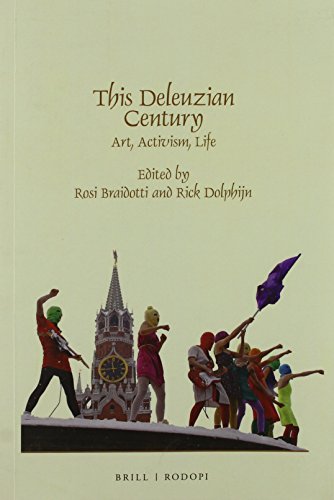
This Deleuzian Century: Art, Activism, Life
2014 · PDF

This Deleuzian Century: Art, Activism, Life
2015 · PDF

Political Theory after Deleuze
2013 · PDF

Organs without bodies: on Deleuze and consequences
2015 · PDF

Gilles Deleuze: An Introduction
2008 · PDF

Deleuze and Philosophy: The Difference Engineer
2011 · EPUB

La casa y el cosmos : el ritornelo y la música en el pensamiento de Deleuze y Guattari
2014 · PDF