States of Credit: Size, Power, and the Development of European Polities
Book information
Description
States of Creditprovides the first comprehensive look at the joint development of representative assemblies and public borrowing in Europe during the medieval and early modern eras. In this pioneering book, David Stasavage argues that unique advances in political representation allowed certain European states to gain early and advantageous access to credit, but the emergence of an active form of political representation itself depended on two underlying factors: compact geography and a strong mercantile presence. Stasavage shows that active representative assemblies were more likely to be sustained in geographically small polities. These assemblies, dominated by mercantile groups that lent to governments, were in turn more likely to preserve access to credit. Given these conditions, smaller European city-states, such as Genoa and Cologne, had an advantage over larger territorial states, including France and Castile, because mercantile elites structured political institutions in order to effectively monitor public credit. While creditor oversight of public funds became an asset for city-states in need of finance, Stasavage suggests that the long-run implications were more ambiguous. City-states with the best access to credit often had the most closed and oligarchic systems of representation, hindering their ability to accept new economic innovations. This eventually transformed certain city-states from economic dynamos into rentier republics. Exploring the links between representation and debt in medieval and early modern Europe,States of Creditcontributes to broad debates about state formation and Europe's economic rise.
Similar books

The Decline and Rise of Democracy
2020 · EPUB

The Decline and Rise of Democracy: A Global History from Antiquity to Today
2020 · PDF
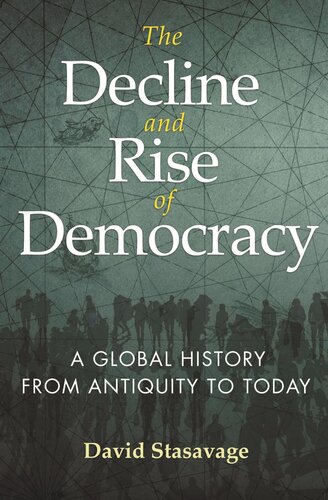
The Decline and Rise of Democracy: A Global History from Antiquity to Today
2020 · PDF

States of Credit: Size, Power, and the Development of European Polities
2011 · PDF

The Decline And Rise Of Democracy: A Global History From Antiquity To Today
2020 · PDF

The Decline and Rise of Democracy ; A Global History from Antiquity to Today
2020 · AZW3

公债与民主国家的诞生 法国与英国,1688-1789
2007 · PDF

Taxing the Rich: A History of Fiscal Fairness in the United States and Europe
2016 · PDF