The Impact of World War One on Limerick
Book information
Description
This book examines the impact of World War One on the people of Limerick. It traces how recruitment, which was weak at the commencement of the war, increased locally after the leader of the Irish Parliamentary Party, John Redmond, issued his call for Irish nationalists and others to enlist, and, as the war progressed, how Sinn Féin separatists impinged on recruiting efforts. It also shows that the British War Office were unwitting contributors to the separatists’ cause by their ill-conceived actions that only assisted them in their political cause and anti-recruiting campaign. The book also tracks how the separatists gained considerably in both military and political strength locally through the inept policies that changed public support for the war effort, thereby paving the way for the Sinn Féin victory in the General Election of December 1918; thus giving credence to the author and poet Robert Graves’ description that Limerick had become a Sinn Féin-ridden town. Further to this, it demonstrates that, despite the best efforts of local capitalists to procure war work contracted out by the British War Office, only very little was achieved; the War Office ensuring that the vast array of such work was to remain in Britain. Some local capitalists did, of course, gain as a result of the war; these were notably those such as merchants and farmers who were in a position to provide Britain and her army with all the foodstuffs that she required. Those on low incomes, namely the working class who also provided the majority of recruits for the armed forces, were to suffer through the ever-increasing price rises. This book, therefore, reveals a complex scene where social and political alignments reflect much of what was happening nationally, but also had uniquely local characteristics.
Similar books

de AS 158: Nederlandse Anarchisten in de tweede Wereldoorlog
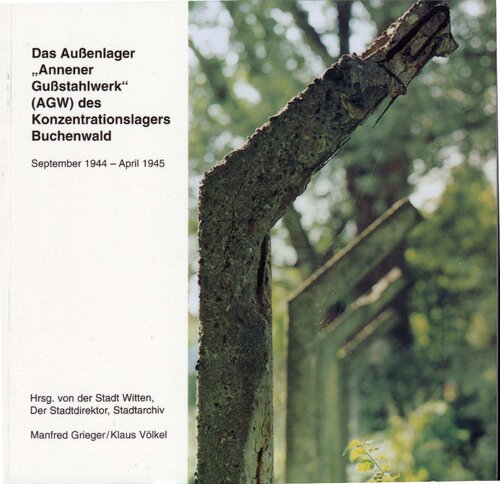
Das Außenlager "Annener Gußstahlwerk" (AGW) des Konzentrationslagers Buchenwald September 1944 - April 1945
1997 · PDF

The Frontier of Patriotism: Alberta and the First World War
2016 · EPUB

Italian Prisoners of War in Pennsylvania: Allies on the Home Front, 1944-1945
2016 · EPUB

Ancestor's Footsteps: The Somme 1916
2016 · EPUB

The Home Front: Derbyshire in the First World War
2016 · EPUB

Japanese Americans: From Relocation to Redress
1992 · PDF

Victoria Crosses on the Western Front, 31st July 1917-6th November 1917, Second Edition: Third Ypres 1917
2017 · EPUB