Concealing Coloration in Animals
Book information
Description
The biological functions of coloration in animals are sometimes surprising. Color can attract mates, intimidate enemies, and distract predators. But color patterns can also conceal animals from detection. Concealing coloration is unusual because it is an adaptation not only to the visual features of the environment but also to the perceptual and cognitive capabilities of other organisms. Judy Diamond and Alan Bond bring to light the many factors at work in the evolution of concealing coloration. Animals that resemble twigs, tree bark, stones, and seaweed may appear to be perfect imitations, but no concealment strategy is without flaws. Amid the clutter of the natural world, predators search for minute, telltale clues that will reveal the identity of their prey. Predators have remarkable abilities to learn to discriminate the fake from the real. But prey have their own range of defensive tactics, evolving multiple appearances or the ability to change color at will. Drawing on modern experimental evidence of the functional significance of animal color strategies, Diamond and Bond offer striking illustrations of how the evolution of features in one organism can be driven by the psychology of others. Concealing Coloration in Animals takes readers on a scientific adventure that explores creatures inside mats of floating seaweed, mice and lizards on desert rocks and sand, and rare parrots in the rainforest of New Zealand. Color photographs extensively document the mind-boggling array of deceptive strategies animals use to blend in, mislead, or vanish from view.
Similar books

Thinking like a Parrot: Perspectives from the Wild
2019 · PDF
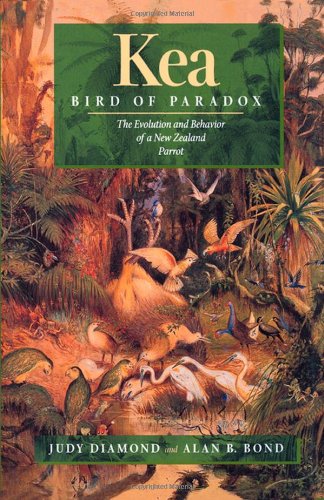
Kea, Bird of Paradox: The Evolution and Behavior of a New Zealand Parrot
1999 · PDF

Concealing Coloration in Animals
2013 · PDF

Parasites: The Inside Story
2022 · PDF

MySQL® Notes for Professionals book
2018 · PDF

MrExcel 2022: Boosting Excel
2022 · PDF

MrExcel 2022: Boosting Excel
2022 · PDF

Session C11: Ancient Cultural Landscapes in South Europe – their Ecological Setting and Evolution, Session C22: Gardeners from South America, Session S04: Agro-Pastoralism and Early Metallurgy Sessions, Session WS29: The Idea of Enclosure in Recent Iberian Prehistory, Session C88: Rhytmes et causalites des dynamiques de l'anthropisation en Europe entre 6500 ET 500 BC: Hypotheses socio-culturelles et/ou climatiques: Proceedings of the XV UISPP World Congress (Lisbon 4-9 September 2006) / Actes du XV Congrès Mondial (Lisbonne 4-9 Septembre 2006) Vol.36
2010 · PDF