Art and Palace Politics in Early Modern Japan, 1580s-1680s (Japanese Visual Culture)
Book information
Description
During the first century of Japans early modern era (1580s to 1680s), art and architecture created for the imperial court served as markers of social prestige, testifying to the enduring centrality of the palace to the cultural life of Kyoto. Emperors Go-Yzei and Go-Mizunoo relied on financial support from ruling warlordsToyotomi Hideyoshi and the Tokugawa shogunsjust as the warlords sought imperial sanction granting them legitimacy to rule. Taking advantage of this complex but oftentimes strained synergy, Go-Yzei and Go-Mizunoo (and to an unprecedented exent his empress, Tfukumonin) enhanced the heriditary prerogatives of the imperial family. Among the works described in this volume are masterpieces commissioned for the residences and temples of the imperial family, which were painted by artists of the Kano, Tosa and Sumiyoshi ateliers, not to mention Tawaraya Statsu. Anonymous but deluxe painting commissions depicting grand imperial processions are examined in detail. The courts fascination with calligraphy and tea, arts that flourished in this age, is also discussed in this profusely illustrated volume. Title Page Copyright Page Dedication Page Contents Preface Acknowledgments Notes to the Reader Introduction: State of the Field The Emperor-Warlord Cultural Dynamic Art and the Emperor-Warlord Dynamic Resources for the Study of Gendered Aristocratic Roles 1 Hideyoshi Restores Glory to the Palace Characteristics of Emperor-Warlord Relations Imperial Excursion to Jurakutei Watching a Nō Performance Rebuilding Go-Yōzei’s Palace Kano Paintings for Royal Chambers Thirty-two Chinese Sages Twenty-four Paragons of Filial Piety Cypress Tale of Genji Hideyoshi Posthumously Deified 2 Go-Yōzei’s Imperial Imperative as Cultural Arbiter Printed Books and Notions of Imperial Authority The Emperor and Poetic Traditions Calligraphy from the Imperial Hand The Emperor as Amateur Painter Kano Takanobu as Court Painter Palace Relations with Military Authorities Go-Yōzei Relinquishes the Throne 3 Tokugawa Shoguns and Patronage for the Throne The Tokugawa Assertion of Political Dominance A New Palace for Go-Mizunoo Takanobu’s Paintings for the Keichō Palace Peonies and Tang Figures from the Keichō Palace The Emperor’s Role in the Deification of Ieyasu 4 Go-Mizunoo’s Ritual and Cultural Agenda The Court’s Observance of Annual Rites and Ceremonies Copying the Scrolls of Annual Rites and Ceremonies Revival of an Esoteric Buddhist New Year’s Rite Religious Prerogatives of a Divine Monarch The Emperor as Patron of Literature Go-Mizunoo’s Skills as a Calligrapher The Palace as Bastion of Aristocratic Culture 5 Art and Architecture for Empress Tōfukumon’in The Royal Wedding for a Warlord’s Daughter Wedding Procession A Palace Built for an Empress Kano Paintings for an Empress’s Palace Panels from the Daikakuji Shinden Panels from the Enman’in Shinden Panels from the Shōren’in Shinden Additional Panels from the Empress’s Palace Roles of Noblewomen in the Early Edo-Period Court Tōfukumon’in, Art, and Religion 6 Paintings of the Imperial Excursion to Nijō Castle Precedents and Preparations for an Imperial Visit Paintings Commissioned for Nijō Castle Nijō Imperial Excursion Other Visual Records of the Emperor’s Excursion to Nijō 7 Emperor and Empress as Patrons of Kyoto Culture The Royal Couple’s Sponsorship of Kano Painters Royal Screen Paintings by Tosa Mitsuoki Beginnings of the Sumiyoshi Atelier The Townsman Painter Sōtatsu’s Entrée to the Court Scroll of an Imaginary Poetry Contest of Artisans The Art of Floral Arrangement Tea Gatherings and Aesthetic Priorities Palace Interaction with Kyoto Townspeople 8 Visual Documents of the Emperor-Warlord Relationship Go-Mizunoo’s Abrupt Abdication Empress Meishō’s Accession to the Throne Relations between the Dairi and Bakufu Leaders The Shogunate’s Korean Connection Go-Mizunoo’s Progeny and the Imperial Lineage The Imperial Retreat at Shugakuin 9 Closing Comments Endnotes Appendix 1: Emperors and Reigning Empresses Appendix 2: Members of the Imperial Family Appendix 3: Imperial Palace Documents, Buildings, and Panel Paintings Appendix 4: List of Chinese Characters Bibliography Illustrations and Photo Credits Index
Similar books
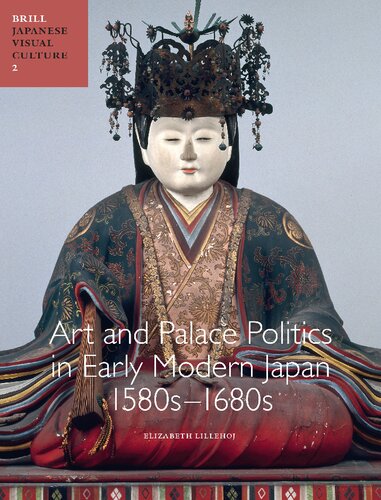
Art and Palace Politics in Early Modern Japan, 1580s-1680s (Japanese Visual Culture)
2011 · PDF

Art and Sovereignty in Global Politics
2017 · PDF

Art and Palace Politics in Early Modern Japan, 1580s–1680s
2011 · PDF

Art and Palace Politics in Early Modern Japan, 1580s-1680s
2011 · PDF

MySQL® Notes for Professionals book
2018 · PDF

MrExcel 2022: Boosting Excel
2022 · PDF

MrExcel 2022: Boosting Excel
2022 · PDF

Session C11: Ancient Cultural Landscapes in South Europe – their Ecological Setting and Evolution, Session C22: Gardeners from South America, Session S04: Agro-Pastoralism and Early Metallurgy Sessions, Session WS29: The Idea of Enclosure in Recent Iberian Prehistory, Session C88: Rhytmes et causalites des dynamiques de l'anthropisation en Europe entre 6500 ET 500 BC: Hypotheses socio-culturelles et/ou climatiques: Proceedings of the XV UISPP World Congress (Lisbon 4-9 September 2006) / Actes du XV Congrès Mondial (Lisbonne 4-9 Septembre 2006) Vol.36
2010 · PDF