Kashmir Saivism – The Central Philosophy of Tantrism
Book information
Description
A brilliant exposition of Tantric tradition. Mishra profoundly explains a system which allows us to fully integrate spiritual inquiry and practice with the mundane goal of physical enjoyment (and) worldly involvement. For spiritual seekers of any sort, with a true interest in understanding the nature of Tantra. This book will finally provide true insight into the ways and means of Tantric philosophy. The present work is an exposition of the philosophy and religionofthe Trika system, popularly known as Kashmir Saivism. Kashmir Saivism is the most prominent system of the Tantric traditional on. The author considers Kashmir Śaivism the true or central philosophy of Tantrism. In this book, he attempts to present alogical analysis of the Tantric position of Abhinavagupta. He has also shown, according to his understanding, what remains unresolved and unanswered in his philosophy, but he admits that in the present work he is mainly playing the role of advocate of Abhinavagupta rather than critic. He is trying (a) to justify the Tantric position from the rational point of view, (b) to work out aconsistent philosophy of Kashmir Saivism, (c) to present the rationale of the abstruse Tantric tradition, (d) to trace out and clarify the inner thread of logic running through the entire system of thought, and (e) to demonstrate the soundness and significance of Kashmir Śaivism. Preface xi Acknowledgments xv Abbrevations xix 1. Introduction 3 General Significance of the Tantric Tradition 3 History of the Tantric Tradition 13 Amalgamation of the Cultures of Renunciation (nivrtti) and Worldly Involvement (pravrtti) 16 The Tantric Denominations 19 The Common Features 22 Significance of the Left-Handed Doctrine (Kaula-marga) 24 Breaking False Barriers 27 Aberrations in Tantra 29 Kashmir Saivism as the Culmination of Tantric Philosophy 31 The Etymology of Tantra and Agama 35 The Textual History 36 The Special Significance of Abhinavagupta 44 2. The Tantric Epistemology 51 The Problem of Consciousness 51 Knowledge as the Nature of Consciousness 54 Knowledge as Activity 55 Knowledge is Self-illumined 57 Consciousness as ‘The’ Means of Knowledge 58 Consciousness Self-illumined 61 Agamic Knowledge 63 Is Agamic Knowledge Scientific? 68 Objections to Agama-pramana 73 The Limits of Knowledge 77 What is Higher Experience? 78 The Validity of Knowledge 84 The Trika Theory of Error 89 3. Absolute Consciousness (Siva-Sakti) 95 Part I – Siva 95 Siva as the First Person 95 Siva is Absolute 97 Siva is Indeterminate 105 Siva is the Subject-consciousness 115 Self-consciousness in Siva 118 Siva as the Absolute Person 122 Siva is Perfection 124 Part II – Sakti 127 The Nature of Sakti 127 Compatibility of Sakti (Kriya) with Siva (Jnana) 130 Siva-Sakti Relationship 135 Kinds of Sakti 137 The Two Levels of Sakti 142 Synonyms and Symbos of Sakti 143 Sakti as Vak (Speech) 147 4. The Process of Creation 149 The Theory of Causation 149 The Fivefold Cosmic Functions 153 General Questions Regarding Creation 155 Creation as Vak ("Speech") 158 The Pure Categories 165 Maya 168 The Five Sheaths 171 The Individual Soul (Purusa) 177 The Twenty-four Material Categories 179 Discussion of the Categorization 185 5. The Theory of Appearance (Abhasavada) 191 The Meaning of Abhasa 192 The Epistemology of Abhasavada 195 Abhasavada as an Ontological Theory 202 The Sense in Which Abhasa is Called Real 208 The Theory of Appearance (Abhasavada) as the Theory of Freedom (Svatantryavada) 214 The Theory of Illusion 218 6. The Problem of Evil 223 The Presence of Evil 224 The Problem 225 Free Will and Moral Evil 228 The Meaning of ‘God as the Real Doer' 233 Ignorance as the Necessary but not the Sufficient Cause of Evil 239 Suffering and the Law of Karma 242 The Place of Evil in Lilavada 249 7. The Concept of Pratyabhujna (Self-recognition) 253 Pratyabhujna is Central to Kashmir Saivism 253 The Meaning of Pratyabhijna 256 Intellectual Knowledge and Existential Knowledge 258 Why Pratyabhujna is Called Knowledge 261 The Mode and Content of Pratyabhujna 264 Pratyabhujna is the Dissolution of the Ego 270 Siva-Pasu Unity as the Metaphysical Ground of Pratyabhijna 272 Levels of Pratyabhujna 274 Pratyabhujna as the Ground of All the Updyas 275 The Relevance of Bhakti in Pratyabhujna 276 Pratyabhujna (Self-recognition) and Aparoksanubhui (Direct Experience) 278 8. Bondage and Liberation 281 The Meaning of Bondage 281 The Concept of Mala (Impurity) 283 The Meaning of Moksa 293 Special Features of the Mukti of Kashmir Saivism 297 Moksa as the Highest Value 303 Stage of the Spiritual Evolution of the Soul 319 9. The Means of Moksa 329 Effort and Grace 330 The Unity of the Means and the End 334 Anupaya 339 Sambhavopaya 340 Saktopaya 342 Anavopaya 344 General Evaluation of the Updyas 347 The Place of Negation of Tantric Sadhana 351 The Relaxed Way of Life 354 10. The Left-handed Doctrine (Kaula Sadhana) and Sexual Sublimation 363 The Rationale behind the Kaula Sadhana 363 The Necessity of Sexual Sublimation 368 The Attitude of Holiness 369 Cultivating Love towards the Sex-Partner 372 Kaula Sadhana as the Means of Self-realization 376 Stage of Kaula Sadhana 377 The Kaula Sadhana: An Appraisal 379 11. Conclusion 383 Notes 497 Selected Bibliography 441 Index 465
Similar books

अभिनवगुप्त का तंत्रागमीय दर्शन (Abhinavagupta ka tantragamiya darshan)
2009 · PDF
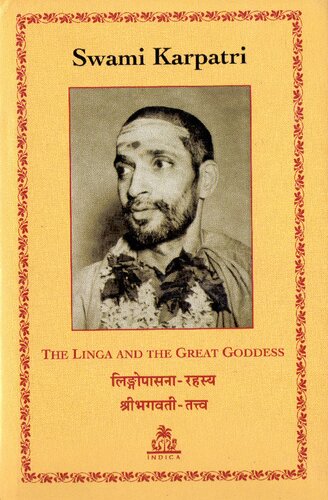
The Linga and the Great Goddess (Lingopsana Rahasya and Shri Bhagavati Tattva)
2009 · PDF

Guhyasamāja Tantra or Tathāgataguhyaka
1967 · PDF

Salt Bir Felsefi Soruşturma: Anlamayı Anlamak
2025 · PDF

Lenin's Fight Against Revisionism and Opportunism
1965 · PDF

The Wisdom of Principles
2025 · PDF

Introducción a la filosofía
1961 · PDF

La filosofía de bitcoin
2022 · PDF