The Making of Technique in the Arts: Theories and Practice from the Sixteenth to the Twentieth Century
Book information
Description
What is technique in the arts? Now widely used to refer to the practical aspects of art making, 'technique' was a neologism in the vernacular, and started to appear in treatises on arts and sciences from around 1750. Rooted in the Greek techne, which was translated routinely as 'art' until the mid-eighteenth century, technique referred to processes of making or doing and their products. Described previously as 'art', 'methods', 'manners' or 'mechanics', techniques were recorded in text with the intention of documenting or transmitting practical skills and knowledge. This book bridges the gap between the changing concept of technique and the practices currently described by it. It explores the linguistic, philosophical, and pedagogic history of technique in the arts, answering the question why the term 'technique' first emerged around 1750, and exploring how its meaning to artists, art theorists, and natural philosophers changed until the twentieth century.
Similar books
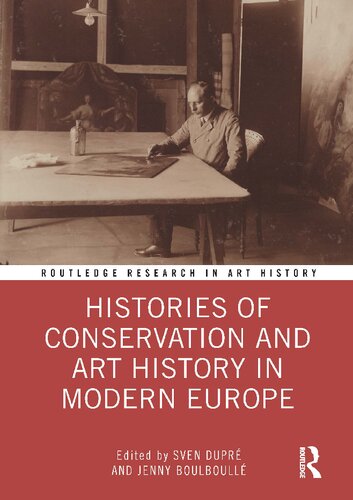
Histories of Conservation and Art History in Modern Europe
2022 · PDF

Perspective as Practice: Renaissance Cultures of Optics
2019 · PDF

Gems in the Early Modern World: Materials, Knowledge and Global Trade, 1450–1800
2019 · PDF

The Origins of the Telescope
2011 · PDF

MySQL® Notes for Professionals book
2018 · PDF

MrExcel 2022: Boosting Excel
2022 · PDF

MrExcel 2022: Boosting Excel
2022 · PDF

Session C11: Ancient Cultural Landscapes in South Europe – their Ecological Setting and Evolution, Session C22: Gardeners from South America, Session S04: Agro-Pastoralism and Early Metallurgy Sessions, Session WS29: The Idea of Enclosure in Recent Iberian Prehistory, Session C88: Rhytmes et causalites des dynamiques de l'anthropisation en Europe entre 6500 ET 500 BC: Hypotheses socio-culturelles et/ou climatiques: Proceedings of the XV UISPP World Congress (Lisbon 4-9 September 2006) / Actes du XV Congrès Mondial (Lisbonne 4-9 Septembre 2006) Vol.36
2010 · PDF