An Inquiry into the Philosophical Concept of Scholê: Leisure as a Political End
Book information
Description
Though the ancient Greek philosophical concept of scholê is usually translated as ‘leisure’, there is a vast difference between the two. Leisure, derived from Latin licere, has its roots in Roman otium and connotes the uses of free time in ways permitted by the status quo. Scholê is the actualization of mind and one’s humanity within a republic that devotes its culture to making such a choice possible. This volume traces the background in Greek culture and the writings of Plato of a daring proposal presented by Aristotle, that scholê is a principle for political organization. The concept of scholê by and large did not survive Aristotle. To sharpen our understanding of scholê the book goes on to identify the concepts of leisure which we have inherited from the intellectuals of the Hellenistic and Roman empires and the early Church Fathers. Scholê also had its contrary ascholia – busyness – which Plato described as a social and psychological pathology and his analysis suggests why, due to these ills, current visions of a leisure society are highly unlikely. Cover Half-title Title Copyright Contents Acknowledgements List of Abbreviations Introduction I. Sisyphus or Scholê? Scholê and its generic cultural attributes The myth of Sisyphus: The curse of busyness The philosophical examination of scholê as a way of life II. Plato on Scholê and Ascholia Scholê discovers its purpose in scholê The inner demons of ascholia Fear Noise Turmoil Befuddlement Ascholia: From symptoms to permanent traits Deinotês: The self-made shackles of our imprisonment to ascholia III. Catharsis, Scholê and Play Scholê in the second best city Divine play as a political end Problems with Plato’s concept of play as the alternative to scholê as end On theological interpretations of Plato’s theory of play IV. Aristotle: On the Nature of Scholê The boldest of all political proposals Three interpretations regarding the practicality of scholê as end Some things that schole is not What is the activity of nous in the defining sense of scholê? The conditions for scholê as end Universality of scholê Self-sufficiency: Scholê as the highest end Practicability of scholê Deviant scholê and the possibility of its reform Practicality of play versus scholê V. Making Scholê Practical – Diagôgê, Mousikê and Philia On some of the differences between diagôgê and scholê The fallacy of suppressed evidence Phaeacia: Diagôgê in music as a way of life Does musical education prepare a citizen for theoretical activity? How does the music curriculum contribute to preparation for scholê? To show the role of music for the theoretical life missing evidence is required Citizens in charge of their musical curriculum Why we are attracted to the translation of homonoia as ‘unanimity’ and ‘concord’ Music and political friendship Homophrosune in Homer What can be the cause of homonoia for the end of scholê? The principle of scholê is God VI. Otium: Withdrawal for Action and Duty From being ‘in scholê’ to being ‘in the school’ Hellenistic scholê and Rome Cicero: Otium as the security and peace of the republic Cicero: The public and private paradoxes of otium After the republic what should a statesman do with otium? Seneca’s De otio A new context for otium A digression on Seneca’s originality The change in the context between Cicero and Seneca First Principle of otium: Pervasive evil in society Permission for, and service in, otium The other-worldly basis for sapientia Fabricating otium’s exempla VII. The Disappearance of Scholê The intricate interactions between scholê and otium in the Imperial Age Philo’s footprints Scholasate! The Christian imperative Cutting the cultural links between schole and ascholia Prayer, catharsis and duty Afterword Leisure as a political end Notes Bibliography Further Reading Index
Similar books

Taming Anger: The Hellenic Approach to the Limitations of Reason
2014 · PDF

Taming Anger: The Hellenic Approach to the Limitations of Reason
2014 · EPUB

Taming Anger: The Hellenic Approach to the Limitations of Reason
2012 · PDF

Aristotle on Political Enmity and Disease: An Inquiry into Stasis
2000 · PDF

Aristotle on Political Enmity and Disease: An Inquiry into Stasis
2000 · PDF
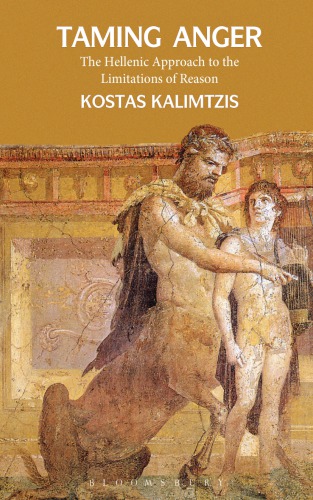
Taming Anger: The Hellenic Approach to the Limitations of Reason
2012 · PDF

MySQL® Notes for Professionals book
2018 · PDF

MrExcel 2022: Boosting Excel
2022 · PDF