Stalinist Science
Book information
Description
Some scholars have viewed the Soviet state and science as two monolithic entities--with bureaucrats as oppressors, and scientists as defenders of intellectual autonomy. Based on previously unknown documents from the archives of state and Communist Party agencies and of numerous scientific institutions, Stalinist Science shows that this picture is oversimplified. Even the reinstated Science Department within the Central Committee was staffed by a leading geneticist and others sympathetic to conventional science. In fact, a symbiosis of state bureaucrats and scientists established a much more terrifying system of control over the scientific community than any critic of Soviet totalitarianism had feared. Some scientists, on the other hand, developed more elaborate devices to avoid and exploit this control system than any advocate of academic freedom could have reasonably hoped. Nikolai Krementsov argues that the model of Stalinist science, already taking hold during the thirties, was reversed by the need for inter-Allied cooperation during World War II. Science, as a tool for winning the war and as a diplomatic and propaganda instrument, began to enjoy higher status, better funding, and relative autonomy. Even the reinstated Science Department within the Central Committee was staffed by a leading geneticist and others sympathetic to conventional science. However, the onset of the Cold War led to a campaign for eliminating such servility to the West. Then the Western links that had benefited genetics and other sciences during the war and through 1946 became a liability, and were used by Lysenko and others to turn back to the repressive past and to delegitimate whole research directions.
Similar books

With And Without Galton: Vasilii Florinskii And The Fate Of Eugenics In Russia
2018 · PDF
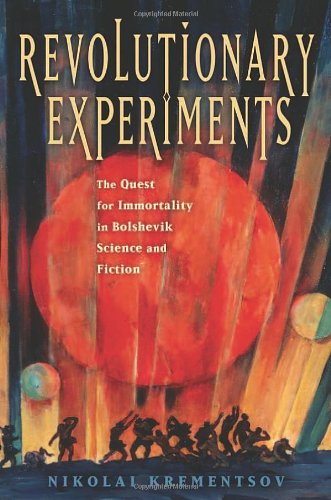
Revolutionary Experiments: The Quest for Immortality in Bolshevik Science and Fiction
2013 · PDF

A Martian Stranded on Earth: Alexander Bogdanov, Blood Transfusions, and Proletarian Science
2011 · PDF

MySQL® Notes for Professionals book
2018 · PDF

MrExcel 2022: Boosting Excel
2022 · PDF

MrExcel 2022: Boosting Excel
2022 · PDF

Session C11: Ancient Cultural Landscapes in South Europe – their Ecological Setting and Evolution, Session C22: Gardeners from South America, Session S04: Agro-Pastoralism and Early Metallurgy Sessions, Session WS29: The Idea of Enclosure in Recent Iberian Prehistory, Session C88: Rhytmes et causalites des dynamiques de l'anthropisation en Europe entre 6500 ET 500 BC: Hypotheses socio-culturelles et/ou climatiques: Proceedings of the XV UISPP World Congress (Lisbon 4-9 September 2006) / Actes du XV Congrès Mondial (Lisbonne 4-9 Septembre 2006) Vol.36
2010 · PDF

THE BRITISH ARMY IN INDIA: ITS PRESERVATION BY AN APPROPRIATE CLOTHING, HOUSING, LOCATING, RECREATIVE EMPLOYMENT, AND HOPEFUL ENCOURAGEMENT OF THE TROOPS. with AN APPENDIX ON INDIA : THE CLIMATE OP ITS HILLS ; THE DEVELOPMENT OF ITS RESODRCBS, INDUSTRY, AND ARTS ; THE ADMINISTRATION OF JUSTICE ; THE BLACK ACT ; THE PROGRESS OF CHRISTIANITY ; THE TRAFFIC IN OPIUM ; THE VALUE OF INDIA ; PERMANENT CAUSES OF DISAFFECTION, AND OF THE RECENT REBELLION ; THE TRADITIONARY POLICY; MISGOVERNMENT BY NATIVE RULERS ; ANNEXATIONS OF THEIR TERRITORY, ETC.
1858 · PDF