Crime and Conflict in English Communities, 1300-1348
Book information
Description
As this account of crime patterns in medieval England shows, crime can perhaps tell us more about a society's dynamics, tensions, and values than any other single social phenomenon. And Barbara Hanawalt's approach is particularly enlightening because it looks at the subject not from the heights of the era's learned opinion, but from the viewpoint of the people participating in the criminal dramas and manipulating the law for their own benefit. Hanawalt's sources are those of the new social historian--village and judicial records supplemented by the literature of the time. She examined approximately 20,000 criminal court cases as well as coroners' and manorial court rolls. Her analysis of these data produces striking results. Medieval England, the author reveals, was a society in which all classes readily sought violent solutions to conflicts. The tensions of village life were severe. The struggle for food and for profits caused numerous homicides and property crimes. These felonies were committed in seasonal patterns, with homicides occurring most frequently during the difficult times of planting and harvesting, and burglaries reaching a peak in winter when goods were stored in houses and barns. Moreover, organized crime was widespread and varied. It ranged from simple associations of local people to professional bands led by members of the nobility. One of Hanawalt's most interesting findings explodes the Robin Hood myth of robbers who stole from the rich and gave to the poor. Almost always, she shows, the robbers stole from the poor and kept for themselves. Throughout, Hanawalt carefully places the crimes and their participants within the context of village life in the later middle ages. Along with a description of the social and legal setting of criminal acts, she includes a discussion of the influence of war, politics, and economic, social, and demographic changes on the patterns of crime. Preface Contents Tables Figures Chapter One Introduction Chapter Two The Social and Judicial Context of Fourteenth-Century Crime Chapter Three Chapter Three The Crimes: Definitions, Patterns, and Techniques Chapter Four The Suspects Chapter Five The Relationship between the Victim and the Accused Chapter Six Criminal Associations and Professional Crime Chapter Seven External Influences on the Pattern of Crime Chapter Eight The Impact of Crime on Fourteenth-Century Rural Society Appendix A The Problem of Missing Deliveries Appendix B Influence of the Determining Powers of the Keepers of the Peace on the Volume of Cases in Gaol Delivery Appendix C Influence of Changes in Law Enforcement Procedures on the Volume of Cases in Gaol Delivery Appendix D Judicial Lag Notes Bibliography Index
Similar books

The Middle Ages: An Illustrated History (Oxford Illustrated History)
EPUB

Medieval Crime and Social Control
1999 · PDF
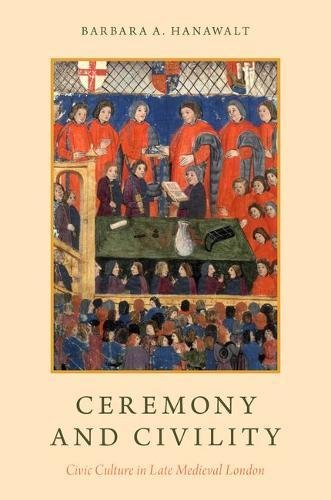
Ceremony and civility : civic culture in late medieval London
2017 · PDF

Growing up in medieval London : the experience of childhood in history
1995 · PDF

Growing Up in Medieval London: The Experience of Childhood in History
1993 · EPUB

Bodies and Disciplines: Intersections of Literature and History in Fifteenth-Century England (Medieval Cultures, Vol 9)

'Of Good and Ill Repute': Gender and Social Control in Medieval England
1998 · PDF

The Wealth of Wives: Women, Law, and Economy in Late Medieval London
2007 · PDF