The Profound Treasury of the Ocean of Dharma: The Tantric Path of Indestructible Wakefulness
Book information
Description
The third volume of this landmark series presents the vajrayana teachings of the tantric path. The vajrayana, or “diamond vehicle,” also referred to as tantra, draws upon and extends the teachings of the hinayana and mahayana. As with the hinayana and the mahayana, the formal acceptance into the vajrayana is marked by a vow, in this case the samaya vow. There is an emphasis at this stage on the student-teacher relationship and on the quality of devotion. Generally, students must complete preliminary practices, called ngöndro, to prepare themselves for initiation into the vajrayana path before going further. Having done so, they then receive the appropriate empowerments to begin tantric practices. There are empowerment ceremonies of many kinds, called abhishekas. The vajrayana includes both form practices, such as visualizations and sadhanas (ritual liturgies), and formless practices based on allowing the mind to rest naturally in its inherent clarity and emptiness. Although on the surface, there is much greater complexity in tantric practices, the principles of mindfulness and awareness and the cultivation of compassion and skillful action continue to be of central importance. The tantric path requires complete engagement and fierce dedication. It is said to be a more rapid path, but it is also more dangerous. There is a quality of directness, abruptness, and wholeheartedness. Tantrikas, or vajrayana practitioners, recognize that the most challenging aspects of life, the energies and play of confused emotions and frightening obstacles, can be worked with as gateways to freedom and realization. Other topics covered in detail in this volume include the four reminders, the mandala principle, mahamudra, atiyoga, and more. The Profound Treasury of the Ocean of Dharma represents meditation master Chögyam Trungpa’s greatest contribution to Western Buddhism. This three-volume collection presents in lively, relevant language the comprehensive teachings of the Tibetan Buddhist path of the hinayana, mahayana, and vajrayana. This work will resonate with new students of Buddhism as well as the most senior students. Editor’s Introduction Pronunciation of Sanskrit and Tibetan PART ONE Approaching the Vajrayana Introduction 1. The Dawning of the Great Eastern Sun 2. The Transition to Vajrayana 3. Entering the Diamond Path on a Solid Foundation 4. Uncovering Indestructible Goodness and Wakefulness 5. The Multifaceted Diamond Path 6. Seven Aspects of Vajrayana: The Space before First Thought PART TWO The Teacher-Student Relationship 7. The Role of the Guru or Vajra Master 8. The Root Guru as the Epitome of Freedom 9. A Total Surrendering of Samsaric Logic 10. The Power of Devotion PART THREE The Tülku Principle and the Trungpa Tülkus 11. The Tülku Principle 12. The Early Trungpas 13. The Later Trungpas PART FOUR Essential Teachings 14. Unconditional Ground 15. Transcending Mental Concepts 16. Fundamental Magic 17. The Play of Space and Form 18. The Eight States of Consciousness and the Trikaya Principle PART FIVE Complete Commitment 19. Samaya: Making a Commitment 20. Positive Entrapment 21. The Different Types of Samaya 22. Maintaining the Samaya Vow 23. Enlightenment and Its Opposite 24. Perfecting the Samaya Vow PART SIX The Mandala Principle 25. The Sphere of Self-Born Wisdom 26. The Mandala of the Five Buddha-Families 27. The Outer Mandala 28. The Inner Mandala 29. The Secret Mandala PART SEVEN Preliminary Practices 30. The Four Reminders 31. The Four Preliminaries 32. Guru Yoga PART EIGHT Empowerment 33. Transmission 34. Surrendering 35. Entering the Vajra Mandala 36. Stability, Luminosity, and Joy 37. The Four Main Abhishekas PART NINE Vajrayana Practice 38. Visualization and Sadhana Practice 39. The Importance of a Nontheistic View PART TEN The Tantric Journey: Lower Tantra Kriyayoga: The Yana of Purity 40. Kriyayoga: Trust in Reality 41. Kriyayoga: Purification 42. Kriyayoga: Empowerment 43. Kriyayoga: Practice Upayoga: The Yana of Conduct 44. Upayoga: Unadorned Perception 45. Upayoga: Empowerment 46. Upayoga: Practice Yogayana: The Yana of Union 47. Yogayana: Complete Union 48. Yogayana: Empowerments and Practice PART ELEVEN The Tantric Journey: Mahamudra Anuttarayoga: Highest Yoga 49. The Great Symbol 50. Devotion: The Essential Prerequisite for Mahamudra 51. Taking a Fresh Look at the Phenomenal World 52. Uniting with Open Space 53. The Challenge of Keeping Samaya 54. The Divisions of Anuttarayoga 55. Manifesting Mahamudra 56. Ground Mahamudra: Understanding Things as They Are 57. Path Mahamudra: The Experience of Meditation 58. Fruition Mahamudra: Realizing One’s Mind as Buddha PART TWELVE The Tantric Journey: Higher Tantra Mahayoga: The Yana of Great Union 59. Mahayoga: The Dawning of the Wisdom of Self-Existence 60. Mahayoga: Meditation and the Mandala Principle 61. Mahayoga: The Eight Logos 62. Mahayoga: Nondual Practice Anuyoga: The Yana of Passion 63. Anuyoga: Joining Space and Wisdom 64. Anuyoga: Empowerment 65. Anuyoga: Practice 66. Anuyoga: No Boundaries Atiyoga: The Great Completion 67. Atiyoga: Continuous Awake 68. Atiyoga: Primordial Enlightenment 69. Atiyoga: Fathomless Mind 70. Atiyoga: Mind, Space, and Instruction 71. Atiyoga: Meditation Practices 72. Atiyoga: Heightened Experience 73. Atiyoga: Everything and Nothing Appendix 1: Kamalashila and the Great Debate Appendix 2: The Song of Lodrö Thaye Appendix 3: The Charnel Ground Appendix 4: Notecards Appendix 5: Outline of Teachings Glossary Sources
Similar books

True Perception: The Path of Dharma Art
2008 · PDF

The Profound Treasury of the Ocean of Dharma: The Path of Individual Liberation
2013 · PDF
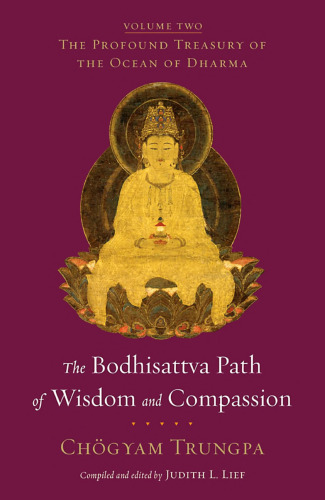
The Profound Treasury of the Ocean of Dharma: The Bodhisattva Path of Wisdom and Compassion
2013 · PDF

The Profound Treasury of the Ocean of Dharma: The Tantric Path of Indestructible Wakefulness
2013 · PDF

The Tantric Path of Indestructible Wakefulness: The Profound Treasury of the Ocean of Dharma, Volume Three
2013 · EPUB
The Bodhisattva Path of Wisdom and Compassion: The Profound Treasury of the Ocean of Dharma, Volume Two
2013 · EPUB

The Path of Individual Liberation: The Profound Treasury of the Ocean of Dharma, Volume One
2013 · EPUB

The Truth of Suffering and the Path of Liberation
2010 · EPUB