German Panzers 1914–18
Book information
Description
Panzer warfare is synonymous with the Wehrmacht of World War II. This book examines the story of the Panzer's more mysterious ancestors, the little-known panzers of the Great War. Germany was very slow to develop armored vehicles compared to Britain and France. Early attempts such as the Marienwagen of 1915 were technical failures, discouraging further design efforts until the utility of the tank was proven by the British and French in 1916-17. Efforts to catch-up proved difficult, and only a couple dozen German A7V tanks were completed in time to take part in the final campaigns of 1918. As a result, the majority of German panzer units actually used captured British tanks, the Beutepanzer. This book will trace the development of German panzers of the Great War, including the A7V and its intended but unfinished stablemates. Also included will be an overview of the use of panzers by the German Army in World War I including both A7V and Beutepanzer units.Related TitlesThe First World War: The War to End All Wars (Essential Histories Special)British Mark I Tank 1916 (New Vanguard)World War I Trench Warfare (1&2) (Elite)Fortifications of the Western Front 1914-18 (Fortress)
Similar books

British Mark I Tank 1916

British Mark I Tank 1916

German Panzers 1914–18
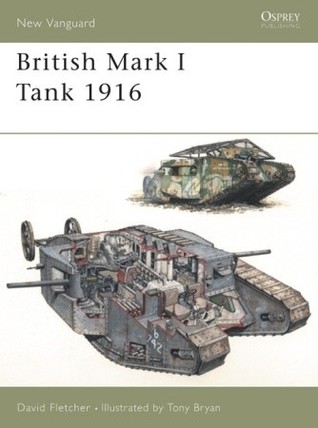
British Mark I Tank 1916

MySQL® Notes for Professionals book
2018 · PDF

MrExcel 2022: Boosting Excel
2022 · PDF

MrExcel 2022: Boosting Excel
2022 · PDF

Session C11: Ancient Cultural Landscapes in South Europe – their Ecological Setting and Evolution, Session C22: Gardeners from South America, Session S04: Agro-Pastoralism and Early Metallurgy Sessions, Session WS29: The Idea of Enclosure in Recent Iberian Prehistory, Session C88: Rhytmes et causalites des dynamiques de l'anthropisation en Europe entre 6500 ET 500 BC: Hypotheses socio-culturelles et/ou climatiques: Proceedings of the XV UISPP World Congress (Lisbon 4-9 September 2006) / Actes du XV Congrès Mondial (Lisbonne 4-9 Septembre 2006) Vol.36
2010 · PDF