Bioconductor Case Studies
Book information
Description
Preface -- Contents -- List of Contributors -- 1 The ALL Dataset -- 1.1 Introduction -- 1.2 The ALL data -- 1.3 Data subsetting -- 1.4 Nonspecific filtering -- 1.5 BCR/ABL ALL1/AF4 subset -- 2 R and BioconductorIntroduction -- 2.1 Finding help in R -- 2.2 Working with packages -- 2.3 Some basic R -- 2.3.1 Functions -- 2.3.2 The apply family of functions -- 2.3.3 Environments -- 2.4 Structures for genomic data -- 2.4.1 Building an ExpressionSet from .CEL and other files -- 2.4.2 Building an ExpressionSet from scratch -- 2.4.3 ExpressionSet basics -- 2.5 Graphics.;In this volume, the authors present a collection of cases to apply Bioconductor tools in the analysis of microarray gene expression data. Each chapter describes an analysis of real data using hands-on example driven approaches. Short exercises are included. Preface -- Contents -- List of Contributors -- 1 The ALL Dataset -- 1.1 Introduction -- 1.2 The ALL data -- 1.3 Data subsetting -- 1.4 Nonspecific filtering -- 1.5 BCR/ABL ALL1/AF4 subset -- 2 R and BioconductorIntroduction -- 2.1 Finding help in R -- 2.2 Working with packages -- 2.3 Some basic R -- 2.3.1 Functions -- 2.3.2 The apply family of functions -- 2.3.3 Environments -- 2.4 Structures for genomic data -- 2.4.1 Building an ExpressionSet from .CEL and other files -- 2.4.2 Building an ExpressionSet from scratch -- 2.4.3 ExpressionSet basics -- 2.5 Graphics. 3 Processing AffymetrixExpression Data -- 3.1 The input data: CEL files -- 3.1.1 The sample annotation -- 3.2 Quality assessment -- 3.3 Preprocessing -- 3.4 Ranking and filtering probe sets -- 3.4.1 Summary statistics and tests for ranking -- 3.4.2 Visualization of differential expression -- 3.4.3 Highlighting interesting genes -- 3.4.4 Selecting hit lists and the multiple testing problem -- 3.4.5 Annotation -- 3.5 Advanced preprocessing -- 3.5.1 PM and MM probes -- 3.5.2 Background-correction -- 3.5.3 Summarization -- 4 Two-Color Arrays -- 4.1 Introduction -- 4.2 Data import -- 4.3 Image plots. 4.4 Normalization -- 4.5 Differential expression -- 5 Fold-Changes, Log-Ratios, Background Correction, Shrinkage Estimation, and Variance Stabilization -- 5.1 Fold-changes and (log- )ratios -- 5.2 Background-correction and generalized logarithm -- 5.3 Calling VSN -- 5.4 How does VSN work? -- 5.5 Robust fitting and the "most genes not differentially expressed" assumption -- 5.6 Single-color normalization -- 5.7 The interpretation of glog-ratios -- 5.8 Reference normalization -- 6 Easy Differential Expression -- 6.1 Example data -- 6.2 Nonspecific filtering -- 6.3 Differential expression. 6.4 Multiple testing correction -- 7 Differential Expression -- 7.1 Motivation -- 7.1.1 The gene-by-gene approach -- 7.1.2 Nonspecific filtering -- 7.1.3 Fold-change versus t-test -- 7.2 Nonspecific filtering -- 7.3 Differential expression -- 7.4 Multiple testing -- 7.5 Moderated test statistics and the limma package -- 7.5.1 Small sample sizes -- 7.6 Gene selection by Receiver Operator Characteristic (ROC) -- 7.7 When power increases -- 8 Annotation and Metadata -- 8.1 Our data -- 8.2 Multiple probe sets per gene -- 8.3 Categories and overrepresentation -- 8.3.1 Chromosomal location. 8.4 Working with GO -- 8.4.1 Functional analyses -- 8.5 Other annotations available -- 8.6 biomaRt -- 8.7 Database versions of annotation packages -- 8.7.1 Mapping Symbols -- 8.7.2 Other capabilities -- 9 Supervised Machine Learning -- 9.1 Introduction -- 9.1.1 Supervised machine learning check list -- 9.2 The example dataset -- 9.2.1 Nonspecific filtering of features -- 9.3 Feature selection and standardization -- 9.4 Selecting a distance -- 9.5 Machine learning -- 9.6 Cross-validation -- 9.7 Random forests -- 9.7.1 Feature selection -- 9.7.2 More exercises -- 9.8 Multigroup classification.
Similar books

Professional Linux kernel architecture ''Wrox programmer to programmer''--Cover. - ''What you are reading right now is the result of an evolution over more than seven years: After two years of writing, the first edition was published in German by Carl Hanser Verlag in 2003. It then described kernel 2.6.0. The test was used as a basis for the low-level design documentation for the EAL4+ security evaluation of Red Hat Enterprise Linux 5, requiring to update it to kernel 2.6.18 (if the EAL acronym does not mean anything to you, then Wikipedia is once more your friend). Hewlett-Packard sponsored the translation into English and has, thankfully, granted the rights to publish the result. Updates to kernel 2.6.24 were then performed specifically for this book''--P. ix
2008 · PDF
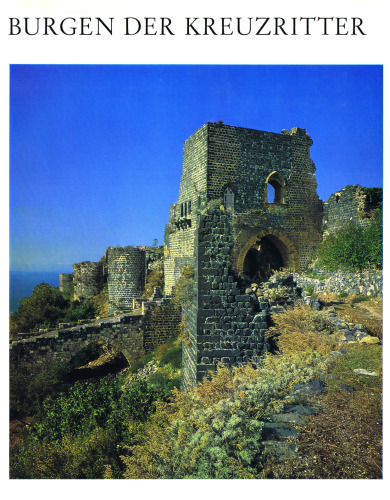
Burgen der Kreuzritter im Heiligen Land, auf Zypern und in der Ägäis
1966 · PDF

Child of the Revolution
1958 · PDF

Die Revolution entlässt ihre Kinder
1955 · PDF

Die Revolution entlässt ihre Kinder
1955 · PDF

A Concise Introduction to Mathematical Logic
2010 · PDF

Real Quaternionic Calculus Handbook
2014 · EPUB

Real Quaternionic Calculus Handbook
2014 · PDF