The Oxford Handbook of Byzantine Literature (OXFORD HANDBOOKS SERIES)
Book information
Description
This volume, the first ever of its kind in English, introduces and surveys Greek literature in Byzantium (330 - 1453 CE). In twenty-five chapters composed by leading specialists, The Oxford Handbook of Byzantine Literature surveys the immense body of Greek literature produced from the fourth to the fifteenth century CE and advances a nuanced understanding of what "literature" was in Byzantium. This volume is structured in four sections. The first, "Materials, Norms, Codes," presents basic structures for understanding the history of Byzantine literature like language, manuscript book culture, theories of literature, and systems of textual memory. The second, "Forms," deals with the how Byzantine literature works: oral discourse and "text"; storytelling; rhetoric; re-writing; verse; and song. The third section ("Agents") focuses on the creators of Byzantine literature, both its producers and its recipients. The final section, entitled "Translation, Transmission, Edition," surveys the three main ways by which we access Byzantine Greek literature today: translations into other Byzantine languages during Late Antiquity and the Middle Ages; Byzantine and post-Byzantine manuscripts; and modern printed editions. The volume concludes with an essay that offers a view of the recent past--as well as the likely future--of Byzantine literary studies. cover The Oxford Handbook of Byzantine Literature Copyright Contents List of Figures List of Contributors Acknowledgments Abbreviations 1. What Is Byzantine Literature? An Introduction Part I Materials, Norms, Codes 2. Language 3. Book Culture 4. Theory of Literature 5. Biblical Hermeneutics 6. Memory: Selection, Citation, Commonplace 7. The Reception of Classical Literature and Ancient Myth 8. Translations I: From Other Languages into Greek Section I. Latin Section II. Syriac Section III. Arabic Section IV. Georgian Section V. Neo-Latin Languages Part II Forms 9. Orality and Textuality (With an Appendix on the Byzantine Conceptions) 10. Narrative: Theory and Practice 11. Rhetorical Practice 12. Rhetorical Figures 13. A Rhetorical Genre(?): The Invective (Ninth–Fifteenth Centuries) 14. Rewriting 15. Poetry? 16. Inscriptions 17. Metrics and Prose Rhythm 18. Sacred Song 19. Recitation and Chant: Types of Notation, Modes of Expression Part III Agents 20. Authors (With an Excursus on Symeon Metaphrastes) 21. Readers and Their Pleasures Part IV Translation, Transmission, Edition 22. Translations II: Greek Texts into Other Languages (Fourth–Fifteenth Centuries) Section I. Latin Section II. Coptic Section III. Syriac Section IV. Armenian Section V. Georgian Section VI. Arabic Section VII. Slavic 23. Modes of Manuscript Transmission (Ninth–Fifteenth Centuries) 24. Textual Criticism Postscript 25. Thoughts on the Recent Past and the Future of Byzantine Literary Studies Glossary of Rhetorical Figures Vessela Valiavitcharska Index
Similar books

Saints at the Limits: Seven Byzantine Popular Legends
2023 · PDF

The Oxford Handbook of Byzantine Literature
2021 · EPUB

The Oxford Handbook of Byzantine Literature
2021 · PDF
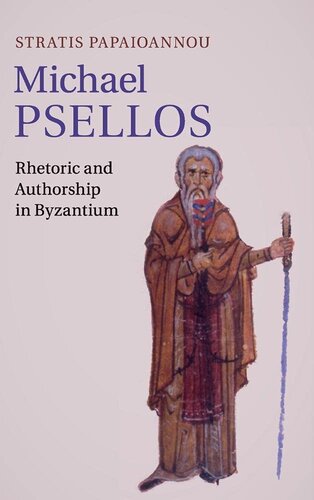
Michael Psellos: Rhetoric and Authorship in Byzantium
2013 · PDF

Michael Psellos: Rhetoric and Authorship in Byzantium
2013 · PDF

Christian Novels from the Menologion of Symeon Metaphrastes
2017 · PDF

Michael Psellos: Rhetoric and Authorship in Byzantium
2013 · PDF

MySQL® Notes for Professionals book
2018 · PDF