Mathematics in Middle and Secondary School : A Problem Solving Approach
Book information
Description
The experience and knowledge acquired in teacher education courses should build important fundamentals for the future teaching of mathematics. In particular, experience in mathematical problem solving, and in planning lessons devoted to problem solving, is an essential component of teacher preparation. This book develops a problem solving approach and is intended to be a text used in mathematics education courses (or professional development) for pre-service or in-service middle and secondary school teachers. It can be used both in graduate and undergraduate courses, in accordance with the focus of teacher preparation programs.The content of the book is suited especially for those students who are further along in their mathematics education preparation, as the text is more involved with mathematical ideas and problem solving, and discusses some of the intricate pedagogical considerations that arise in teaching. The text is written not as an introduction to mathematics education (a first course), but rather as a second, or probably, third course. The book deals both with general methodology issues in mathematics education incorporating a problem solving approach (Chapters 1-6) and with more concrete applications within the context of specific topics - algebra, geometry, and discrete mathematics (Chapters 7-13).The book provides opportunities for teachers to engage in authentic mathematical thinking. The mathematical ideas under consideration build on specific middle and secondary school content while simultaneously pushing the teacher to consider more advanced topics, as well as various connections across mathematical domains. The book strives to preserve the spirit of discussion, and at times even argument, typical of collaborative work on a lesson plan. Based on the accumulated experience of work with future and current teachers, the book assumes that students have some background in lesson planning, and extends their thinking further. Specifically, this book aims to provide a discussion of how a lesson plan is constructed, including the ways in which problems are selected or invented, rather than the compilation of prepared lesson plans. This approach reflects the authors' view that the process of searching for an answer is often more important than the formal result.
Similar books
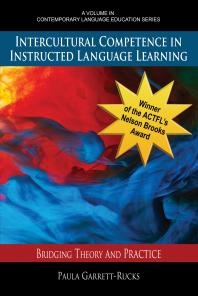
Intercultural Competence in Instructed Language Learning: Bridging Theory and Practice
2016 · PDF

Art As an Agent for Social Change
2020 · PDF

Empowering Students As Self-Directed Learners of Qualitative Research Methods: Transformational Practices for Instructors and Students
2019 · PDF

Augmented Reality in Educational Settings
2019 · PDF

Uncovering the Cultural Dynamics in Mentoring Programs and Relationships: Enhancing Practice and Research
2014 · PDF

From Policy to Practice: Sustainable Innovations in School Leadership Preparation and Development
2015 · PDF

The Translational Design of Universities: An Evidence-Based Approach
2019 · PDF

Poetry Across the Curriculum: New Methods of Writing Intensive Pedagogy for U. S. Community College and Undergraduate Education
2018 · PDF