Defending God: Biblical Responses to the Problem of Evil
Book information
Description
Despite the title, this is not a book of theodicy (a defense of God). This is a book describing theodicies (plural) in the Bible. As another reviewer has noted, this is very similar to what Bart Ehrman tried to do (unsuccessfully in my opinion) in his book "God's Problem."In that book, Ehrman describes situations of clear evil in the world, and then writing outside of his expertise concludes that the Bible offers no effective answers to the problem of evil. Since Ehrman has become something of a popular skeptical writer (due to his background), it's no surprise that he tackles this topic. With that said, you wouldn't expect an unbiased opinion to come from his pen. What Crenshaw does (although there is no intentional interaction with Ehrman), is show that Ehrman's reading of the text is simplistic at best and naïve at worst. Crenshaw's aim is to discuss in depth the various ways that the biblical writers deal with defending God in the face of evil. He gives ten responses from the Bible to evil (both natural and personal). In each of them he sees a trajectory that develops throughout the biblical tradition, but sees none (in and of themselves) as ultimately effective, although a culmulative argument might be made. His analysis is extremely thoughtful and thorough.So why only three stars? There are two main reasons. First, I do not find Crenshaw to be a good writer. This is not popular reading, but intended for a scholarly audience. Therefore, one would not expect readability to be a virtue in such an endeavor. Still, can one remain so utterly dispassionate on such a topic? Having heard Crenshaw lecture in the past, I know that he personally has struggled deeply with the topic and that makes him all the more compelling to hear. Unfortunately, this deep struggle does not find its way into these pages as the feel of the writing is largely emotionless. Second, the electronic format was terrible. When you spend $40 on a Kindle book (most are $10), you should expect quality. Surely, the price comes due to the publisher (OUP), but such poor formatting cannot find a $40 price tag to be justifiable.
Similar books
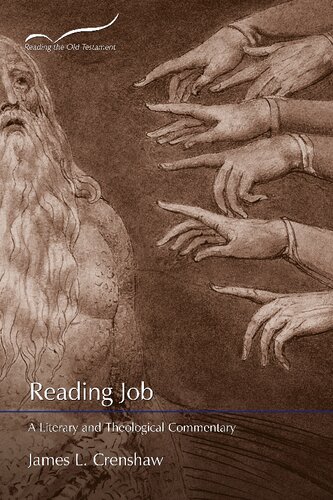
Reading Job: A Literary and Theological Commentary
2012 · PDF

Ecclesiastes: A Commentary
1987 · EPUB

Ecclesiastes: A Commentary (The Old Testament Library)
1987 · PDF

Prophetic Conflict: Its Effect Upon Israelite Religion
1971 · PDF

Prophetic Conflict: Its Effect Upon Israelite Religion
1971 · PDF

Qoheleth: The Ironic Wink
2013 · PDF
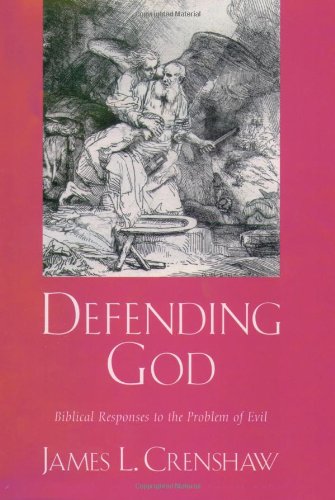
Defending God: Biblical Responses to the Problem of Evil
2005 · PDF

Defending God: Biblical Responses to the Problem of Evil
2005 · PDF