Prisoners of Shangri-La: Tibetan Buddhism and the West
Book information
Description
In this fine scholarly work, Lopez (Asian Languages and Cultures/Univ. of Michigan) warns his readers away from romanticized visions of Tibet, which ultimately harm that beleaguered nation's prospects for independence. Buddhism, the religion of enlightenment, takes as its task the dispersal of human misconceptions of reality. It is only fitting that, in the wake of heightened popular interest in Tibet, Lopez should write a corrective to both positive and negative misconceptions of Tibetan Buddhism. Among the sources of misinterpretation he notes are: psychological interpretations of the Tibetan Book of the Dead; The Third Eye, by Englishman Cyril Hoskin, a fantastic (and popular) tale of Tibetan spirit possession published in 1956; mistranslations of the famous mantra, Om Mani Padme Hum; exhibitions of Tibetan art in Western museums; the institutionalization of the academic discipline of Tibetology; increasingly airy spiritualizations of Tibetan culture. What all these acts of interpreting Tibetan Buddhism share, says Lopez, is a whole or partial disregard for the concrete, living contexts of Tibetan religion. Elements of Tibetan Buddhism become abstract symbols onto which Western writers project their own spiritual, psychological, or professional needs. For example, the chant Om Mani Padme Hum, mistranslated as ``the jewel is in the lotus,'' is allegorized into an edifying symbol of conjoined opposites when, in fact, it is simply a prayerful invocation of the Buddhist god Avalokiteshvara. The irony is that Tibetans affirm these Western misreadings in hopes of winning more sympathy for their struggle for independence. The danger, according to Lopez, is that the full particularity of Tibet will be lost in ineffectual platitudes. He is angry about many of the more outrageous manglings of Tibetan belief and culture; he can also be quite witty over the more ridiculous applications by New Agers of ostensibly Tibetan beliefs. As an interpreter of interpreters, Lopez functions here twice removed from the actual religion of Tibet; readers should approach with some prior knowledge of Buddhism.Prisoners of Shangri-La is a provocative analysis of the romance of Tibet, a romance that, even as it is invoked by Tibetan lamas living in exile, ultimately imprisons those who seek the goal of Tibetan independence from Chinese occupation."Lopez lifts the veil on America's romantic vision of Tibet to reveal a country and a spiritual history more complex and less ideal than popular perceptions allow. . . . Lively and engaging, Lopez's book raises important questions about how Eastern religions are often co-opted, assimilated and misunderstood by Western culture."—Publishers Weekly
Similar books

Strange Tales of an Oriental Idol: An Anthology of Early European Portrayals of the Buddha
2016 · EPUB

Religions of China in Practice
1996 · EPUB

The Lotus Sūtra: A Biography (Lives of Great Religious Books, 26)
2016 · EPUB

The Madman's Middle Way: Reflections on Reality of the Tibetan Monk Gendun Chopel
2008 · PDF

Hyecho's Journey: The World of Buddhism
2017 · PDF

The Norton Anthology of World Religions: Buddhism
2015 · PDF
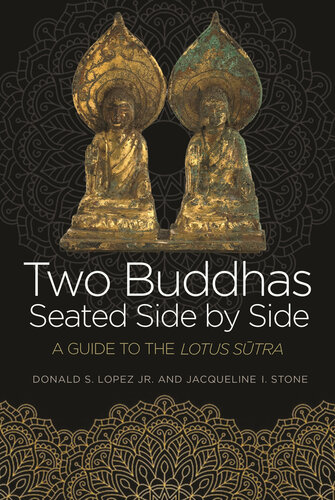
Two Buddhas Seated Side by Side: A Guide to the Lotus Sūtra
2019 · EPUB

Buddhism and Science: A Guide for the Perplexed (Buddhism and Modernity)
2008 · EPUB