Theorizing Race in the Americas: Douglass, Sarmiento, Du Bois, and Vasconcelos
Book information
Description
In 1845 two thinkers from the American hemisphere - the Argentinean statesman Domingo Faustino Sarmiento, and the fugitive ex-slave, abolitionist leader, and orator from the United States, Frederick Douglass - both published their first works. Each would become the most famous and enduring texts in what were both prolific careers, and they ensured Sarmiento and Douglass' position as leading figures in the canon of Latin American and U.S. African-American political thought, respectively. But despite the fact that both deal directly with key political and philosophical questions in the Americas, Douglass and Sarmiento, like African-American and Latin American thought more generally, are never read alongside each other. This may be because their ideas about race differed dramatically. Sarmiento advocated the Europeanization of Latin America and espoused a virulent form of anti-indigenous racism, while Douglass opposed slavery and defended the full humanity of black persons. Still, as Juliet Hooker contends, looking at the two together allows one to chart a hemispheric intellectual geography of race that challenges political theory's preoccupation with and assumptions about East / West comparisons, and questions the use of comparison as a tool in the production of theory and philosophy. By juxtaposing four prominent nineteenth and twentieth-century thinkers - Frederick Douglass, Domingo F. Sarmiento, W. E. B. Du Bois, and José Vasconcelos - her book will be the first to bring African-American and Latin American political thought into conversation. Hooker stresses that Latin American and U.S. ideas about race were not developed in isolation, but grew out of transnational intellectual exchanges across the Americas. In so doing, she shows that nineteenth and twentieth-century U.S. and Latin American thinkers each looked to political models in the 'other' America to advance racial projects in their own countries. Reading these four intellectuals as hemispheric thinkers, Hooker foregrounds elements of their work that have been dismissed by dominant readings, and provides a crucial platform to bridge the canons of Latin American and African-American political thought. Dedication Contents Acknowledgments Introduction: Race Theory and Hemispheric Juxtaposition Part I: Ambas Américas 1. “A Black Sister to Massachusetts”: Latin America and the Fugitive Democratic Ethos of Frederick Douglass 2. “Mi Patria de Pensamiento”: Sarmiento, the United States, and the Pitfalls of Comparison Part II: Mestizo Futurisms 3. “To See, Foresee, and Prophesy”: Du Bois’s Mulatto Fictions and Afro- Futurism 4. “A Doctrine that Nourished the Hopes of the Nonwhite Races”: Vasconcelos, Mestizaje’s Travels, and US Latino Politics Conclusion Notes Bibliography Index
Similar books

Black Grief/White Grievance: The Politics of Loss
2023 · PDF
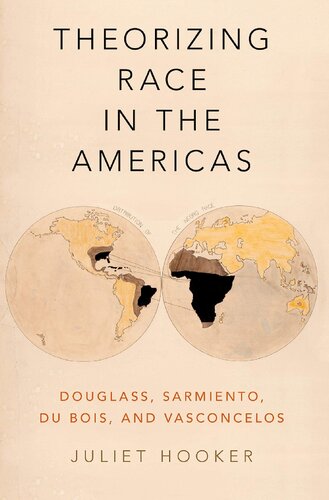
Theorizing Race in the Americas: Douglass, Sarmiento, Du Bois, and Vasconcelos
2017 · PDF

La Autonomia a Debate: autogobierno indigena y Estado plurinacional en America Latina
2010 · PDF

Race and the Politics of Solidarity
2009 · PDF

MySQL® Notes for Professionals book
2018 · PDF

MrExcel 2022: Boosting Excel
2022 · PDF

MrExcel 2022: Boosting Excel
2022 · PDF

Session C11: Ancient Cultural Landscapes in South Europe – their Ecological Setting and Evolution, Session C22: Gardeners from South America, Session S04: Agro-Pastoralism and Early Metallurgy Sessions, Session WS29: The Idea of Enclosure in Recent Iberian Prehistory, Session C88: Rhytmes et causalites des dynamiques de l'anthropisation en Europe entre 6500 ET 500 BC: Hypotheses socio-culturelles et/ou climatiques: Proceedings of the XV UISPP World Congress (Lisbon 4-9 September 2006) / Actes du XV Congrès Mondial (Lisbonne 4-9 Septembre 2006) Vol.36
2010 · PDF