Austrian Historical Memory and National Identity
Book information
Description
When the Hapsburg monarchy disintegrated after World War I, Austria was not considered to be a viable entity. In a vacuum of national identity the hapless country drifted toward a larger Germany. After World War II, Austrian elites constructed a new identity based on being a "victim" of Nazi Germany. Cold war Austria, however, envisioned herself as a neutral "island of the blessed" between and separate from both superpower blocs. Now, with her membership in the European Union secured, Austria is reconstructing her painful historical memory and national identity. In 1996 she celebrates her 1000-year anniversary. In this volume of Contemporary Austrian Studies, Franz Mathis and Brigitte Mazohl-Wallnig argue that regional identities in Austria have deeper historical roots than the many artificial and ineffective attempts to construct a national identity. Heidemarie Uhl, Anton Pelinka, and Brigitte Bailer discuss the post-World War II construction of the victim mythology. Robert Herzstein analyses the crucial impact of the 1986 Waldheim election imploding Austria's comforting historical memory as a "nation of victims." Wolfram Kaiser shows Austria's difficult adjustments to the European Union and the larger challenges of constructing a new "European identity." Chad Berry's analysis of American World War II memory establishes a useful counterpoint to construction of historical memory in a different national context. A special forum on Austrian intelligence studies presents a fascinating reconstruction by Timothy Naftali of the investigation by Anglo-American counterintelligence into the retreat of Hitler's troops into the Alps during World War II. Rudiger Overmans' "research note" presents statistics on lower death rates of Austrian soldiers in the German army. Review essays by Gunther Kronenbitter and Gunter Bischof, book reviews, and a 1995 survey of Austrian politics round out the volume. Austrian Historical Memory and National Identity will be of intense interest to foreign policy analysts, historians, and scholars concerned with the unique elements of identity and nationality in Central European politics. Title Page Copyright Page Contents Introduction Topical Essays Franz Mathis, 1,000 Years of Austria and Austrian Identity: Founding Myths Gunda Barth-Scalmani, Hermann J. W. Kuprian, Brigitte Mazohl-Wallnig, National Identity or Regional Identity: Austria Versus Tyrol/Salzburg Heidemarie Uhl, The Politics of Memory: Austria’s Perception of the Second World War and the National Socialist Period Anton Pelinka, Taboos and Self-Deception: The Second Republic’s Reconstruction of History Brigitte Bailer, They Were All Victims: The Selective Treatment of the Consequences of National Socialism Robert Edwin Herzstein, The Present State of the Waldheim Affair: Second Thoughts and New Directions Wolfram Kaiser, The Silent Revolution: Austria’s Accession to the European Union Chad Berry, Public, Private, and Popular: The United States Remembers World War II Proposals by the Advisory Commission on the Mauthausen Concentration Camp Memorial FORUM: Toward a History of Austrian Intelligence Studies Timothy Naftali, Creating the Myth of the Alpenfestung: Allied Intelligence and the Collapse of the Nazi Police-State Siegfried Beer, Early CIA Reports on Austria, 1947-1949 Radomir Luža, Research Note: My Files at the Czech Ministry of the Interior Archives, Prague, May 1995 Research Note Rüdiger Overmans, German and Austrian Losses in World War II Review Essays Günter Bischof, Founding Myths and Compartmentalized Past: New Literature on the Construction, Hibernation, and Deconstruction of World War II Memory in Postwar Austria Günther Kronenbitter, Austria-Hungary and World War I Book Reviews Robert Knight: Gertrude Enderle-Burcel, Rudolph Jeřábek, Leopold Kammerhofer, eds., Protokolle des Kabinettsrates der Provisorischen Regierung Karl Renner 1945, vol. 1 Dieter Stiefel: Klaus Eisterer, Die Schweiz als Partner: Zum eigenständigen Außenhandel der Bundesländer Vorarlberg und Tirol mit der Eidgenossenschaft 1945-1947 Daniel E. Rogers: Rolf Steininger with Ingrid Böhler, eds., Der Umgang mit dem Holocaust Matthew Paul Berg: Franz Olah, Die Erinnerungen Andrei S. Markovits: Heinz Fischer, Die Kreisky-Jahre: 1967-1983 Kurt Richard Luther: Wolfgang C. Müller, Fritz Passer, Peter A. Ulram, eds., Wählerverhalten und Parteien wettbewerb. Analysen zur Nationalratswahl 1994 (Vienna: Signum Verlag, 1995). Annual Review Reinhold Gärtner List of Authors
Similar books

Neutrality in Austria
2001 · EPUB

The Dollfuss Schuschnigg Era in Austria: A Reassessment (Contemporary Austrian Studies) (Volume 11)
2003 · PDF

Austrian Lives
2012 · PDF

Die unheilige Allianz: Die rechten und die linken Extremisten gegen Europa
2015 · PDF
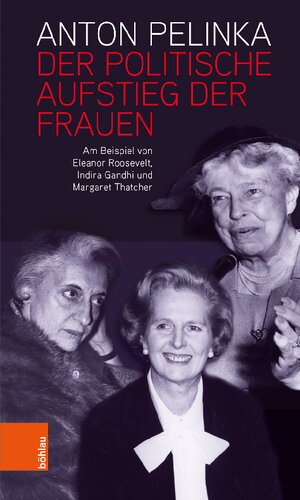
Der politische Aufstieg der Frauen: Am Beispiel von Eleanor Roosevelt, Indira Gandhi und Margaret Thatcher
2020 · PDF

Faschismus?: Zur Beliebigkeit eines politischen Begriffs
2022 · PDF

Die gescheiterte Republik: Kultur und Politik in Österreich 1918–1938
2017 · PDF

Politics of the Lesser Evil: Leadership, Democracy, and Jaruzelski's Poland
1999 · EPUB