Newtonian Microeconomics: A Dynamic Extension to Neoclassical Micro Theory
Book information
Description
Presenting the dynamic laws of economic quantities, this book tackles one of the core difficulties of current economic theory: that of transforming abstract equations of equilibrium into precise dynamic rules. The theoretical framework of neoclassical micro theory has historically prohibited its development into a quantitative science. Estola identifies the main weaknesses of this framework as follows: 1) Static optimization does not allow for the modelling of time-dependent production and consumption flows; 2) The assumption of optimal behaviours forecloses any understanding of changes in economic quantities, as none will change its optimal behaviour. The author of this title assumes that economic units tend to better their situation where possible. The book demonstrates how this approach leads to an analogous framework in economics to the Newtonian framework in physics. The ‘forces’ acting upon economic quantities, which either cause adjustment toward an equilibrium state or keep the system in motion with time, are defined such that the neoclassical framework corresponds to a ‘zero-force’ situation. Introducing a system of measurement units for economic phenomena, Estola applies this throughout, and thereby illuminates a way for microeconomics to meet the minimum requirements of quantitative analysis.
Similar books

Game Theory : An Introduction with Step-by-Step Examples
2023 · PDF

Foundations of Machine Learning
2018 · PDF

Nonlinearity, Bounded Rationality, and Heterogeneity: Some Aspects of Market Economies as Complex Systems
2018 · PDF

Datenanalyse mit SPSS: Realdatenbasierte Übungs- und Klausuraufgaben mit vollständigen Lösungen
2017 · PDF
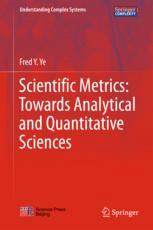
Scientific Metrics: Towards Analytical and Quantitative Sciences
2017 · PDF

Analysis and Modelling of the French Capacity Mechanism: Impact Assessment of Energy Policy Measures on the Security of Supply
2017 · PDF
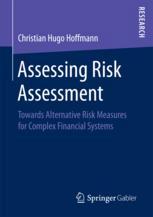
Assessing Risk Assessment: Towards Alternative Risk Measures for Complex Financial Systems
2017 · PDF

Time and Economics: The Concept of Functional Time
2017 · PDF