Lies With Long Legs: Discoveries, Scholars, Science, Enlightenment - Documentary Narration
Book information
Description
In his painstakingly long academic journey through mountains of source material available in Europe, Prof Prodosh Aich establishes that the entire understanding of India developed by self-claimed scholars from West is erroneous, since the initial attempt to comprehend ancient India through the Vedas was itself faulty. He questions the validity of the works of the famous western scholars who translated the Vedic literature into English, German and Italian. A vast majority of them did not even set foot on the Indian soil and those who came here did not learn the ancient languages in an organised manner, even though translation needs an equal command of both languages. Since neither the Vedic language nor the Sanskrit were spoken languages since ages, it was all the more difficult for them to develop language skills required for translation. Colonialist Imperial England had prepared a concerted design to establish the superiority of blond-blue eyed-white-Christian culture over other cultures that they opted to define as "primitive", particularly in case of India. Prof Aich uses juxtaposition to drive home a point and leaves judgement to readers. He frames a question and then answers it by using the primary source material. The book is bound to trigger an academic debate in the West also and would go a long way to establish once for all that the much-trumpeted and self-championed discipline of Indology in the West has in fact been based on falsehood. It must have been a design that none of the scholars so far bothered to use the existing material, so abundantly available, which could have helped to unravel the truth about the colonial powers and imperial administration and bureaucracy. Scholars after scholars, even after the end of colonial empire, have continued to overlook the material that would have removed the well-laid myths about Indian society, polity and culture.
Similar books

अभिनवगुप्त का तंत्रागमीय दर्शन (Abhinavagupta ka tantragamiya darshan)
2009 · PDF
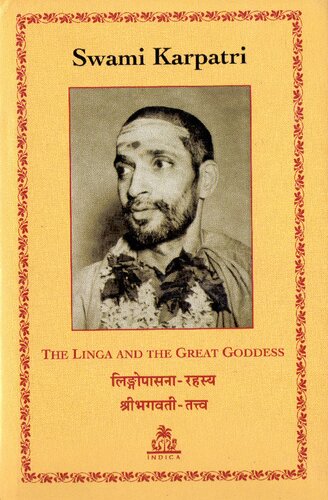
The Linga and the Great Goddess (Lingopsana Rahasya and Shri Bhagavati Tattva)
2009 · PDF

The Illustrated Encyclopedia of Hinduism
2000 · PDF

Sultan Raziyyah (Razia) and her Predecessors
Bronzes from Achutrajpur, Orissa
1978 · PDF

The history of the church, from Our Lord's incarnation, to the twelfth year of the Emperor Mauricius Tiberius, or the year of Christ 594 As it was written in Greek by Eusebius Pamphilus, Bishop of Caesarea in Palestine; Socrates Scholasticus, Native of Constantinople; and Evagrius Scholasticus Born at Epiphania in Syria Secunda. Made English from that edition of these Historians, which Valesius published at Paris in the Years 1659, 1668, and 1673. Also, the Life of Constantine in four books, written by Eusebius Pamphilus; with Constantine's Oration to the Convention of the Saints, and Eusebius's Speech in Praise of Constantine, spoken at his Tricennalia. Valesius's Annotations on these Authors are done into English, and set at their proper Places in the Margin; as likewise a Translation of His Account of their Lives and Writings. With Two indexes; the One, of the Principal Matters that occur in the Text; the Other, of those contained in the Notes
AZW3

The Emergence of the Chief Data Officer: And a Look Into Analytics (Harness the Power of Data within Your Marketing Strategy Book 1)
2015 · AZW3

Focus Factor: How to Use Your Mental Power
2017 · AZW3