Modern Christian Theology
Book information
Description
Christopher Ben Simpson tells the story of modern Christian theology against the backdrop of the history of modernity itself. The book examines the many ways that theology became modern while seeing how modernity arose in no small part from theology. These intertwined stories progress through four parts. In Part I, Emerging Modernity, Simpson discusses the period from the beginnings of modernity in the late Middle Ages through the Protestant Reformation and Renaissance Humanism to the creative tension between Enlightenments and Awakenings of the 18th-century. Part II, The Long Nineteenth-Century, presents the great movements and figures arising out of these creative tension — from Romanticism and Schleiermacher to Ritschlianism and Vatican I. Part III, Twentieth-Century Crisis and Modernity, proceeds through the revolutionary theologies of the period of the World Wars such as that of Karl Barth or nouvelle théologie. Finally, Part IV, The Late Modern Supernova, lays out the diverse panoply of recent theologies — from the various liberation theologies to the revisionist, the secular, the postliberal, and the postsecular. Designed for classroom use, this volume includes the following features: - charts/diagrams/visual organizations of the information presented included throughout - both a one-page chapter title table of the contents and an expanded (multipage) table of contents - chapter at-a-glance outlines at the beginning of each chapter • references to further reading at the end of chapters FC Half Title Title Page Copyright Contents Acknowledgments List of Images and Figures Introduction 0.1 Our theological situation 0.2 The history of secular modernity (a first sketch) 0.3 “Theology” 0.4 The Secular and three “secularities” 0.5 “Modern” Part I. Emerging Modernity 1. The Middle Ages and the Lost World 1.1 The Modern and the Pre-modern 1.2 The Lost World 1.2.1 Characteristics and Practices 1.2.2 The Classical Synthesis 1.2.3 Divine Transcendence and Creation 1.2.4 Paradoxical Harmonies 1.3 The Late Middle Ages 1.3.1 Nominalism and Voluntarism 1.3.2 Nature and Grace 1.3.3 Reform 1.3.4 Disconnections 2. Reformation and Humanism: 1400–1650 2.1 Reform and Reformation 2.2 Discord 2.2.1 Sola scriptura 2.2.2 Authority and Certainty 2.3 Voluntarism in the Reformation 2.4 Renaissance Humanism 2.5 Nominalism and Skepticism 2.6 The Wars of Religion and Changing Political Order 3. Enlightenments and Awakenings: 1650–1800 3.1 The Second Wave of Modernity, Tension, Variety 3.2 The Enlightenment and its Contexts 3.2.1 Enlightenments 3.2.2 The Wake of Confessional Anarchy 3.3 Enlightenment Thought 3.3.1 Descartes 3.3.2 Autonomy 3.3.3 Reason and Natural Science 3.3.4 Progress and Optimism 3.4 Enlightenment Religion 3.4.1 Dangerous Religion 3.4.2 Rational Religion 3.4.2.1 Locke 3.4.2.2 Spinoza 3.4.2.3 Lessing 3.4.2.4 Wolff 3.5 Biblical Criticism 3.5.1 Spinoza 3.5.2 The Academic Bible 3.5.3 Reimarus 3.5.4 Semler 3.6 Deism 3.6.1 Deist View of Humanity 3.6.2 Deist View of God 3.7 Exclusive Humanism 3.7.1 Hume 3.7.2 Radical Enlightenment 3.8 Awakenings 3.8.1 French Devotion: Jansenism and Quietism 3.8.2 German Pietism 3.8.3 English Awakening 3.8.4 American Revivalism 3.9 Rousseau 4. Kant 4.1 Pietism and Enlightenment 4.2 The Possibility of Knowledge 4.3 Theoretical Knowledge of God? 4.4 Practical Reason 4.5 Moral Faith 4.6 Christianity 4.6.1 Jesus 4.6.2 Radical Evil 4.6.3 Justification 4.7 “Liberal Theology” Part II. The Long Nineteenth Century 5. Romanticism: 1800–50 5.1 The French Revolution 5.2 Ideal and Desire 5.3 God, Nature, and the Whole 5.3.1 The Divine and the Sublime 5.3.2 Overcoming Dualism 5.3.3 Spinoza, the Living God, and Romantic Religion 5.4 German Counter-Enlightenment 5.4.1 Jacobi 5.4.1.1 Jacobi and the Pantheismusstreit 5.4.1.2 Jacobi on Faith 5.4.2 Hamann 5.4.3 Herder 5.4.3.1 Language, History, and Holism 5.4.3.2 Bildung and Religion 5.4.3.3 God and Revelation 5.5 German Idealism 5.5.1 Fichte 5.5.2 Schelling 5.6 Coleridge 6. Schleiermacher 6.1 Pietism, Enlightenment, Romanticism 6.2 The Speeches 6.3 The Glaubenslehre 6.4 Religious Consciousness 6.5 Christian Doctrine 6.6 God 6.7 Christ and Redemption 6.8 Sin 6.9 The Structure of the Glaubenslehre 6.10 “Mediating” and “Liberal” Theology 7. Hegel and Hegelians 7.1 Hegel 7.1.1 Life and Works 7.1.2 Hegel’s Philosophy 7.1.3 Absolute Spirit and Religion 7.1.4 Hegel on Christianity 7.1.4.1 Christianity in Hegel’s Philosophy of Religion 7.1.4.2 Creation and Fall 7.1.4.3 The Incarnation and the Community of the Spirit 7.1.4.4 Trinity 7.1.5 Christianity and Philosophy 7.2 Hegelians 7.2.1 Right Hegelians 7.2.2 Left Hegelians 7.2.2.1 D. F. Strauss 7.2.2.2 Feuerbach 7.2.2.3 Marx 8. Coping with the Nova 8.1 The Nineteenth-Century Nova 8.2 The Challenge of Biblical Criticism 8.2.1 The Old Testament: De Wette and Wellhausen 8.2.2 The New Testament: F. C. Baur 8.2.3 Essays and Reviews 8.3 The Challenge of Natural Science 8.4 Conservative Response 8.4.1 Confessionalism and Princeton Theology 8.4.2 Inerrancy and Objectivity 8.4.3 Scripture and Science 8.5 Mediating Theologies 8.5.1 Tholuck 8.5.2 Rothe 8.5.3 Dorner 8.5.4 Bushnell 8.5.5 F. D. Maurice 9. Early-Nineteenth-Century Catholic and Anglo-Catholic Theology 9.1 Romantic Return to Tradition 9.2 French Traditionalism and Restoration 9.3 The Oxford Movement 9.4 John Henry Newman 9.5 The Tübingen School 9.5.1 Drey 9.5.2 Möhler 10. Ritschlianism 10.1 “Classical Liberal Theology” 10.2 Ritschl 10.2.1 Against Metaphysics 10.2.2 Value Judgments 10.2.3 The Jesus of History 10.2.4 Justification and Reconciliation 10.2.5 The Kingdom of God 10.3 Harnack 10.4 Herrmann 10.4.1 Pietism vs. Intellectualism 10.4.2 History and Jesus 10.4.3 The Communion of the Christian with God 10.5 Kähler 10.6 Troeltsch 10.7 Schweitzer 11. Late-Nineteenth-Century Catholic Theology 11.1 Pius IX and Ultramontanism 11.2 Vatican I 11.3 Neo-Scholasticism 11.4 Catholic Modernism Part III. Twentieth-Century Crisis and Modernity 12. Kierkegaard and Nietzsche 12.1 Kierkegaard 12.1.1 Critique of Hegelian Philosophy 12.1.2 Transcendence and Paradox 12.1.3 The Present Age 12.1.4 Christendom 12.1.5 Indirect Communication 12.1.6 The Existing Individual 12.1.7 The Existence-Spheres 12.1.8 Christology 12.2 Nietzsche 12.2.1 The Chaotic Universe and the Affirmation of Life 12.2.2 Slave Morality 12.2.3 The Transvaluation of All Values 12.2.4 Nihilism 12.3 Malaise: Living after the Death of God 12.4 Trajectories 13. Barth 13.1 Theology of the Word of God 13.1.1 Dialectical Theology 13.1.2 Reading Barth 13.1.3 Barth and Schleiermacher 13.2 Der Römerbrief 13.2.1 A Manifesto 13.2.2 Against Liberalism 13.2.3 Dialectic 13.2.4 Krisis 13.3 Church Dogmatics I. The Doctrine of the Word of God 13.3.1 Dogmatic Prolegomena 13.3.2 The Word of God 13.3.3 The Self-Revelation of the Triune God 13.4 Church Dogmatics II. The Doctrine of God 13.4.1 The Reality of God 13.4.2 Election 13.5 Church Dogmatics III. The Doctrine of Creation 13.5.1 The Work of Creation 13.5.2 The Creature 13.5.3 The Creator and His Creature and The Command of God the Creator 13.6 Church Dogmatics IV. The Doctrine of Reconciliation 13.6.1 Jesus Christ, the Lord as Servant 13.6.2 Jesus Christ, the Servant as Lord 13.6.3 Jesus Christ, the True Witness 14. Bultmann and Tillich 14.1 Existentialism 14.1.1 Kierkegaard and Nietzsche 14.1.2 Heidegger 14.2 Bultmann 14.2.1 Biblical Studies 14.2.2 Jesus, History, Faith 14.2.3 Demythologization 14.3 Tillich 14.3.1 Method of Correlation 14.3.2 I. Reason and Revelation 14.3.3 II. Being and God 14.3.4 III. Existence and the Christ 14.3.5 IV. Life and the Spirit 14.3.6 V. History and the Kingdom of God 15. Early-Twentieth-Century Catholic Theology 15.1 Nineteenth-Century Trajectories 15.2 Neo-Scholasticism 15.3 Nouvelle théologie 15.3.1 Chenu 15.3.2 Congar 15.3.3 Bouillard 15.3.4 Daniélou 15.3.5 de Lubac 16. Conservative Protestants in America 16.1 Fundamentalism 16.2 Evangelicalism 16.3 Pentecostalism Part IV. The Late Modern Supernova Introduction to Part IV :Disparate Trajectories andCross Pressures 17. Later Twentieth-Century Catholic Theology 17.1 Vatican II 17.1.1 Precursors 17.1.2 Pope John XXIII 17.1.3 Vatican II Documents 17.1.4 After the Council 17.2 Rahner 17.2.1 The Experience of God 17.2.2 Christ 17.2.3 Grace 17.2.4 Sacraments 17.3 Balthasar 17.3.1 “Truth is Symphonic” 17.3.2 Theological Aesthetics 17.3.3 Theo-Drama 17.3.4 Theo-Logic 18. Liberation Theologies 18.1 Political Theology 18.1.1 Germany: Moltmann and Metz 18.1.2 America: Reinhold Niebuhr 18.2 Latin American Liberation Theology 18.2.1 Latin America 18.2.2 Medellín 18.2.3 Puebla 18.2.4 Gutiérrez 18.2.5 Decline 18.3 Feminist Theology 18.3.1 Feminisms 18.3.2 Patriarchy 18.3.3 Particularity 18.3.4 Retrieval 18.3.5 Revision 18.3.6 Advocacy 18.3.7 On the Margins 18.4 Black Theology 18.4.1 African American Experience 18.4.2 Cone 18.4.3 Womanist Theology 18.5 Postcolonial Theology 19. Revisionist and Secular Theologies 19.1 Revisionist Theology 19.1.1 Tracy 19.1.2 Kaufmann 19.2 Process Theology 19.2.1 Teilhard 19.2.2 Whitehead 19.2.3 Hartshorne 19.2.4 Cobb 19.3 Secular and “Death of God” Theology 19.3.1 Gogarten 19.3.2 Bonhoeffer 19.3.4 American Secular Theology: Altizer and Hamilton 19.4 Postmodern Theology 19.4.1 “Postmodern” 19.4.2 Derrida 19.4.3 Levinas 19.4.4 Taylor 19.4.5 Caputo 19.4.6 Marion 20. Postliberal and Postsecular Theology 20.1 Postliberal Theology 20.1.1 Precursors 20.1.2 Frei 20.1.3 Lindbeck 20.1.4 Hauerwas 20.2 Postsecular Theology 20.2.1 “Radical Orthodoxy” 20.2.2 The Myth of the Secular 20.2.3 Participatory Ontology Index
Similar books

Merleau-Ponty and Theology
2014 · PDF

Merleau-Ponty and Theology
2013 · PDF

Deleuze and Theology
2012 · PDF

Religion, Metaphysics, and the Postmodern: William Desmond and John D. Caputo (Indiana Series in the Philosophy of Religion)
2009 · PDF
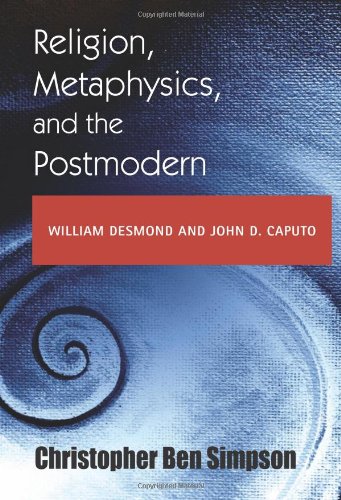
Religion, Metaphysics, and the Postmodern: William Desmond and John D. Caputo (Indiana Series in the Philosophy of Religion)
2009 · PDF

MySQL® Notes for Professionals book
2018 · PDF

MrExcel 2022: Boosting Excel
2022 · PDF

MrExcel 2022: Boosting Excel
2022 · PDF