European thought and culture in the 19th century
Book information
Description
"In the 19th century, Europe was the crucible for most of the ideas, institutions, and ""isms"" that now shape the life of our entire planet- nationalism, capitalism, democracy, socialism, feminism, and the list goes on and on. But where did these ideas come from' How did the particular conditions of Europe between the French Revolution and the First World War shape these thinkers' ideas, the thoughts of their critics, the progress of the debates that went on between them, and the wider hearing that all received' Over the course of 24 sweeping lectures, Professor Kramer invites you to view intellectual history as a series of overlapping, interconnected dialogues, which will help you deepen your understanding of the ideas of influential 19th-century European intellectuals; reflect on the interactions between ideas and social experience; and think critically and creatively about how the ideas of 19th-century Europe's leading thinkers and writers still raise a host of cogent questions for our own time. You will examine not only famous thinkers like Marx, Darwin, and Nietzsche, but a number of important, though less well-remembered, figures including the romantic author Germaine de Stael, the positivist Auguste Comte, the novelist and feminist George Sand, the political theorist Benjamin Constant, and many others-each placed in a context and linked both to other creative thinkers and the major issues of the time. Beginning the legacy of the 18th-century Enlightenment and its connection to the French Revolution and ending with the philosophy of Nietzsche, this ambitious course is rich with great-and lasting-ideas." Read more... Abstract: "In the 19th century, Europe was the crucible for most of the ideas, institutions, and ""isms"" that now shape the life of our entire planet- nationalism, capitalism, democracy, socialism, feminism, and the list goes on and on. But where did these ideas come from' How did the particular conditions of Europe between the French Revolution and the First World War shape these thinkers' ideas, the thoughts of their critics, the progress of the debates that went on between them, and the wider hearing that all received' Over the course of 24 sweeping lectures, Professor Kramer invites you to view intellectual history as a series of overlapping, interconnected dialogues, which will help you deepen your understanding of the ideas of influential 19th-century European intellectuals; reflect on the interactions between ideas and social experience; and think critically and creatively about how the ideas of 19th-century Europe's leading thinkers and writers still raise a host of cogent questions for our own time. You will examine not only famous thinkers like Marx, Darwin, and Nietzsche, but a number of important, though less well-remembered, figures including the romantic author Germaine de Stael, the positivist Auguste Comte, the novelist and feminist George Sand, the political theorist Benjamin Constant, and many others-each placed in a context and linked both to other creative thinkers and the major issues of the time. Beginning the legacy of the 18th-century Enlightenment and its connection to the French Revolution and ending with the philosophy of Nietzsche, this ambitious course is rich with great-and lasting-ideas."
Similar books

The passions : philosophy and the intelligence of emotions
2015 · PDF

The enlightenment invention of the modern self
2015 · PDF
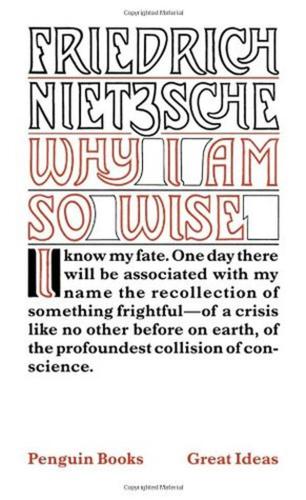
Why I am so wise
2005 · MOBI

Why I am so wise
2005 · EPUB

Why I am so wise
2005 · AZW3

The Book of Destiny: An Open Statement of the Authentic and Inspired Prophesies of the New and Old Testament
1956 · PDF

The Devil's Final Battle: Our Lady's Victory Edition
2010 · PDF

On the True and the False Pope: The Case Against Bergoglio
2021 · AZW3