Italian Yearbook of Human Rights 2011 (Human Right Studies)
Book information
Description
The legal and political significance of human rights has increased enormously all over the world. The Italian Yearbook of Human Rights 2011 provides a dynamic picture of laws, institutions, policies and case law that have implemented international human rights norms in Italy over the past few years, particularly in 2010. The volume has four main sections, which concern respectively: Italy’s adaptation to international human rights law; the human rights infrastructure both at national and sub-national levels; Italy in dialogue with the international machinery; and national, European and international case law. The Yearbook is the first volume in a series edited by the Centre for Human Rights and the Rights of Peoples of the University of Padua, in cooperation with the UNESCO Chair in Human Rights, Democracy and Peace at the same University. The Centre, founded in 1982 with the support of the Region of Veneto, carries out research and training programmes according to an interdisciplinary approach. It hosts the Jean Monnet Centre of Excellence on intercultural dialogue and human rights and edits the quarterly journal Pace diritti umani/Peace human rights. The Centre also works in cooperation with the European Commission, the Council of Europe, the United Nations High Commissioner for Human Rights and UNESCO, as well as with civic organizations, schools and local authorities. The editors of the Italian Yearbook of Human Rights 2011 include Andrea Cofelice, Pietro De Perini, Paola Degani, Paolo De Stefani, Marco Mascia, Antonio Papisca (coordinator) and Claudia Pividori. Table of Contents Acronyms Preface (Antonio Papisca) Introduction PART I. IMPLEMENTATION OF INTERNATIONAL HUMAN RIGHTS LAW IN ITALY International Human Rights Law I. Legal Instruments of the United Nations II. Legal Instruments on disarmament and Non-proliferation III. Legal Instruments of the Council of Europe IV. European Union Law Italian Law I. The Constitution of the Italian Republic II. National Legislation III. Municipal, Provincial and Regional Statutes IV. Regional Laws PART II. THE HUMAN RIGHTS INFRASTRUCTURE IN ITALY National Human Rights-related Bodies I. Parliamentary Bodies II. Governmental Bodies III. Independent Authorities IV. Non-governmental Organisations V. Human Rights Teaching and Research in Italian Universities Human Rights Structures at a Sub-national Level I. Peace Human Rights Offices in Municipalities,Provinces and Regions II. The Ombudsman in Municipalities, Provinces and Regions III. Ombudsman National Coordination IV. Network of Children’s Commissioners V. National Coordination of Local Authoritiesfor Peace and Human Rights Region of Veneto I. Department for International Relations, International Cooperation, Human Rights and Equal Programmes II. Committee for Human Rights and the Culture of Peace III. Archive “Pace Diritti Umani – Peace Human Rights” IV. Venice for Peace Research Foundation V. Commissioner for Children and Adolescents VI. Ombudsman VII. Regional Commission for Equal Opportunities between Men and Women VIII. Integrated Network of Regional Observatories on Social Policies IX. Regional Observatory on Immigration PART III. ITALY IN DIALOGUE WITH INTERNATIONAL HUMAN RIGHTS INSTITUTIONS The United Nations System I. General Assembly II. Human Rights Council III. High Commissioner for Human Rights (OHCHR) IV. High Commissioner for Refugees (UNHCR) V. Treaty Bodies VI. Specialised United Nations Agencies Council of Europe I. Parliamentary Assembly II. Committee of Ministers III. European Court of Human Rights IV. European Committee for the Prevention of Torture V. European Committee of Social Rights VI. Commissioner for Human Rights VII. European Commission against Racism and Intolerance VIII. Advisory Committee on the Framework Convention for the Protection of National Minorities IX. Standing Committee of the EuropeanConvention on the Exercise of Children’s Rights X. European Commission for Democracy through Law European Union I. European Parliament II. European Commission III. Council of the European Union IV. Court of Justice of the European Union V. European External Action Service VI. Fundamental Rights Agency VII. European Ombudsman Organisation for Security and Cooperation in Europe I. Office for Democratic Institutions and Human Rights (ODIHR) II. High Commissioner on National Minorities III. OSCE Representative on Freedom of the Media IV. Special Representative and Co-ordinator for Combating Trafficking in Human Beings International Humanitarian and Criminal Law I. Adapting to International Humanitarianand Criminal Law II. The Italian Contribution to Peace-keepingMissions and Other International Missions PART IV. NATIONAL AND INTERNATIONAL CASE-LAW Human Rights in Italian Case-law I. The “Communitarisation” of International Human Rights Norms II. Dignity of the Person III. Discrimination IV. Immigrants’ Rights V. Children VI. International Protection, Asylum VII. Criminal Trial and Execution of the Penalty VIII. Expropriations and the Right to Peaceful Enjoyment of Property IX. Reasonable Length of Judicial Proceedings X. Right to Vote Case-law of the European Court of Human Rights Concerning Italy I. Excessive Length of Trials and “Pinto on Pinto” Cases II. Right to Property, “Indirect Expropriations”and Just Satisfaction III. Criminal Procedures, Prison System,Reduction to Slavery IV. Fair Civil Trial V. Alien Deportations and the Risk of Tortureor Inhuman Treatment VI. Parliamentary Immunity, Electoral Law VII. Adoption and Foster Care VIII. Telephone and Environmental Interception Table of Cases Research and Editing Committee
Similar books
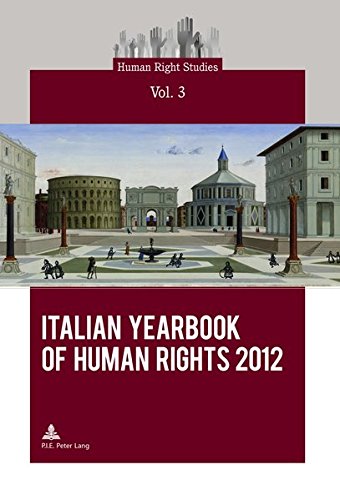
Italian Yearbook of Human Rights 2012 (Human Right Studies)
2013 · PDF

MySQL® Notes for Professionals book
2018 · PDF

MrExcel 2022: Boosting Excel
2022 · PDF

MrExcel 2022: Boosting Excel
2022 · PDF

Session C11: Ancient Cultural Landscapes in South Europe – their Ecological Setting and Evolution, Session C22: Gardeners from South America, Session S04: Agro-Pastoralism and Early Metallurgy Sessions, Session WS29: The Idea of Enclosure in Recent Iberian Prehistory, Session C88: Rhytmes et causalites des dynamiques de l'anthropisation en Europe entre 6500 ET 500 BC: Hypotheses socio-culturelles et/ou climatiques: Proceedings of the XV UISPP World Congress (Lisbon 4-9 September 2006) / Actes du XV Congrès Mondial (Lisbonne 4-9 Septembre 2006) Vol.36
2010 · PDF

THE BRITISH ARMY IN INDIA: ITS PRESERVATION BY AN APPROPRIATE CLOTHING, HOUSING, LOCATING, RECREATIVE EMPLOYMENT, AND HOPEFUL ENCOURAGEMENT OF THE TROOPS. with AN APPENDIX ON INDIA : THE CLIMATE OP ITS HILLS ; THE DEVELOPMENT OF ITS RESODRCBS, INDUSTRY, AND ARTS ; THE ADMINISTRATION OF JUSTICE ; THE BLACK ACT ; THE PROGRESS OF CHRISTIANITY ; THE TRAFFIC IN OPIUM ; THE VALUE OF INDIA ; PERMANENT CAUSES OF DISAFFECTION, AND OF THE RECENT REBELLION ; THE TRADITIONARY POLICY; MISGOVERNMENT BY NATIVE RULERS ; ANNEXATIONS OF THEIR TERRITORY, ETC.
1858 · PDF

Idries Shah 27 Books Collection : A Perfumed Scorpion, A Veiled Gazelle, Caravan of Dreams, Darkest England, Destination Mecca, Evenings with Idries Shah, Knowing How to Know, Learning How to Learn, Letters and Lectures of Idries Shah, Neglected aspects of Sufi study, Observations, Oriental Magic, Reflections, Seeker after Truth, Special Illumination, Special Problems in the study of Sufi ideas, Sufi thought and action, Tales of the Dervishes, The Dermis Probe, The Elephant in the Dark, The Englishman Handbook, Idries Shah Antology, The Magic Monastery, The natives are restless, wisdom of the Idiots PDF.
2022 · PDF

The travels of Capts. Lewis and Clarke from St. Louis, by way of the Missouri and Columbia rivers, to the Pacific ocean; performed in the years 1804, 1805 & 1806, by order of the government of the United States. Containing delineations of the manners, customs, religion, &c. of the Indians, comp. from various authentic sources, and original documents, and a summary of the Statistical view of the Indian nations, from the official communication of Meriwether Lewis. Illustrated with a map of the country, inhabited by the western tribes of Indians
1809 · PDF