Free Speech in the Balance
Book information
Description
Free Speech in the Balance is the first comprehensive study of proportional analysis in free speech theory. This book challenges the US Supreme Court's categorical approach and explains the importance of understanding the breadth of concerns arising from regulations directly and indirectly impacting expression. The author provides in-depth analysis of some of the important social and political principles governing topics of vital concern, including campaign financing, university speech codes, secondary school rules, incitement, and threats. This book should be read by students and scholars of free speech theory and anyone interested in learning more about the history of existing law, the issues of current importance, and trends in expressive significance. Cover Half-title page Title page Copyright page Dedication Contents Preface Acknowledgments Part I Theory 1 Formalism and Categorical Doctrine 1.1 Unprotected Categories of Speech 1.2 Boring Down into the Categories 1.2.1 Obscenity 1.2.2 Defamation 1.2.3 Fraud 1.3 Reasoned Balancing, Not Ad Hoc Balancing 2 Dominant Academic Approaches to Free Speech: Strengths and Shortcomings 2.1 Personal Autonomy 2.1.1 Autonomy Theory 2.1.2 Evaluating Autonomist’s Claims 2.1.3 Autonomy and Copyright 2.2 Self-Government 2.3 The Marketplace for Truth 2.4 Convergences and Divergences of Methodologies 3 Free Speech and Proportionality 3.1 A Matter of Theory 3.2 Primary and Secondary Concerns 4 Civic Community and Social Context 4.1 Communications 4.2 A Contextual Theory of Free Speech 4.3 Speech and Other Constitutional Values 4.4 Pluralistic Free Speech 4.5 Balancing Content Part II Application 5 US Formalism and EU Proportionality Alternative 6 Offense, Incitement, True Threats, and Hate Speech 6.1 Offensive Speech 6.2 Incitement 6.2.1 Historical Dimensions 6.2.2 The Modern Test 6.3 Critics of the True Threats Doctrine 6.4 European Court of Human Rights and Hate Speech 7 Terrorist Incitement on the Internet 7.1 Material Support for Foreign Terrorist Organizations 7.2 International and Foreign Laws against Incitement and Terror 7.3 Drafting a United States Cyberspace Terrorist Statute 7.4 Social Media Platform Liability 7.4.1 International Guidance 7.4.2 Communications Decency Act § 230 Immunity 7.5 Counterarguments 8 First Amendment on Campus 8.1 Contemporary Campus Speech Issues 8.2 Doctrinal, Statutory, and Judicial Considerations on the Enforcement of Campus Codes 8.2.1 Campus Codes and Constitutional Doctrine 8.2.2 Hostile Campus Environment: Title VI Litigation 8.2.3 Lower Court Findings on Campus Codes 8.3 Current University Policies 9 High Schooler Speech in the Age of the Internet 9.1 Student Speech Doctrine 9.2 Lower Court Review of Schools 9.2.1 On-Campus Speech 9.2.2 Off-Campus Speech 9.3 Conflicting Constitutional Values in Schools: the Case of Confederate Symbols 9.4 Conflicting Constitutional Values in Schools: the Case of Confederate Symbols 10 On the Campaign Trail: Money and Politics 10.1 Campaign Financing Law: Burger Court 10.1.1 Unlimited Expenditure 10.1.2 Contributions by People and Corporations 10.2 Campaign Financing Law: Roberts Court 10.2.1 Corporate Expenditures 10.2.2 Aggregation of Contributions 10.3 Representative Democracy and Market Priorities Conclusion Index
Similar books

Destructive Messages: How Hate Speech Paves the Way For Harmful Social Movements
2002 · PDF

The Thirteenth Amendment and American Freedom: A Legal History
2004 · PDF

We Shall Overcome: A History of Civil Rights and the Law
2008 · PDF

For Liberty and Equality: The Life and Times of the Declaration of Independence
2012 · PDF

The Thirteenth Amendment and American Freedom: A Legal History
2004 · PDF
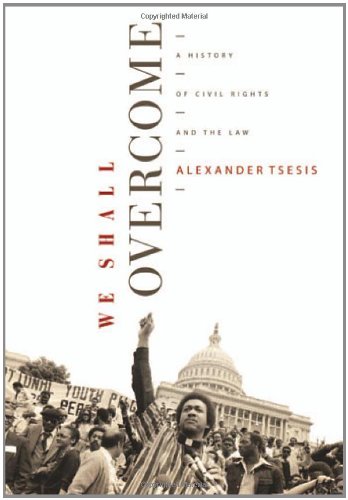
We shall overcome: a history of civil rights and the law
2008 · PDF

The Thirteenth Amendment and American Freedom: A Legal History (Constitutional Amendments)
2004 · PDF

MySQL® Notes for Professionals book
2018 · PDF