Ostension: Word Learning and the Embodied Mind
Book information
Description
Ostension is bodily movement that manifests our engagement with things, whether we wish it to or not. Gestures, glances, facial expressions: all betray our interest in something. Ostension enables our first word learning, providing infants with a prelinguistic way to grasp the meaning of words. Ostension is philosophically puzzling; it cuts across domains seemingly unbridgeable—public–private, inner–outer, mind–body. In this book, Chad Engelland offers a philosophical investigation of ostension and its role in word learning by infants. Engelland discusses ostension (distinguishing it from ostensive definition) in contemporary philosophy, examining accounts by Quine, Davidson, and Gadamer, and he explores relevant empirical findings in psychology, evolutionary anthropology, and neuroscience. He offers original studies of four representative historical thinkers whose work enriches the understanding of ostension: Wittgenstein, Merleau-Ponty, Augustine, and Aristotle. And, building on these philosophical and empirical foundations, Engelland offers a meticulous analysis of the philosophical issues raised by ostension. He examines the phenomenological problem of whether embodied intentions are manifest or inferred; the problem of what concept of mind allows ostensive cues to be intersubjectively available; the epistemological problem of how ostensive cues, notoriously ambiguous, can be correctly understood; and the metaphysical problem of the ultimate status of the key terms in his argument: animate movement, language, and mind. Finally, he argues for the centrality of manifestation in philosophy. Taking ostension seriously, he proposes, has far-reaching implications for thinking about language and the practice of philosophy.
Similar books

Wandering in Darkness: Narrative and the Problem of Suffering
2010 · PDF

Whys & Therefores: A Rational Look at the English Language
2011 · PDF
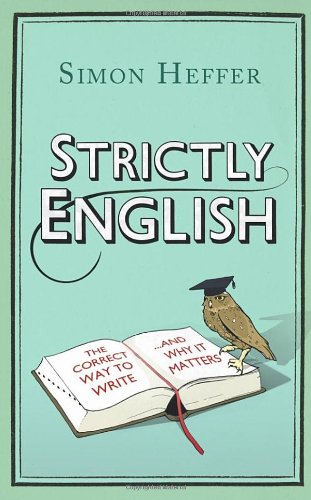
Strictly English: The Correct Way to Write . . . And Why It Matters
2010 · MOBI

The Intelligent Mind: On the Genesis and Constitution of Discursive Thought
2015 · PDF

Dimensions of Literacy: A Conceptual Base for Teaching Reading and Writing in School Settings
2014 · PDF

How Language Began: Gesture and Speech in Human Evolution
2012 · EPUB

Palimpsest: A History of the Written Word
2015 · EPUB

Cognitive Bases of Second Language Fluency
2010 · PDF