Probability, Choice, and Reason
Book information
Description
Much of our thinking is flawed because it is based on faulty intuition. By using the framework and tools of probability and statistics, we can overcome this to provide solutions to many real-world problems and paradoxes. We show how to do this, and find answers that are frequently very contrary to what we might expect. Along the way, we venture into diverse realms and thought experiments which challenge the way that we see the world. Features: An insightful and engaging discussion of some of the key ideas of probabilistic and statistical thinking Many classic and novel problems, paradoxes, and puzzles An exploration of some of the big questions involving the use of choice and reason in an uncertain world The application of probability, statistics, and Bayesian methods to a wide range of subjects, including economics, finance, law, and medicine Exercises, references, and links for those wishing to cross-reference or to probe further Solutions to exercises at the end of the book This book should serve as an invaluable and fascinating resource for university, college, and high school students who wish to extend their reading, as well as for teachers and lecturers who want to liven up their courses while retaining academic rigour. It will also appeal to anyone who wishes to develop skills with numbers or has an interest in the many statistical and other paradoxes that permeate our lives. Indeed, anyone studying the sciences, social sciences, or humanities on a formal or informal basis will enjoy and benefit from this book. Cover Half Title Title Page Copyright Page Dedication Table of Contents Preface Author Biography Chapter 1 Probability, Evidence, and Reason 1.1 Bayes’ Theorem: The Most Powerful Equation in the World 1.1.1 Appendix 1.1.2 Exercise 1.1.3 Reading and Links 1.2 Bayes and the Taxi Problem 1.2.1 Appendix 1.2.2 Exercise 1.2.3 Reading and Links 1.3 Bayes and the Beetle 1.3.1 Appendix 1.3.2 Exercise 1.3.3 Reading and Links 1.4 Bayes and the False Positives Problem 1.4.1 Examples 1.4.2 Appendix 1.4.2.1 Sensitivity and Specificity 1.4.2.2 Vaccine Efficacy 1.4.3 Exercise 1.4.4 Reading and Links 1.5 Bayes and the Bobby Smith Problem 1.5.1 Appendix 1.5.2 Exercise 1.5.3 Reading and Links 1.6 Bayes and the Broken Window 1.6.1 Appendix 1.6.2 Exercise 1.7 The Bayesian Detective Problem 1.7.1 Epilogue 1.7.2 Exercise 1.8 Bayesian Bus Problems 1.8.1 Exercise 1.9 Bayes at the Theatre 1.9.1 Appendix 1.9.2 Exercise 1.9.3 Reading and Links 1.10 Bayes in the Courtroom 1.10.1 Exercise 1.10.2 Reading and Links Chapter 2 Probability Paradoxes 2.1 The Bertrand’s Box Paradox 2.1.1 Exercise 2.1.2 Reading and Links 2.2 The Monty Hall Problem 2.2.1 Appendix 2.2.1.1 Alternative Derivation 2.2.2 Exercise 2.2.3 Reading and Links 2.3 The Three Prisoners Problem 2.3.1 Exercise 2.3.2 Reading and Links 2.4 The Deadly Doors Problem 2.4.1 Exercise 2.4.2 Reading and Links 2.5 Portia’s Challenge 2.5.1 Exercise 2.5.2 Reading and Links 2.6 The Boy–Girl Paradox 2.6.1 Appendix 2.6.2 Exercise 2.6.3 Reading and Links 2.7 The Girl Named Florida Problem 2.7.1 Appendix 2.7.2 Exercise 2.7.3 Reading and Links 2.8 The Two Envelopes Problem 2.8.1 Exercise 2.8.2 Reading and Links 2.9 The Birthday Problem 2.9.1 Exercise 2.9.2 Reading and Links 2.10 The Inspection Paradox 2.10.1 Exercise 2.10.2 Reading and Links 2.11 Berkson’s Paradox 2.11.2 Exercise 2.11.3 Reading and Links 2.12 Simpson’s Paradox 2.12.1 Exercise 2.12.2 Reading and Links 2.13 The Will Rogers Phenomenon 2.13.1 Exercise 2.13.2 Reading and Links Chapter 3 Probability and Choice 3.1 Newcomb’s Paradox 3.1.1 Exercise 3.1.2 Reading and Links 3.2 The Sleeping Beauty Problem 3.2.1 Exercise 3.2.2 Reading and Links 3.3 The God’s Coin Toss Problem 3.3.1 Exercise 3.3.2 Reading and Links 3.4 The Doomsday Argument 3.4.1 Exercise 3.4.2 Reading and Links 3.5 When Should You Stop Looking and Start Choosing? 3.5.1 Exercise 3.5.2 Reading and Links 3.6 Why Do We Always Seem to End Up in the Slower Lane? 3.6.1 Exercise 3.6.2 Reading and Links 3.7 Pascal’s Wager 3.7.1 Exercise 3.7.2 Reading and Links 3.8 The Keynesian Beauty Contest 3.8.1 Exercise 3.8.2 Reading and Links 3.9 Benford’s Law 3.9.1 Exercise 3.9.2 Reading and Links 3.10 Faking Randomness 3.10.1 Exercise 3.10.2 Reading and Links Chapter 4 Probability, Games, and Gambling 4.1 The Chevalier’s Dice Problem 4.1.1 Exercise 4.1.2 Reading and Links 4.2 The Pascal–Fermat “Problem of Points” 4.2.1 Appendix 4.2.2 Exercise 4.2.3 Reading and Links 4.3 The Newton–Pepys Problem 4.3.1 Exercise 4.3.2 Reading and Links 4.4 Staking to Reach a Target Sum 4.4.1 Exercise 4.4.2 Reading and Links 4.5 The Favourite-Longshot Bias 4.5.1 Appendix 4.5.2 Exercise 4.5.3 Reading and Links 4.6 The Poisson Distribution 4.6.1 Exercise 4.6.2 Reading and Links 4.7 Card Counting 4.7.1 Exercise 4.7.2 References and Links 4.8 Can the Martingale Betting System Guarantee a Profit? 4.8.1 Appendix 4.8.2 Exercise 4.8.3 Reading and Links 4.9 How Much Should We Bet When We Have the Edge? 4.9.1 Exercise 4.9.2 Reading and Links 4.10 The Expected Value Paradox 4.10.1 Exercise 4.10.2 Reading and Links 4.11 Options, Spreads, and Wagers 4.11.1 Appendix 4.11.2 Exercise A. Buy Call Option B. Buy Put Option C. Sell Call Option D. Sell Put Option Summary Puzzle 4.11.3 Reading and Links Chapter 5 Probability, Truth, and Reason 5.1 Does Seeing a Blue Tennis Shoe Increase the Likelihood That All Flamingos Are Pink? 5.1.1 Exercise 5.1.2 Reading and Links 5.2 The Simulated World Question 5.2.1 Exercise 5.2.2 Reading and Links 5.3 Quantum World Thought Experiments 5.3.1 Exercise 5.3.2 Reading and Links 5.4 The Fine-Tuned Universe Puzzle 5.4.1 Exercise 5.4.2 Reading and Links 5.5 Occam’s Razor 5.5.1 Exercise 5.5.2 Reading and Links Chapter 6 Anomalies of Choice and Reason 6.1 Efficiency and Inefficiency of Markets 6.1.1 Exercise 6.1.2 Reading and Links 6.2 Curious and Classic Market Anomalies 6.2.1 Exercise 6.2.2 Reading and Links 6.3 Ketchup Anomalies, Financial Puzzles, and Prospect Theory 6.3.1 Exercise 6.3.2 Reading and Links 6.4 The Wisdom of Crowds 6.4.1 Exercise 6.4.2 Reading and Links 6.5 Superforecasting 6.5.1 Exercise 6.5.2 Reading and Links 6.6 Anomalies of Taxation 6.6.1 Exercise 6.6.2 Reading and Links Chapter 7 Game Theory, Probability, and Practice 7.1 Game Theory: Nash Equilibrium 7.1.1 Exercise 7.1.2 Reading and Links 7.2 Game Theory: Repeated Game Strategies 7.2.1 Exercise 7.2.2 Reading and Links 7.3 Game Theory: Mixed Strategies 7.3.1 Appendix 7.3.2 Exercise 7.3.3 Reading and Links Chapter 8 Further Ideas and Exercises 8.1 The Four Card Problem 8.1.1 Exercise 8.1.2 Reading and Links 8.2 The Bell Boy Paradox 8.2.1 Exercise 8.3 Can a Number of Infinite Length Be Represented by a Line of Finite Length? 8.3.1 Exercise 8.4 Does the Sum of All Positive Numbers Really Add Up to a Negative Number? 8.4.1 Reading and Links 8.5 Zeno’s Paradox 8.5.1 Exercise 8.5.2 Reading and Links 8.6 Cool Down Exercise 8.6.1 Exercise 8.6.2 Reading and Links Reading and References Solutions to Exercises Index
Similar books
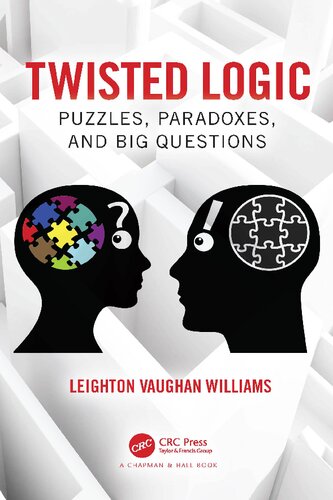
Twisted Logic: Puzzles, Paradoxes, and Big Questions
2024 · PDF

The Oxford Handbook of the Economics of Gambling
2013 · PDF

Information Efficiency in Financial and Betting Markets
2005 · PDF

Information Efficiency in Financial and Betting Markets
2005 · PDF

MySQL® Notes for Professionals book
2018 · PDF

MrExcel 2022: Boosting Excel
2022 · PDF

MrExcel 2022: Boosting Excel
2022 · PDF

Session C11: Ancient Cultural Landscapes in South Europe – their Ecological Setting and Evolution, Session C22: Gardeners from South America, Session S04: Agro-Pastoralism and Early Metallurgy Sessions, Session WS29: The Idea of Enclosure in Recent Iberian Prehistory, Session C88: Rhytmes et causalites des dynamiques de l'anthropisation en Europe entre 6500 ET 500 BC: Hypotheses socio-culturelles et/ou climatiques: Proceedings of the XV UISPP World Congress (Lisbon 4-9 September 2006) / Actes du XV Congrès Mondial (Lisbonne 4-9 Septembre 2006) Vol.36
2010 · PDF