A Sceptical Theory of Morality and Law (Studies in Theoretical and Applied Ethics)
Book information
Description
A Sceptical Theory of Morality and Law aims ultimately to cast light on some contentious issues in the philosophy of law, including the nature of rights and of judicial interpretation. The answers one gives, however, rest on the moral theory one finds most convincing. The first part of this book gives a sustained defence of a sceptical moral theory owing much to the views of David Hume. That version of scepticism is then relied upon in the author's discussion of law and legal theory. Table of Contents Preface ix Introduction 1 PART A — A CASE FOR MORAL SCEPTICISM 7 Chapter One: The Deflation of Reason 9 a) The Ambit of Reason According to Hume (p.9) b) Reason Alone Cannot Move Action (p.13) c) Hume's Position Considered for the First Time (p.18) d) A Transcendental Reply Considered (that yes, reason alone can move action) (p.25) e) A Summary (p.32) Chapter Two: Reason and Morality 37 a) Hume's Position Considered for the Second Time (p.39) b) An Enriched, Moral Reason? A Different Reality (p.44) c) Reason and Utilitarianism (p.50) d) A Summary (p.53) Chapter Three: Defending the View that Moral Distinctions are Projected, Subjective Sentiments 55 a) Hume's Position Considered for the Third Time (p.55) b) Moral Scepticism and the Meaning of Moral Statements (p.61) c) Whence Duty? (p.78) d) The Secondary Qualities Analogy (p.80) e) A Summary (p.84) Chapter Four: A Sceptic's View of Sympathy and Virtue 87 a) Hume's Position Considered for the Fourth Time (p.88) b) Sympathy (p.91) c) Virtue (p.95) Chapter Five: The Making of an Interpersonal System of Constraints on Action 97 a) Justice (p.97) b) How and Why Might the Passage to Justice Take Place? (p.101) c) Why Approve of Just Acts? (p.109) d) Hume's Position Considered for the Fifth Time (p.111) e) The Search for a Disinterested Perspective (p.120) f) A Summary (p.130) Chapter Six: Ramifications and Reckonings 133 a) The Good Life v. the Moral Life (p.133) b) The Free-Rider Problem (p.138) c) The Need for Standards (p.143) d) Hume's Position Considered for the Final Time (p.145) PART B — LEGAL THEORY FROM THE SCEPTIC'S VANTAGE 151 Chapter Seven: Insider Interpreting 153 a) Do Judges have Discretion? Is there a Right Answer? (p.153) b) Dworkin's Reply to the Sceptic Considered (p.160) c) The Consequences of a Dworkinian Judiciary (p.167) Chapter Eight: A Sceptic's Observations about Interpretation and Legal Systems 171 a) Describing a Legal System (p.171) b) My Preferred Approach (p.174) c) Overview and Implications (p.181) Chapter Nine: Non-Legal Rights: Human or Humean? 189 a) Do Non-Legal Rights Really Exist? (p.190) b) Do Non-Legal Rights Contingently Emerge? (p.191) c) The 'Ought' from the 'Is' (p.193) d) How Much is Enough? (p.201) e) The Sceptic as Natural Law Adherent (p.205) f) Bills of Rights (p.206) g) Recommending Rights — Should they be Emphasised? (p.211) Concluding Remarks 223 Notes 229 Bibliography 273
Similar books

Democracy in Decline: Steps in the Wrong Direction
2014 · PDF

A Sceptical Theory of Morality and Law
1998 · PDF

Democracy in Decline: Steps in the Wrong Direction
2014 · PDF

Iran. Journal of the British Institute of Persian Studies
2001 · PDF
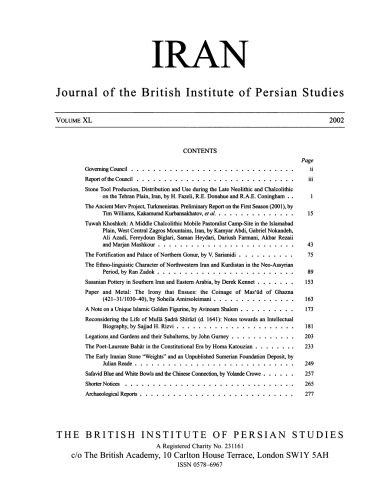
Iran. Journal of the British Institute of Persian Studies
2002 · PDF

Iran. Journal of the British Institute of Persian Studies
2003 · PDF

Iran. Journal of the British Institute of Persian Studies
2004 · PDF

MySQL® Notes for Professionals book
2018 · PDF