The Role of Nanoparticles in Plant Nutrition under Soil Pollution: Nanoscience in Nutrient Use Efficiency (Sustainable Plant Nutrition in a Changing World)
Book information
Description
Nanotechnology has shown great potential in all spheres of life. With the increasing pressure to meet the food demands of rapidly increasing population, thus, novel innovation and research are required in agriculture. The principles of nanotechnology can be implemented to meet the challenges faced by agricultural demands. Major challenges include the loss of nutrients in the soil and nutrient-deficient plants, which result in a lower crop yield and quality. Subsequently, consumption of such crops leads to malnourishment in humans, especially in underprivileged and rural populations. One convenient approach to tackle nutrient deficiency in plants is via the use of fertilizers; however, this method suffers from lower uptake efficiency in plants. Another approach to combat nutrient deficiency in humans is via the use of supplements and diet modifications; however, these approaches are less affordably viable in economically challenged communities and in rural areas. Therefore, the use of nano-fertilizers to combat this problem holds the greatest potential. Additionally, nanotechnology can be used to meet other challenges in agriculture including enhancing crop yield, protection from insect pests and animals, and by use of nano-pesticides and nano-biosensors to carry out the remediation of polluted soils. The future use of nanomaterials in soil ecosystems will be influenced by their capability to interact with soil constituents and the route of nanoparticles into the environment includes both natural and anthropogenic sources. The last decade has provided increasing research on the impact and use of nanoparticles in plants, animals, microbes, and soils, and yet these studies often lacked data involving the impact of nanoparticles on biotic and abiotic stress factors. This book provides significant recent research on the use of nano-fertilizers, which can have a major impact on components of an ecosystem. This work should provide a basis to further study these potential key areas in order to achieve sustainable and safe application of nanoparticles in agriculture.
Similar books
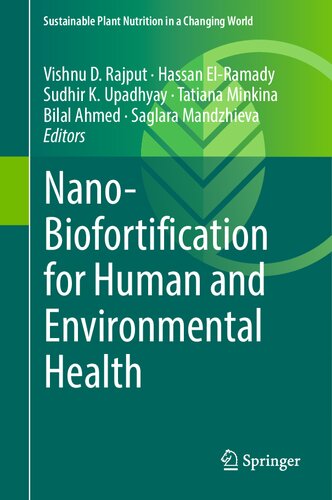
Nano-Biofortification for Human and Environmental Health (Sustainable Plant Nutrition in a Changing World)
2023 · PDF

Agro-industrial Perspectives on Sugarcane Production under Environmental Stress
2023 · PDF

Nano-Biofortification for Human and Environmental Health (Sustainable Plant Nutrition in a Changing World)
2023 · PDF

Nano-Biofortification for Human and Environmental Health (Sustainable Plant Nutrition in a Changing World)
2023 · EPUB

Biotechnological Transformation for Sugarcane Management
2024 · PDF

Nanomaterials and Nano-Biochar in Reducing Soil Stress: An Integrated Approach for Sustainable Agriculture
2024 · PDF

Nano-Bioremediation for Water and Soil Treatment: An Eco-Friendly Approach
2024 · PDF

Soils in Urban Ecosystem
2022 · PDF