Philosophy and Theology in the Middle Ages
Book information
Description
In the ancient world being a philosopher was a practical alternative to being a Christian. Philosophical systems offered intellectual, practical and moral codes for living. By the Middle Ages however philosophy was largely, though inconsistently, incorporated into Christian belief. From the end of the Roman Empire to the Reformation and Renaissance of the 16th century Christian theologians had a virtual monopoly on higher education. The complex interaction between theology and philosophy, which was the result of the efforts of Christian leaders and thinkers to assimilate the most sophisticated ideas of science and secular learning into their own system of thought, is the subject of this book. Augustine, as the most widely read author in the Middle Ages, is the starting point. Dr Evans then discusses the classical sources in general which the medieval scholar would have had access to when he wanted to study philosophy and its theological implications. Part One ends with an analysis of the problems of logic, language and rhetoric. In Part II the sequence of topics - God, cosmos, man - follows the outline of the summa, or systematic encyclopedia of theology.
Similar books
First Christian Theologians
2004 · PDF

Saint Anselm of Canterbury
2002 · PDF

The Church and the Churches: Toward an Ecumenical Ecclesiology
1994 · PDF
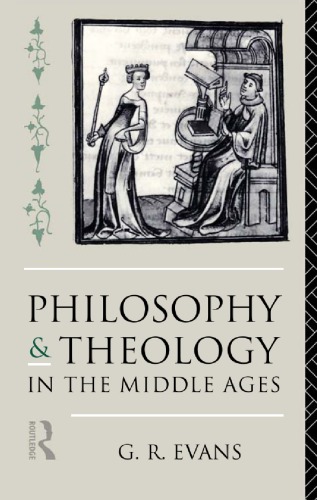
Philosophy and Theology in the Middle Ages
1993 · PDF

Fifty Key Medieval Thinkers
2002 · PDF

MySQL® Notes for Professionals book
2018 · PDF

MrExcel 2022: Boosting Excel
2022 · PDF

MrExcel 2022: Boosting Excel
2022 · PDF