The Formation of Chinese Art Cinema: 1990–2003
Book information
Description
The Formation of Chinese Art Cinema: 1990–2003 examines the development of Chinese art film in the People’s Republic of China from 1990, when the first Sixth Generation film Mama was released, to 2003, when authorities acknowledged the legitimacy of underground filmmakers. Through an exploration of the production and consecration mechanisms of the new art wave and its representative styles, this book argues that the art wave of the 1990s fundamentally defined Chinese art cinema. In particular, this vital art wave was not enabled by democratic liberalism, but by the specific industrial development, in which the film system transitioned from Socialist propaganda into a commercialized entity. Allowing Chinese art film to grow but at the same time denying its legitimacy, this paradoxical transition process shaped Chinese art film’s institutional and aesthetical alternative positioning, which eventually helped consolidate the art wave into art cinema. Ultimately, this book is a history of the Chinese portion of global art cinema, which also reveals the complex Chinese cultural experiences during the Reform Era. Front Matter ....Pages i-xii Introduction (Li Yang)....Pages 1-38 Front Matter ....Pages 39-39 The Socialist Film System (Li Yang)....Pages 41-63 The Separation of Production (Li Yang)....Pages 65-88 Institutions of Consecration (Li Yang)....Pages 89-122 Front Matter ....Pages 123-123 In the Mix: The Early Sixth Generation Cinema (Li Yang)....Pages 125-156 The Impulse to Record: The Neorealist Style (Li Yang)....Pages 157-189 The World of Psychological and Symbolic Complexity: The Expressionist Style (Li Yang)....Pages 191-212 Back Matter ....Pages 213-228
Similar books

Romance in Post-Socialist Chinese Television
2020 · PDF

Chinese Urban Shi-nema: Cinematicity, Society and Millennial China
2020 · PDF
The Films of Kore-eda Hirokazu: An Elemental Cinema
2019 · PDF
Hong Kong Dark Cinema: Film Noir, Re-conceptions, and Reflexivity
2019 · PDF

Taiwan Cinema, Memory, and Modernity
2019 · PDF

Ethnic Tourism: Impacts, Challenges and Opportunities
2023 · PDF
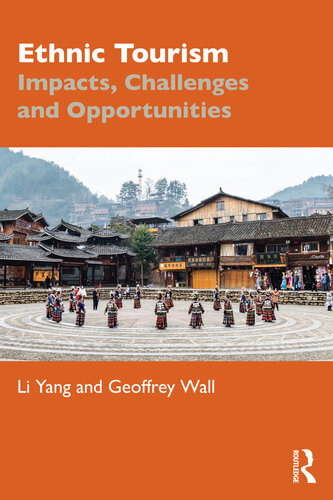
Ethnic Tourism: Impacts, Challenges and Opportunities
2023 · EPUB

100 Natural Foods: A Practical Guide to Health with Traditional Chinese Medicine (A Modern Reader of 'Compendium of Materia Medica')
EPUB