On Vulnerability: A Philosophical Anthropology
Book information
Description
We tend to understand vulnerability in one of two ways: (1) the measure of everything that happens to us, or (2) that it legitimizes the current discourses and the halo of authority that fashion grants. However, we should think of vulnerability as being affectable both to and by others. In On Vulnerability: A Philosophical Anthropology Miquel Seguró Mendlewicz projects vulnerability as a condition of human life and the central concept to understand our existential position in the world. The philosophical journey is structured around two fundamental areas: the existential reality of vulnerability (its pathos) and the decision to integrate it and live it as an ethical and political reality (its ethos). Using the work of René Descartes, whose philosophy the author presents as conducive to meditating on vulnerability, Seguró Mendlewicz proposes a philosophical reflection that projects vulnerability as a condition of human life in all its magnitudes. Therefore, this book explores all facets of vulnerability, the real impact of what being vulnerable means, and the dangers implied when something becomes trendy.
Similar books

On Vulnerability: A Philosophical Anthropology
2024 · EPUB
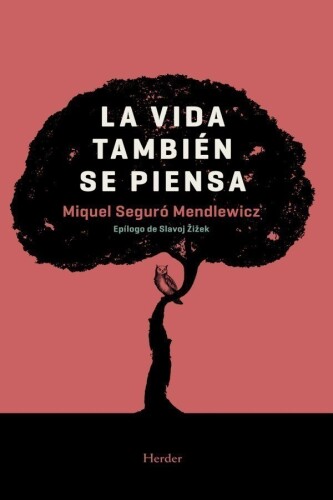
La vida también se piensa
2018 · EPUB

La vida también se piensa
2018 · MOBI

La vida también se piensa
2018 · PDF

MySQL® Notes for Professionals book
2018 · PDF

MrExcel 2022: Boosting Excel
2022 · PDF

MrExcel 2022: Boosting Excel
2022 · PDF

Session C11: Ancient Cultural Landscapes in South Europe – their Ecological Setting and Evolution, Session C22: Gardeners from South America, Session S04: Agro-Pastoralism and Early Metallurgy Sessions, Session WS29: The Idea of Enclosure in Recent Iberian Prehistory, Session C88: Rhytmes et causalites des dynamiques de l'anthropisation en Europe entre 6500 ET 500 BC: Hypotheses socio-culturelles et/ou climatiques: Proceedings of the XV UISPP World Congress (Lisbon 4-9 September 2006) / Actes du XV Congrès Mondial (Lisbonne 4-9 Septembre 2006) Vol.36
2010 · PDF