A History of Chinese Political Thought
Book information
Description
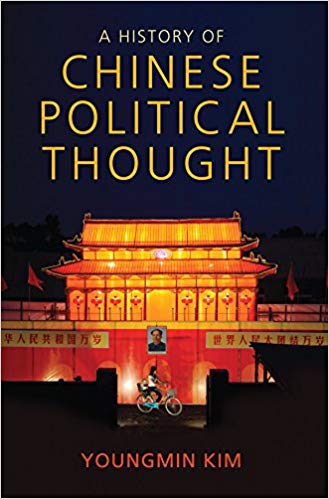
China's rapid rise as a regional and global power is one of the most important political developments of the twenty-first century. Yet the West still largely overlooks or oversimplifies the complex ideas and ideals that have shaped the country's national and international transformation from antiquity to the present day. In this beautifully written introductory text, Youngmin Kim offers a uniquely incisive survey of the major themes in Chinese political thought from customary community to empire, exploring their theoretical importance and the different historical contexts in which they arose. Challenging traditional assumptions about Chinese nationalism and Marxist history, Kim shows that China does not have a fixed, single identity, but rather is a constantly moving target. His probing, interdisciplinary approach traces the long and nuanced history of Chinese thought as a true tradition anchored in certain key themes, many of which began in the early dynasties and still resonate in China today. Only by appreciating this rich history, he argues, can we begin to understand the intricacies and contradictions of contemporary Chinese politics, economy, and society. Table of Contents Dedication Title page Copyright page A Note on Conventions Dynasties and Periods Preface 1: Introduction What is China? Approaches to Chineseness Authoritarian Forms of Government Confucianism Typological Approach vs. Agent-based Approach Narrativity Threads Notes 2: Enlightened Customary Community From Theocratic Polity to Enlightened Customary Community Ritual and Cognitive Agency Ritual and Emotional Agency The Political Elite The Small State Notes 3: Political Society The Concept of Political Society Competing Visions Mozi Xunzi Laozi Hanfeizi Yang Zhu Mencius Zhuangzi Notes 4: The State Foreign Relations Shang Yang Jia Yi The Salt and Iron Debates Notes 5: Aristocratic Society New Historical Conditions Tang Order Cosmopolitan Chineseness The Transcendental Emperor Religious Toleration Open Bureaucracy Legal Framework The Symbiosis of the State and Aristocrats The Decline of Tang Order Passive Conformity as Political Ideology The Emperor Aristocrats Buddhism Han Yu The Tale of Oriole Person vs. Self Notes 6: The Metaphysical Republic The Southern Song Question of Chinese Identity The Emergence of a New Elite Dao Learning and the Metaphysical Republic The Metaphysical Republic Notes 7: The Greater Integrated World The Tribute Trade System Responses to Mongol Rule Notes 8: Autocracy Rulership in Chinese History Approaches to Ming Despotism An Alternative Approach Wang Tingxiang Notes 9: Civil Society or Body Politic? Debate over Chinese Civil Society The Eight Steps Two Visions of Body Politics Notes 10: Empire The Political Identity of Qing Rulers Evidential Learning Good Governance and Local Autonomy Westernization in the Chinese Context Notes Epilogue: China in Larger Contexts Contested Centrality in Early Modern East Asia Contested Centrality in Modern East Asia Contested Centrality in a Contemporary World Notes Glossary References Index End User License Agreement
Similar books

A History of Chinese Political Thought
2018 · PDF

A History of Chinese Political Thought
2017 · EPUB
A History of Chinese Political Thought
2017 · EPUB

Accelerating MATLAB with GPU Computing A Primer with Examples
2013 · PDF

Accelerating MATLAB with GPU Computing: A Primer with Examples
2013 · EPUB

Women and Confucianism in Chosŏn Korea: New Perspectives
2011 · PDF

MySQL® Notes for Professionals book
2018 · PDF

MrExcel 2022: Boosting Excel
2022 · PDF