Leaving Marxism: Studies in the Dissolution of an Ideology
Book information
Description
The collapse of Marxism as a compelling ideology and political force is one of the most important developments in the history of twentieth-century Europe. This book seeks to understand the failure of Marxism by viewing it up close, in the experiences of three important Marxist intellectuals—the Belgian Henri De Man, the German Max Horkheimer, and the Pole Leszek Kolakowski—each of whom embraced Marxism early in life and later decisively rejected it. The author focuses on the processes through which these three figures lost their faith in Marxism, thereby providing the framework for a more general account of modern ideological disenchantment. An introductory chapter surveys an earlier stage of that disenchantment by examining the appeal of Nietzsche and his concept of the superman to Marxist intellectuals in each of the major European socialist movements, focusing particularly on those who have lost confidence in the redemptive historical role of the proletariat. In studying the ideological trajectory of De Man, Horkheimer, and Kolakowski, the author identifies the common dilemmas they faced in their efforts to advance the Marxist cause. Those dilemmas arose in large part out of the clash between their bourgeois ethical sensibilities and the materialistic and deterministic outlook of orthodox Marxism. This clash provides a connecting link between the three generations of Marxist intellectuals dealt with in the study. The author also discusses the aftermath of these three versions of ideological disenchantment—the attempts of each of these intellectuals to reconstruct a view of the world following the dissolution of his Marxist faith. The book concludes by placing Marxism in a broad historical context, and raises questions about its place—and that of the utopian imagination in general—within Western civilization.
Similar books
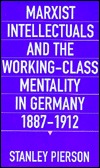
Marxist Intellectuals and the Working-Class Mentality in Germany, 1887-1912
1993 · PDF

British Socialists: The Journey from Fantasy to Politics
1979 · PDF

Leaving Marxism: Studies in the Dissolution of an Ideology
2002 · PDF

MySQL® Notes for Professionals book
2018 · PDF

MrExcel 2022: Boosting Excel
2022 · PDF

MrExcel 2022: Boosting Excel
2022 · PDF

Session C11: Ancient Cultural Landscapes in South Europe – their Ecological Setting and Evolution, Session C22: Gardeners from South America, Session S04: Agro-Pastoralism and Early Metallurgy Sessions, Session WS29: The Idea of Enclosure in Recent Iberian Prehistory, Session C88: Rhytmes et causalites des dynamiques de l'anthropisation en Europe entre 6500 ET 500 BC: Hypotheses socio-culturelles et/ou climatiques: Proceedings of the XV UISPP World Congress (Lisbon 4-9 September 2006) / Actes du XV Congrès Mondial (Lisbonne 4-9 Septembre 2006) Vol.36
2010 · PDF

THE BRITISH ARMY IN INDIA: ITS PRESERVATION BY AN APPROPRIATE CLOTHING, HOUSING, LOCATING, RECREATIVE EMPLOYMENT, AND HOPEFUL ENCOURAGEMENT OF THE TROOPS. with AN APPENDIX ON INDIA : THE CLIMATE OP ITS HILLS ; THE DEVELOPMENT OF ITS RESODRCBS, INDUSTRY, AND ARTS ; THE ADMINISTRATION OF JUSTICE ; THE BLACK ACT ; THE PROGRESS OF CHRISTIANITY ; THE TRAFFIC IN OPIUM ; THE VALUE OF INDIA ; PERMANENT CAUSES OF DISAFFECTION, AND OF THE RECENT REBELLION ; THE TRADITIONARY POLICY; MISGOVERNMENT BY NATIVE RULERS ; ANNEXATIONS OF THEIR TERRITORY, ETC.
1858 · PDF