The Tepehuan Revolt of 1616: Militarism, Evangelism and Colonialism in Seventeenth-Century Nueva Vizcaya
Book information
Description
A contemporary observer of the four-year Tepehuan Indian revolt in a northern province of New Spain described it as "one of the greatest outbreaks of disorder, upheaval, and destruction that had been seen in New Spain since the Conquest".In The Tepehuan Revolt of 1616, Charlotte Gradie presents the uprising as a pivotal test of both the Spanish institutions of conquest and Jesuit evangelism, as well as the Tepehuan capacity for military and cultural resistance. The unrest resulted in the death of over two hundred Spaniards, along with an uncounted number of slaves and servants. Ten missionaries, eight of them Jesuits, also died, and there was massive destruction of property. The number of Tepehuanes who died from war-related causes was estimated by one Spanish source at 4,000.The horror of the uprising for the Spanish was enhanced by its total surprise. The Tepehuanes, considered "pacified" since 1590, were known for their bellicosity, but by the time of the uprising many had settled in mission towns supervised by Jesuits who spoke the native language. For the Spanish, the only logical explanation was that the Tepehuanes' revolt was the work of the devil. Although the Spanish policy toward indigenous peoples had evolved from one of total war to one that relied on the more peaceful missions, the revolt caused the Spanish to reintroduce the presidio system to protect the missions and the labor source for their expanding economy.While the ultimately unsuccessful revolt may have been an effort by Tepehuan warrior elite to reassert their authority, it resulted in a reaffirmation of Jesuit missionary activity in Mexico and altered Spanish colonial methods in Sinaloa, Sonora, BajaCalifornia, and Arizona.
Similar books

Andean Cosmopolitans: Seeking Justice and Reward at the Spanish Royal Court
2018 · PDF
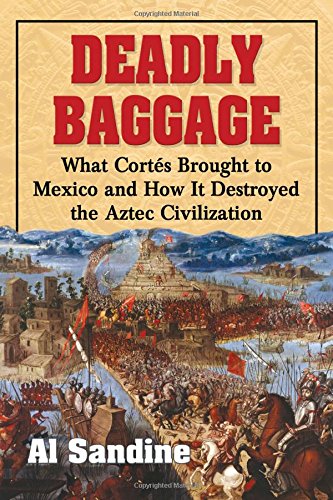
Deadly Baggage: What Cortes Brought to Mexico and How It Destroyed the Aztec Civilization
2015 · PDF

Malinche, Pocahontas, and Sacagawea: Indian Women as Cultural Intermediaries and National Symbols
2015 · PDF

Elusive Unity: Factionalism and the Limits of Identity Politics in Yucatán, Mexico
2013 · PDF

Outside the Hacienda Walls: The Archaeology of Plantation Peonage in Nineteenth-Century Yucatán
2012 · PDF

Conflict and Carnage in Yucatán: Liberals, the Second Empire, and Maya Revolutionaries, 1855-1876
2015 · PDF

Lord Eight Wind of Suchixtlan and the Heroes of Ancient Oaxaca: Reading History in the Codex Zouche-Nuttall
2009 · PDF

The Maya of the Cochuah Region: Archaeological and Ethnographic Perspectives on the Northern Lowlands
2015 · PDF