Bach’s Numbers: Compositional Proportion and Significance
Book information
Description
In eighteenth-century Germany the universal harmony of God's creation and the perfection of its proportions still held philosophical, moral and devotional significance. Reproducing proportions close to the unity (1:1) across compositions could render them beautiful, perfect and even eternal. Using the principles of her groundbreaking theory of proportional parallelism and the latest source study research, Ruth Tatlow reveals how Bach used the number of bars to create numerical perfection across his published collections, and explains why he did so. The first part of the book illustrates the wide-ranging application of belief in the unity, showing how planning a well-proportioned structure was a normal compositional procedure in Bach's time. In the second part Tatlow presents practical demonstrations of this in Bach's works, illustrating the layers of proportion that appear within a movement, a work, between two works in a collection, across a collection and between collections.
Similar books
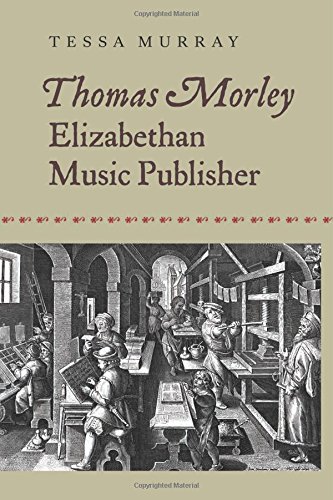
Thomas Morley: Elizabethan Music Publisher
2014 · PDF

J. S. Bach at His Royal Instrument: Essays on His Organ Works
2012 · PDF

Beethoven’s Symphony No. 9
2017 · PDF

Exploring the World of J. S. Bach: A Traveler’s Guide
2016 · PDF

Gluck
2015 · PDF

Mozart in Vienna: The Final Decade
2017 · PDF

A Southern Music: Exploring the Karnatik Tradition
2015 · EPUB

Performing Music in the Age of Recording
2004 · PDF