Reconsidering the Life of Power: Ritual, Body, and Art in Critical Theory and Chinese Philosophy
Book information
Description
Offers a compelling intercultural perspective on body, art, self, and society. Reconsidering the Life of Power examines Chinese perspectives on bodily self-cultivation and explores how these can be resources for working past the ritual scripts of everyday life. In recent decades, European and American thinkers like Michel Foucault and Judith Butler have called attention to the way that people live out ritual scripts in order to be recognized by other people such that they might survive. Philosophers in China, however, have a long history of considering ritual not just in terms of confining power structures but also in terms of empowering artistic self-cultivation. Out of this convergence, a response to Butler’s The Psychic Life of Power becomes possible, along with fascinating implications for improving real-world experience. James Garrison looks at art and aesthetics as a way of responding positively to the vicissitudes of everyday life. This means reframing ritual practice in domains like meditation, yoga, tai chi chuan, dance, calisthenics, fashion, and beyond as a kind of work that delves into and unearths society’s long-accruing unconscious habits in a way that makes conscious one’s everyday speech, comportment, countenance, and presence. The everyday body thus becomes an artwork, speaking in novel ways to the everyday self by revealing an alternative to the programmed ritual scripts through which most of us tend to survive. Reconsidering the Life of Power offers a compelling contemporary intercultural perspective on body, art, self, and society that bridges theory and practice by providing an actionable yet deeply philosophical approach to enhancing life. Contents Acknowledgments Introduction Subjectivation Autonomy Ritual Propriety—Lĭ 礼 Subjectality Technique in Appearance Somaesthetics Conclusion Intercultural and Interdisciplinary Work: A Statement on Method Rhizomes, Embryos, and Growth in Between Intercultural Philosophy Growing the Rhizome Chapter 1 Subjectivation/Subjection Preliminary Remarks: Butler on Subjectivation/Subjection Foucault’s Prison: Subjectivation in the Panopticon Hailed into Existence: Interpellation Misrecognition and Limited Freedom from Sign Chains Kantian Responses to Subjectivation/Subjection Kant on Purposiveness and the Artwork’s Negative Freedom Hegel on the Artisan and Recognition Nietzsche on the Artistically Creating Subject Art as Another “Other” and Novelty in Self-Recognition Conclusion Chapter 2 Autonomy and Appearance in Artful Ritual Practice Preliminary Remarks: The Modern Alienation of Art and Practice in the Unhappy Artworld The Early Human World: The Historical Link between Art and Ritual Practice Arendt on Purposiveness, Appearance in the World, and Art Bringing Art and Novel Recognition into Play in Everyday Encounters Conclusion Chapter 3 Confucianism and Lĭ 禮/礼: Ritual Propriety, Music, and the Arts Preliminary Remarks: The Relational, Discursive, Bodily, and Ritually Impelled Person in Confucianism A Background Vocabulary of Music in Reference to Ritual Ritual and Music in Confucianism Xún Zĭ 荀子 on Ritual Lĭ in Regard to Distinction and Difference Xún Zĭ on Ritual and Music Moving the Classical Confucian Framework of Ritual and Music Forward Conclusion Chapter 4 Subjectality Preliminary Remarks: Collective Unconsciousness in Species-Level Subjectality and “Individual” Consciousness in Subjectivation Kant and the World Observer Arendt’s Remarks on Kant Lĭ Zéhòu and Kant Hannah Arendt and Lĭ Zéhòu on Kantian Purposiveness in Human Affairs Conclusion Chapter 5 Technique in Appearance Preliminary Remarks: Apprehension, Appearance, and Concern Stiegler on Technique and Memory Reassessing Stiegler and Ritual Technique in Appearance Conclusion Chapter 6 Somaesthetics Preliminary Remarks: Somaesthetics and Subjectivation Somaesthetics: Rethinking Bodily Cultivation Somaesthetic Practice: A Resource for Expanding Subject Life or Another Means of Control? Confucian Perspectives on the Development of Ritual Propriety: Inside or Outside of Human Nature? Mencius on Human Nature and Ritual Xún Zĭ on Human Nature Xún Zi’s Restricted Usefulness for Somaesthetics and the Potential Value of New Approaches to Mencius Assessing Somaesthetics with Regard to Mencius and Xún Zĭ Conclusion Final Thoughts Changing the Stakes Conclusion Notes Index
Similar books

Pietas from Vergil to Dryden
2021 · PDF

Dryden and the Tradition of Panegyric
2023 · PDF

Dryden and the Tradition of Panegyric
2023 · PDF
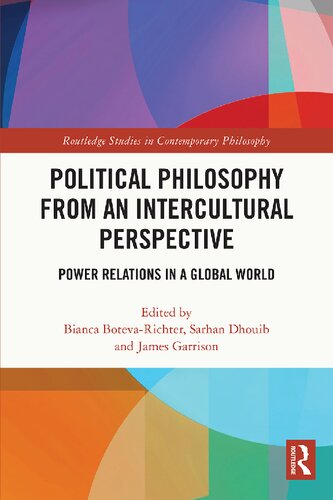
Political Philosophy from an Intercultural Perspective: Power Relations in a Global World
2021 · PDF

MySQL® Notes for Professionals book
2018 · PDF

MrExcel 2022: Boosting Excel
2022 · PDF

MrExcel 2022: Boosting Excel
2022 · PDF

Session C11: Ancient Cultural Landscapes in South Europe – their Ecological Setting and Evolution, Session C22: Gardeners from South America, Session S04: Agro-Pastoralism and Early Metallurgy Sessions, Session WS29: The Idea of Enclosure in Recent Iberian Prehistory, Session C88: Rhytmes et causalites des dynamiques de l'anthropisation en Europe entre 6500 ET 500 BC: Hypotheses socio-culturelles et/ou climatiques: Proceedings of the XV UISPP World Congress (Lisbon 4-9 September 2006) / Actes du XV Congrès Mondial (Lisbonne 4-9 Septembre 2006) Vol.36
2010 · PDF