The Revolutionary Imagination in the Americas and the Age of Development
Book information
Description
In The Revolutionary Imagination in the Americas and the Age of Development, María Josefina Saldaña-Portillo boldly argues that crucial twentieth-century revolutionary challenges to colonialism and capitalism in the Americas have failed to resist—and in fact have been constitutively related to—the very developmentalist narratives that have justified and naturalized postwar capitalism. Saldaña-Portillo brings the critique of development discourse to bear on such exemplars of revolutionary and resistant political thought and practice as Ernesto “Che” Guevara, Malcolm X, the Sandinista government of Nicaragua, and the Guatemalan guerrilla resistance. She suggests that for each of these, developmentalist constructions frame the struggle as a heroic movement from unconsciousness to consciousness, from a childlike backwardness toward a disciplined and self-aware maturity. Reading governmental reports, memos, and policies, Saldaña-Portillo traces the arc of development narratives from its beginnings in the 1944 Bretton Woods conference through its apex during Robert S. McNamara's reign at the World Bank (1968–1981). She compares these narratives with models of subjectivity and agency embedded in the autobiographical texts of three revolutionary icons of the 1960s and 1970s—those of Che Guevara, Guatemalan insurgent Mario Payeras, and Malcolm X—and the agricultural policy of the Sandinista National Liberation Front (FSLN). Saldaña-Portillo highlights a shared paradigm of a masculinist transformation of the individual requiring the "transcendence" of ethnic particularity for the good of the nation. While she argues that this model of progress often alienated the very communities targeted by the revolutionaries, she shows how contemporary insurgents such as Rigoberta Menchú, the Zapatista movement, and queer Aztlán have taken up the radicalism of their predecessors to retheorize revolutionary subjectivity for the twenty-first century. Title Page......Page 4 Copyright Page......Page 6 Contents......Page 7 About the Series......Page 10 Acknowledgments......Page 12 Part I......Page 15 1. Introduction......Page 16 2. Development and Revolution: Narratives of Liberation and Regimes of Subjectivity in the Postwar Period......Page 29 National Development as the Promise of a Postcolonial Era......Page 31 From Territory to Interiority: The Desiring Subject of Development......Page 41 From Rostow to McNamara and Back Again......Page 58 “Development Is Peace”? A Response from the Periphery......Page 61 Part II......Page 74 3. The Authorized Subjects of Revolution: Ernesto “Che” Guevara and Mario Payeras......Page 75 Resemblance-in-Difference......Page 77 Chronicle of a Death, Retold......Page 80 Is “el Nuevo Hombre” la Nueva Mujer in Drag?......Page 91 Betwixt Ariel and Caliban: A Small Arc of Historical Representation......Page 99 Che’s Legacy: “We Announced Simply That We Were Going to Triumph”......Page 103 4. Irresistible Seduction: Rural Subjectivity under Sandinista Agricultural Policy......Page 121 What Women Remember......Page 125 The Legacy of Dependency: Establishing an Agricultural State Sector, 1979–1981......Page 128 Stage Two: Agrarian Reform, 1981–1985......Page 139 Landownership and National Identity, 1985–1986......Page 151 For the Prisoners of Hope......Page 155 Part III......Page 162 5. Reiterations of the Revolutionary “I”: Menchú and the Performance of Subaltern Conciencia......Page 163 “Wavering on the Horizon of Social Being”......Page 165 Autobiographical Desire and the Testimonio Critic......Page 168 The Autobiographical “I” and the Ruse of Authenticity......Page 177 A Limited Participation......Page 192 6. The Politics of Silence: Development and Difference in Zapatismo......Page 204 Inventing the “Indian” for Spanish Colonialism......Page 213 The Rise of the Revolutionary Mestizo......Page 219 Cronica de una guerra anunciada......Page 228 Death by Development: “Dolor, pena, muerte, y . . . silencio”......Page 238 7. Epilogue Toward an American “American Studies”: Postrevolutionary Reflections on Malcolm X and the New Aztlán......Page 271 Malcolm X: Angry Prince or Gentle Servant?......Page 276 Disciplining the Other and White Anxiety......Page 286 Ticket to the New Aztlán......Page 292 1. Introduction......Page 305 2. Development and Revolution......Page 307 3. The Authorized Subjects of Revolution......Page 316 4. Irresistible Seduction......Page 321 5. Reiterations of the Revolutionary “I”......Page 328 6. The Politics of Silence......Page 339 7. Epilogue: Toward an American “American Studies”......Page 362 Works Cited......Page 366
Similar books

Indian Given: Racial Geographies across Mexico and the United States
2016 · PDF
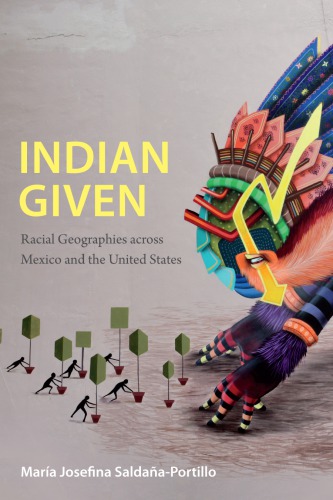
Indian Given: Racial Geographies across Mexico and the United States
2016 · PDF

MySQL® Notes for Professionals book
2018 · PDF

MrExcel 2022: Boosting Excel
2022 · PDF

MrExcel 2022: Boosting Excel
2022 · PDF

Session C11: Ancient Cultural Landscapes in South Europe – their Ecological Setting and Evolution, Session C22: Gardeners from South America, Session S04: Agro-Pastoralism and Early Metallurgy Sessions, Session WS29: The Idea of Enclosure in Recent Iberian Prehistory, Session C88: Rhytmes et causalites des dynamiques de l'anthropisation en Europe entre 6500 ET 500 BC: Hypotheses socio-culturelles et/ou climatiques: Proceedings of the XV UISPP World Congress (Lisbon 4-9 September 2006) / Actes du XV Congrès Mondial (Lisbonne 4-9 Septembre 2006) Vol.36
2010 · PDF

THE BRITISH ARMY IN INDIA: ITS PRESERVATION BY AN APPROPRIATE CLOTHING, HOUSING, LOCATING, RECREATIVE EMPLOYMENT, AND HOPEFUL ENCOURAGEMENT OF THE TROOPS. with AN APPENDIX ON INDIA : THE CLIMATE OP ITS HILLS ; THE DEVELOPMENT OF ITS RESODRCBS, INDUSTRY, AND ARTS ; THE ADMINISTRATION OF JUSTICE ; THE BLACK ACT ; THE PROGRESS OF CHRISTIANITY ; THE TRAFFIC IN OPIUM ; THE VALUE OF INDIA ; PERMANENT CAUSES OF DISAFFECTION, AND OF THE RECENT REBELLION ; THE TRADITIONARY POLICY; MISGOVERNMENT BY NATIVE RULERS ; ANNEXATIONS OF THEIR TERRITORY, ETC.
1858 · PDF

Idries Shah 27 Books Collection : A Perfumed Scorpion, A Veiled Gazelle, Caravan of Dreams, Darkest England, Destination Mecca, Evenings with Idries Shah, Knowing How to Know, Learning How to Learn, Letters and Lectures of Idries Shah, Neglected aspects of Sufi study, Observations, Oriental Magic, Reflections, Seeker after Truth, Special Illumination, Special Problems in the study of Sufi ideas, Sufi thought and action, Tales of the Dervishes, The Dermis Probe, The Elephant in the Dark, The Englishman Handbook, Idries Shah Antology, The Magic Monastery, The natives are restless, wisdom of the Idiots PDF.
2022 · PDF